Aubert Alexandre, Goeres Jenna, Liu Amy, Kao Martin, Richardson Katlyn C, Jung Karen, Hinz Boris, Crawford Richard I, Granville David J
International Collaboration on Repair Discoveries (ICORD) Centre, Vancouver Coastal Health Research Institute (VCHRI), University of British Columbia (UBC), Vancouver, BC, Canada.
Department of Pathology and Laboratory Medicine, University of British Columbia (UBC), Vancouver, BC, Canada.
Front Immunol. 2025 Jan 16;15:1484462. doi: 10.3389/fimmu.2024.1484462. eCollection 2024.
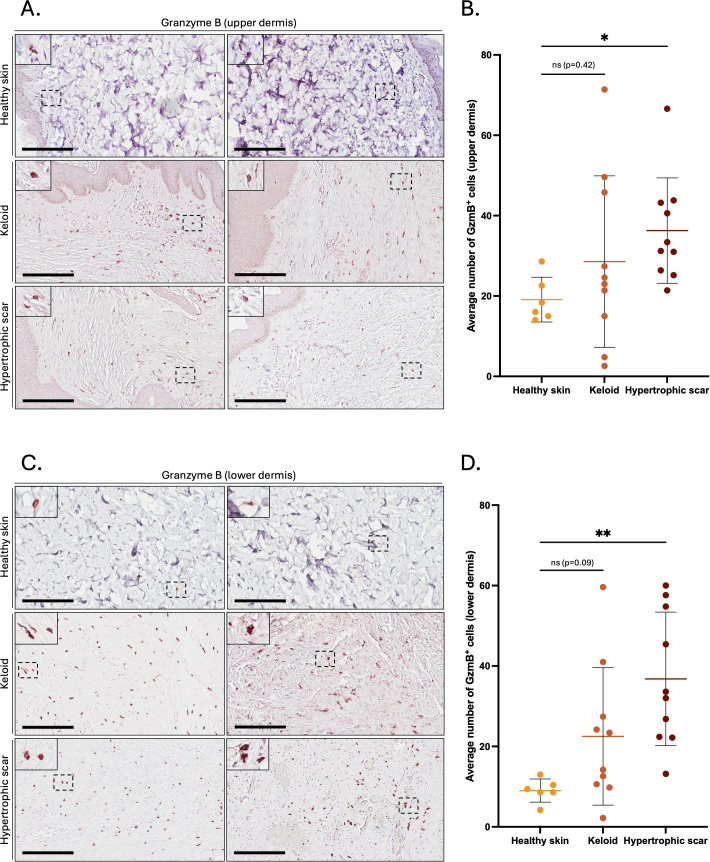
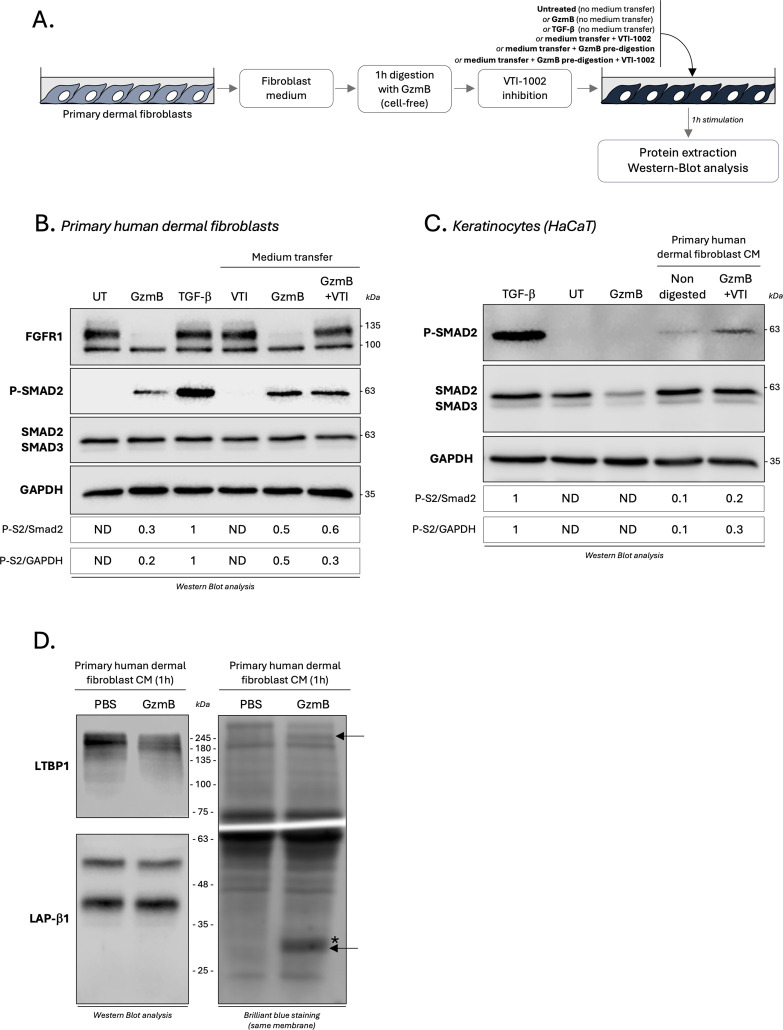
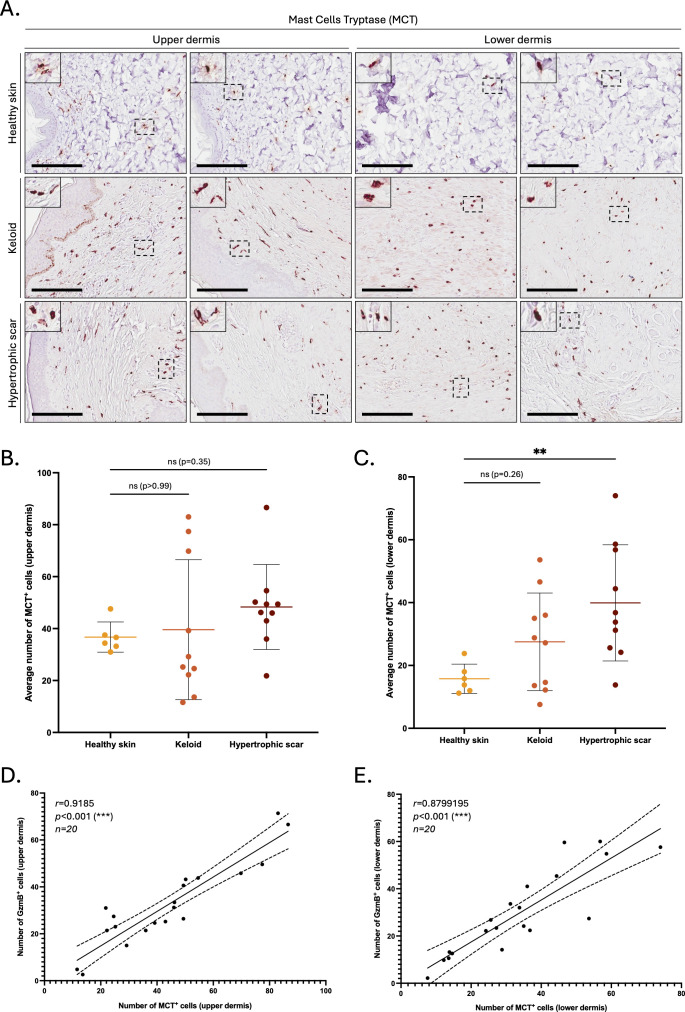
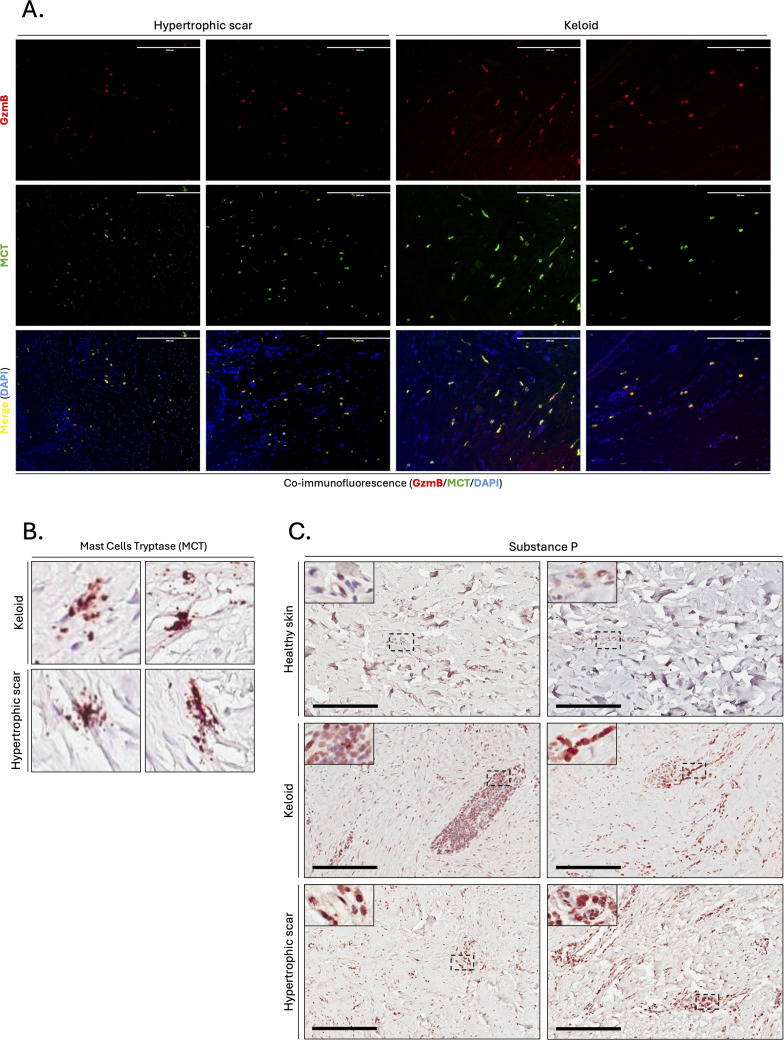
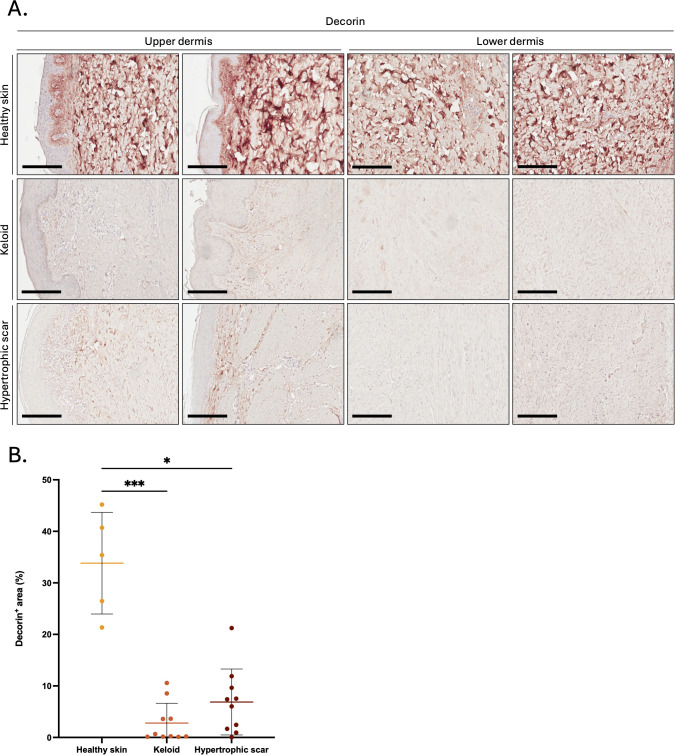
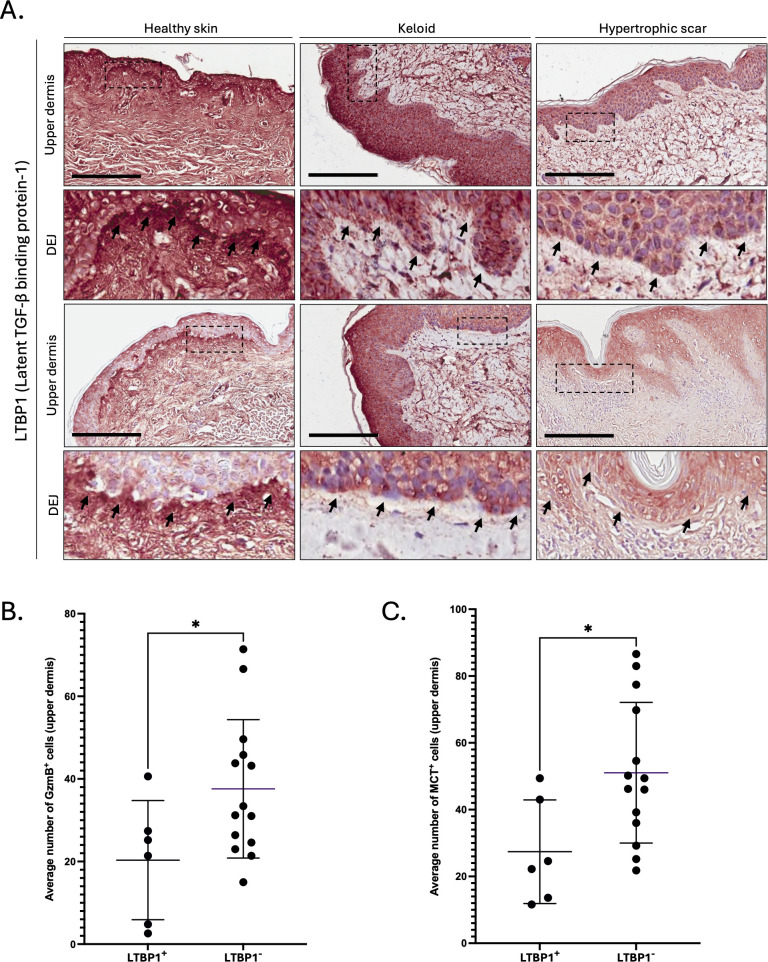
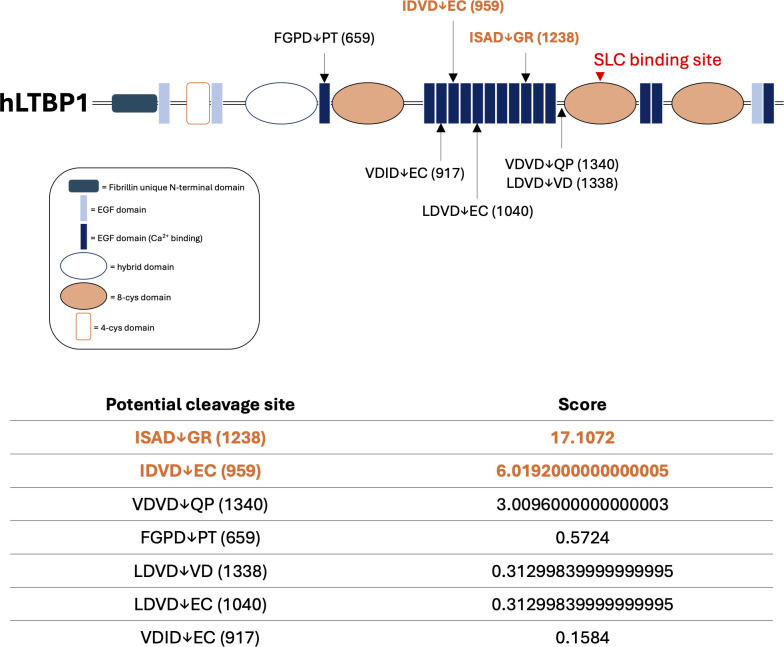
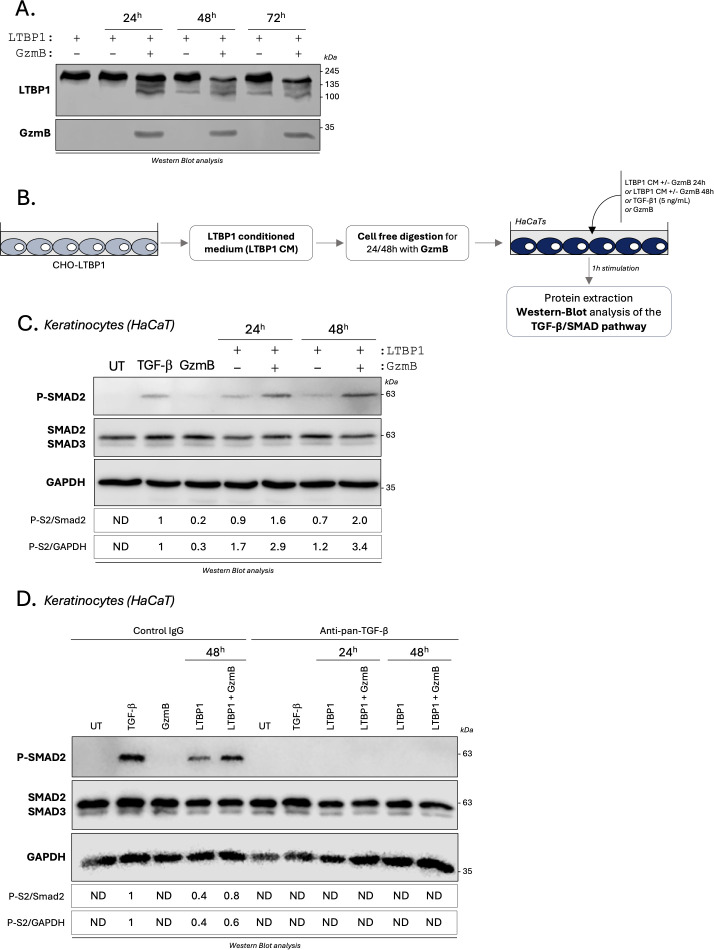
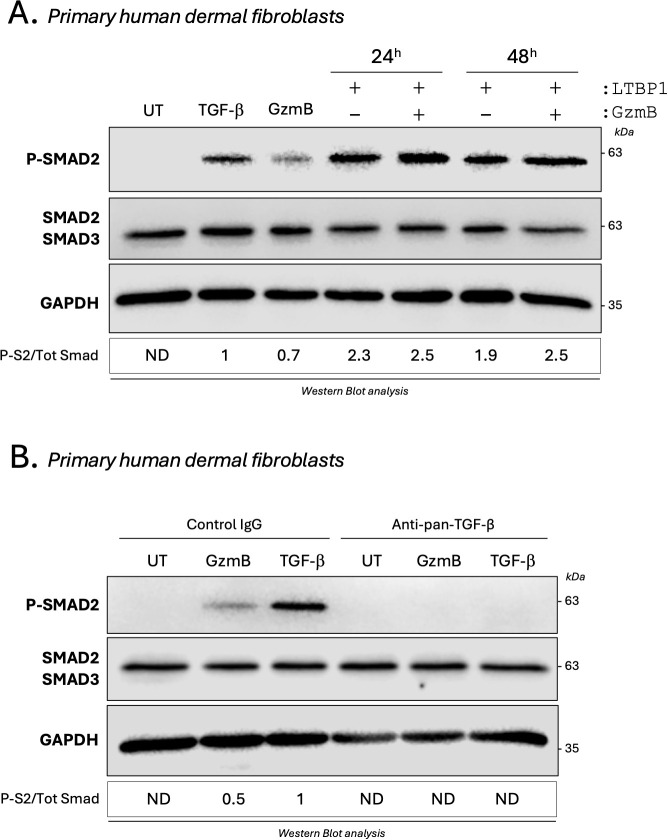
Keloid scars (KS) and hypertrophic scars (HS) are fibroproliferative wound healing defects characterized by excessive accumulation of extracellular matrix (ECM) in the dermis of affected individuals. Although transforming growth factor (TGF)-β is known to be involved in the formation of KS and HS, the molecular mechanisms responsible for its activation remain unclear. In this study we investigated Granzyme B (GzmB), a serine protease with established roles in fibrosis and scarring through the cleavage of ECM proteins, as a potential new mediator of TGF-β activation in KS and HS. Increased GzmB-positive mast cells were identified in the dermis of KS and HS but not healthy skin controls. Elevated levels of substance P, a neuropeptide involved in mast cell degranulation, suggest that GzmB is released extracellularly, as confirmed by the significant reduction of the established extracellular GzmB substrate decorin in KS and HS. Similarly, presence of latent TGF-β binding protein 1 (LTBP1), a protein involved in the extracellular tethering of latent TGF-β, was disrupted proximal to the dermal-epidermal junction (DEJ) of GzmB KS and HS lesions. Using LTBP1-enriched medium as well as purified LTBP1, its cleavage by GzmB was confirmed . Increased TGF-β/Smad signaling pathway was observed in keratinocytes treated with GzmB-digested LTBP1 and was abolished by the addition of a pan-TGF-β inhibitor, suggesting that GzmB cleavage of LTBP1 contributes to TGF-β activation. In dermal fibroblasts, GzmB also cleaved cell-derived LTBP1 and induced TGF-β activation through the cleavage of one or more unidentified fibroblast-secreted proteins. Altogether, the present results suggest that GzmB contributes to KS and HS through ECM remodeling and TGF-β activation.
瘢痕疙瘩(KS)和增生性瘢痕(HS)是纤维增生性伤口愈合缺陷,其特征是受影响个体真皮中细胞外基质(ECM)过度积累。尽管已知转化生长因子(TGF)-β参与KS和HS的形成,但其激活的分子机制仍不清楚。在本研究中,我们研究了颗粒酶B(GzmB),一种丝氨酸蛋白酶,通过切割ECM蛋白在纤维化和瘢痕形成中发挥既定作用,作为KS和HS中TGF-β激活的潜在新介质。在KS和HS的真皮中发现GzmB阳性肥大细胞增加,但在健康皮肤对照中未发现。P物质水平升高,一种参与肥大细胞脱颗粒的神经肽,表明GzmB在细胞外释放,这在KS和HS中已建立的细胞外GzmB底物核心蛋白聚糖的显著减少中得到证实。同样,潜在TGF-β结合蛋白1(LTBP1)的存在,一种参与潜在TGF-β细胞外束缚的蛋白,在GzmB KS和HS病变的真皮-表皮交界处(DEJ)近端被破坏。使用富含LTBP1的培养基以及纯化的LTBP1,证实了其被GzmB切割。在用GzmB消化的LTBP1处理的角质形成细胞中观察到TGF-β/Smad信号通路增加,并通过添加泛TGF-β抑制剂而被消除,表明GzmB对LTBP1的切割有助于TGF-β激活。在真皮成纤维细胞中,GzmB还切割细胞衍生的LTBP1,并通过切割一种或多种未鉴定的成纤维细胞分泌蛋白诱导TGF-β激活。总之,目前的结果表明GzmB通过ECM重塑和TGF-β激活促成KS和HS。