Laboratoire de Biologie Tissulaire et Ingénierie Thérapeutique (LBTI), UMR CNRS 5305, Université Lyon 1, Institut de Biologie et Chimie des Protéines, Lyon, France.
Institut de Recherche en Cancérologie de Montpellier (IRCM), INSERM U1194, Université de Montpellier, Institut du Cancer de Montpellier (ICM), Montpellier, France.
Front Immunol. 2021 May 13;12:613438. doi: 10.3389/fimmu.2021.613438. eCollection 2021.
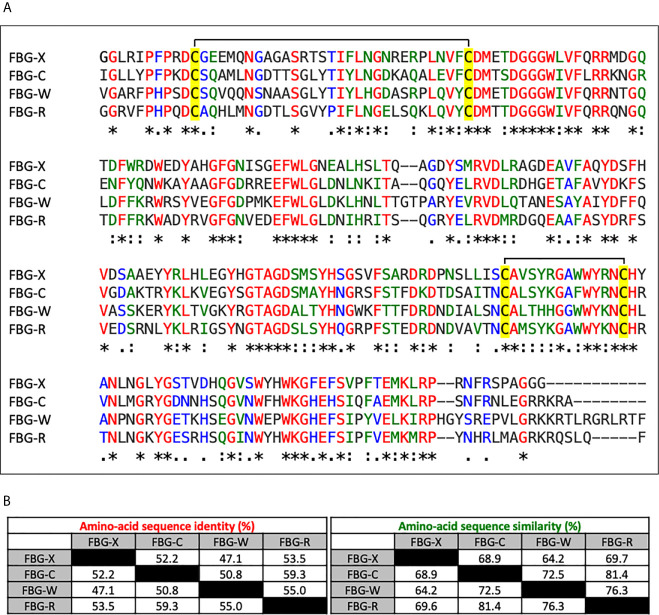
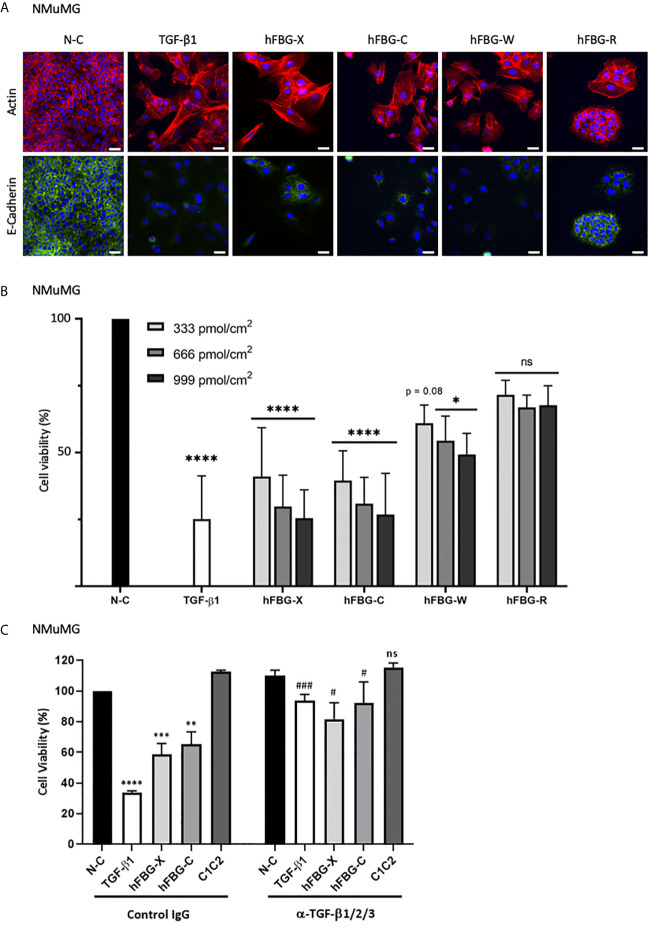
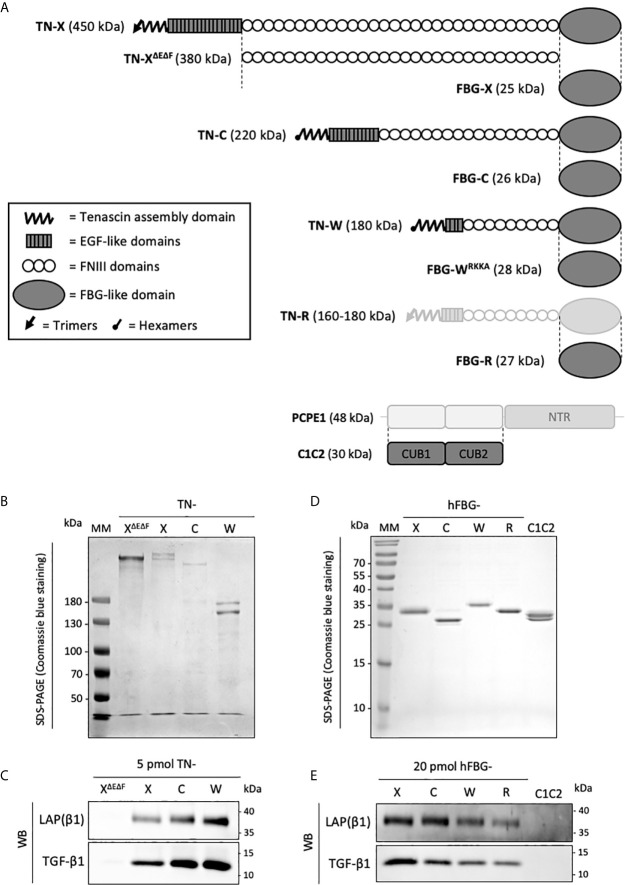
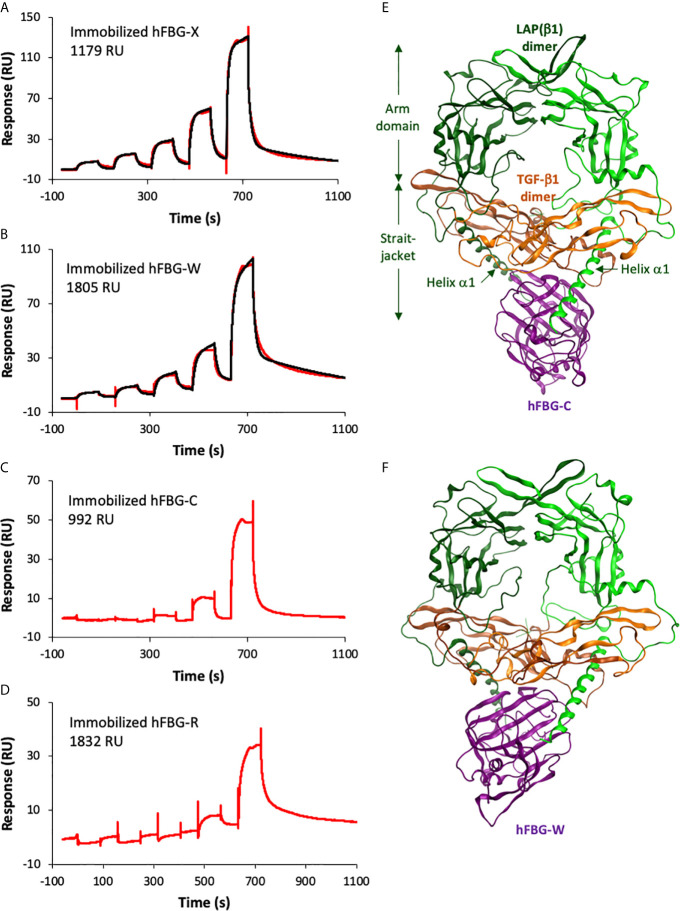
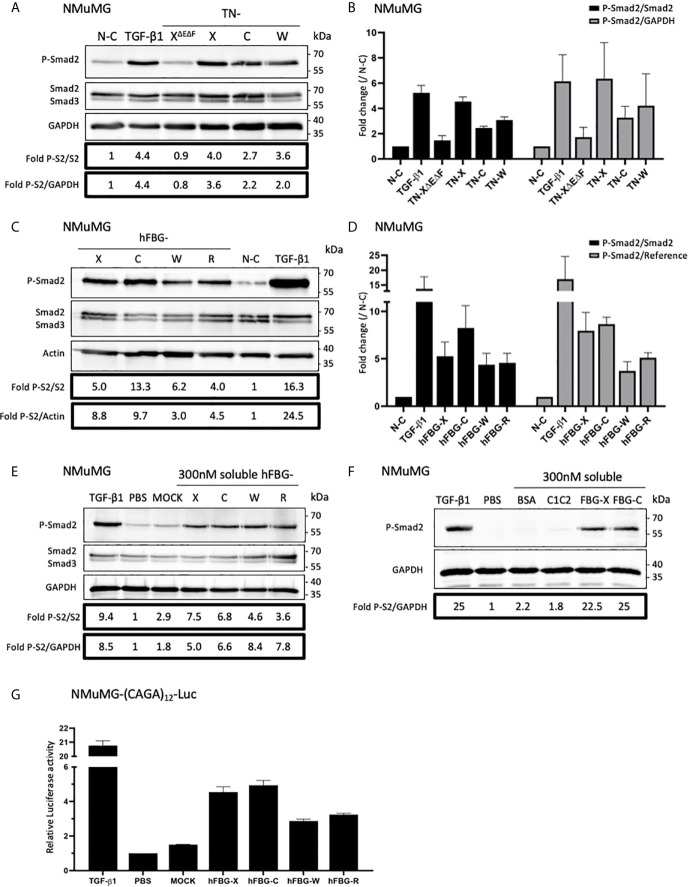
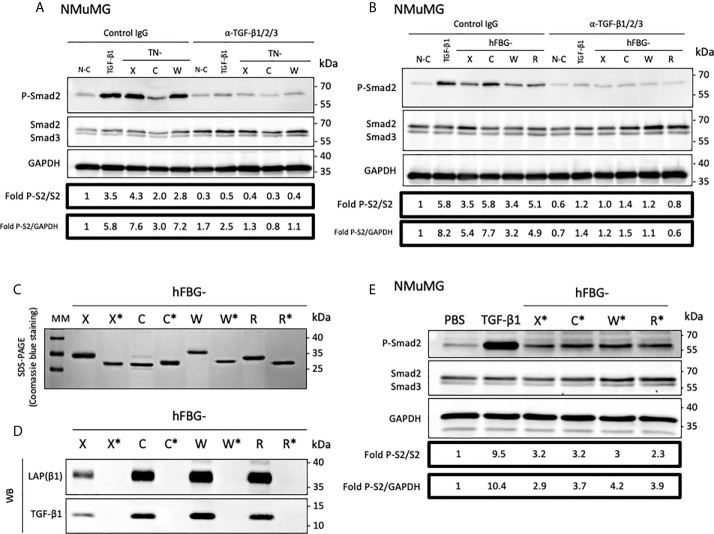
Transforming growth factor-β (TGF-β) isoforms are secreted as inactive complexes formed through non-covalent interactions between bioactive TGF-β entities and their N-terminal pro-domains called latency-associated peptides (LAP). Extracellular activation of latent TGF-β within this complex is a crucial step in the regulation of TGF-β activity for tissue homeostasis and immune cell function. We previously showed that the matrix glycoprotein Tenascin-X (TN-X) interacted with the small latent TGF-β complex and triggered the activation of the latent cytokine into a bioactive TGF-β. This activation most likely occurs through a conformational change within the latent TGF-β complex and requires the C-terminal fibrinogen-like (FBG) domain of the glycoprotein. As the FBG-like domain is highly conserved among the Tenascin family members, we hypothesized that Tenascin-C (TN-C), Tenascin-R (TN-R) and Tenascin-W (TN-W) might share with TN-X the ability to regulate TGF-β bioavailability through their C-terminal domain. Here, we demonstrate that purified recombinant full-length Tenascins associate with the small latent TGF-β complex through their FBG-like domains. This association promotes activation of the latent cytokine and subsequent TGF-β cell responses in mammary epithelial cells, such as cytostasis and epithelial-to-mesenchymal transition (EMT). Considering the pleiotropic role of TGF-β in numerous physiological and pathological contexts, our data indicate a novel common function for the Tenascin family in the regulation of tissue homeostasis under healthy and pathological conditions.
转化生长因子-β(TGF-β)同工型以非共价相互作用形成的无活性复合物形式分泌,这种相互作用是生物活性 TGF-β 实体与其称为潜伏相关肽(LAP)的 N 端前结构域之间形成的。在该复合物中,潜伏 TGF-β 的细胞外激活是调节 TGF-β 活性以维持组织内稳态和免疫细胞功能的关键步骤。我们之前表明,细胞外基质糖蛋白 tenascin-X(TN-X)与小潜伏 TGF-β 复合物相互作用,并触发潜伏细胞因子的激活转化为生物活性 TGF-β。这种激活很可能通过潜伏 TGF-β 复合物内的构象变化发生,并且需要糖蛋白的 C 末端纤维蛋白原样(FBG)结构域。由于 FBG 样结构域在 tenascin 家族成员中高度保守,我们假设 tenascin-C(TN-C)、tenascin-R(TN-R)和 tenascin-W(TN-W)可能与 TN-X 一样,通过其 C 末端结构域具有调节 TGF-β 生物利用度的能力。在这里,我们证明纯化的全长 tenascins 通过其 FBG 样结构域与小潜伏 TGF-β 复合物结合。这种结合促进了潜伏细胞因子的激活以及随后在乳腺上皮细胞中的 TGF-β 细胞反应,如细胞静止和上皮间质转化(EMT)。鉴于 TGF-β 在许多生理和病理情况下的多效性作用,我们的数据表明 tenascin 家族在健康和病理条件下调节组织内稳态方面具有新的共同功能。