Sabnis Siddhesh S, S Narasimhan Kishore Kumar, Chettiar Poojashree B, Shelkar Gajanan P, Dravid Shashank M
Department of Psychiatry and Behavioral Sciences, Health Sciences Center, School of Medicine, Texas A&M University, 206, Olsen Blvd, Reynolds Medical Sciences Bldg, College Station, TX, 77845, USA.
Cell Mol Life Sci. 2025 Jan 31;82(1):67. doi: 10.1007/s00018-024-05554-z.
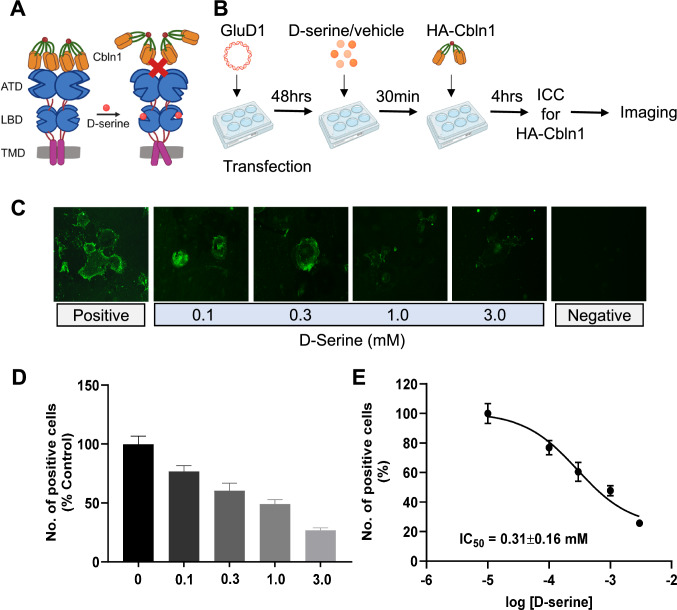
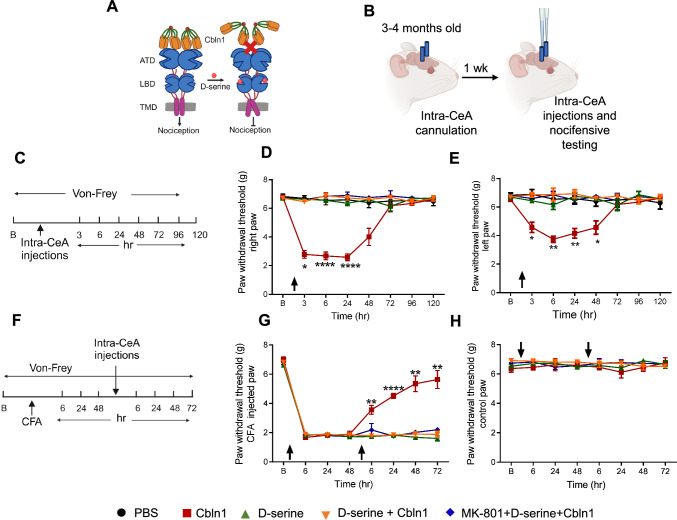
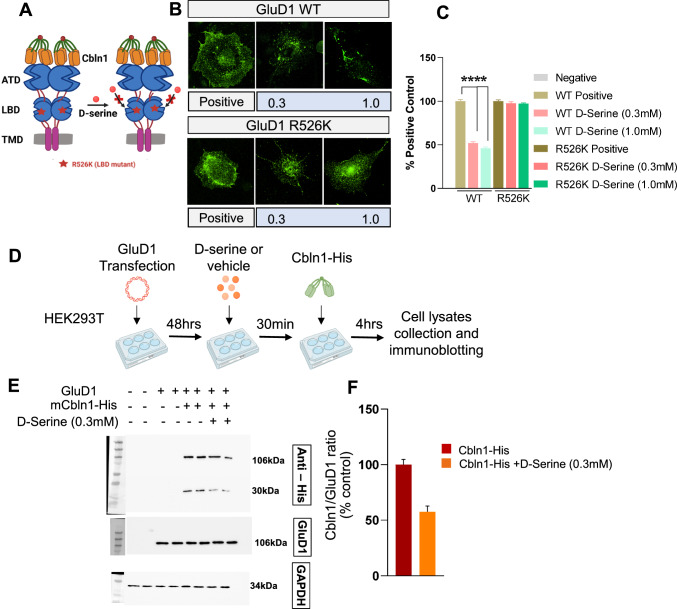
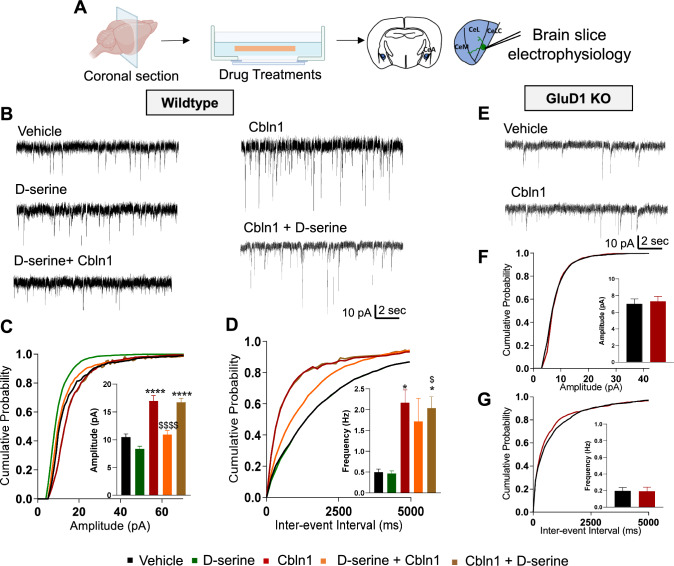
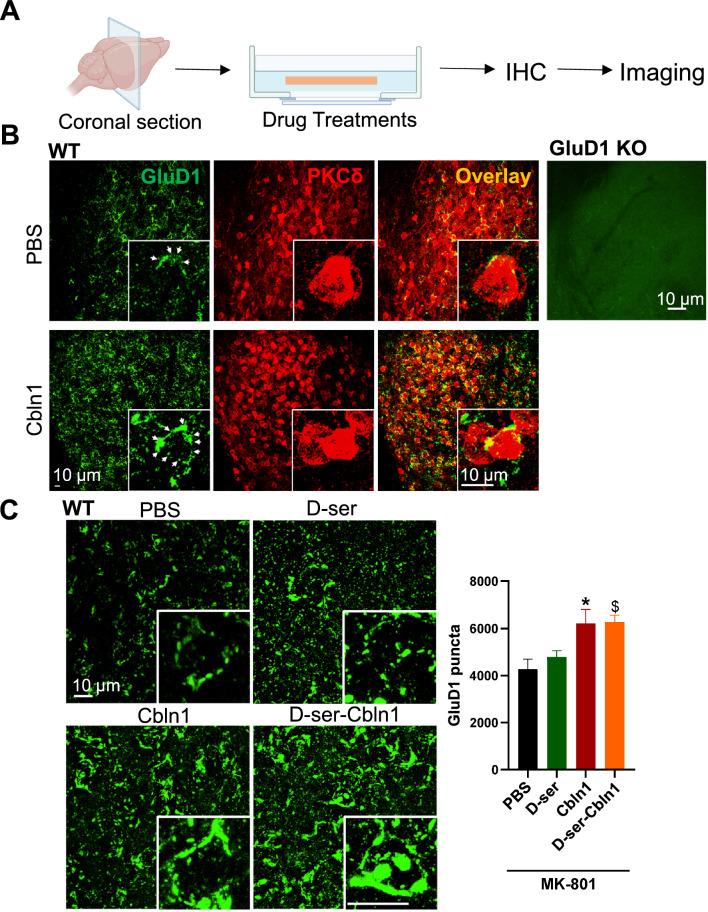
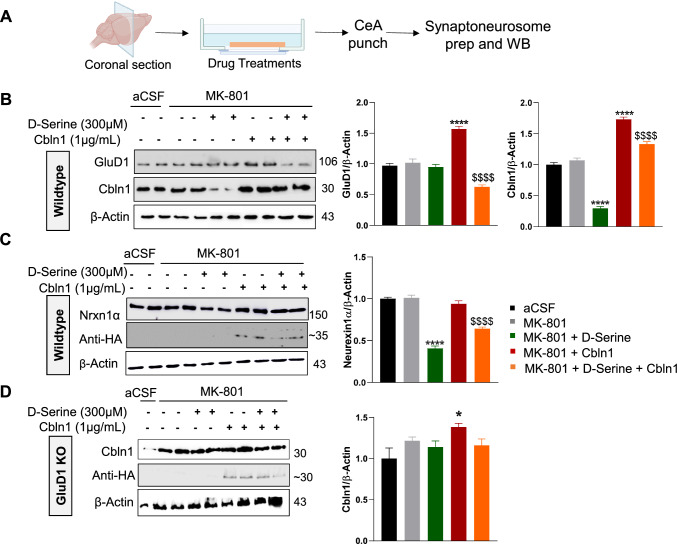
Ionotropic glutamate receptors (iGluRs) mediate fast excitatory neurotransmission in the nervous system. In addition to NMDA receptor co-agonists, D-serine is a ligand for glutamate delta receptors (GluDs) and interacts with the ligand-binding domain with low affinity. However, D-serine binding does not lead to typical ion channel currents in GluD1 or GluD2 but may contribute to synaptic plasticity. In the developing brain, D-serine binding to GluD2 facilitates long-term depression at parallel fiber-Purkinje cell synapses. However, the influence of D-serine on GluD1's interaction with its amino terminal domain synaptogenic ligand Cbln1 and its subsequent impact on synaptic function and behavior remains unexplored. Here, we found that D-serine inhibited the interaction between Cbln1 and GluD1 in an in vitro cell-binding assay. This effect was concentration-dependent, with an IC value of ~ 300 µM. Furthermore, in ex vivo central amygdala (CeA) slices application of recombinant Cbln1 (rCbln1), consistent with its synaptogenic property, produced a robust increase in excitatory neurotransmission and GluD1 expression. This effect of rCbln1 was partially blocked by pre-treatment with D-serine. Finally, in behavioral experiments, we observed that the pro-nociceptive effect of intra-CeA injection of rCbln1 was inhibited by pre-treatment with D-serine. In addition, the antinociceptive effect of intra-CeA rCbln1 injection in an inflammatory pain model was blocked by D-serine. Overall, these results demonstrated that D-serine binding to GluD1 reduces its interaction with Cbln1, which may be relevant to synaptic plasticity and behavior.
离子型谷氨酸受体(iGluRs)介导神经系统中的快速兴奋性神经传递。除了NMDA受体共激动剂外,D-丝氨酸是谷氨酸δ受体(GluDs)的配体,并以低亲和力与配体结合结构域相互作用。然而,D-丝氨酸结合不会在GluD1或GluD2中导致典型的离子通道电流,但可能有助于突触可塑性。在发育中的大脑中,D-丝氨酸与GluD2的结合促进平行纤维-浦肯野细胞突触处的长时程抑制。然而,D-丝氨酸对GluD1与其氨基末端结构域突触生成配体Cbln1相互作用的影响及其随后对突触功能和行为的影响仍未得到探索。在这里,我们发现在体外细胞结合试验中,D-丝氨酸抑制了Cbln1与GluD1之间的相互作用。这种效应是浓度依赖性的,IC值约为300μM。此外,在离体中央杏仁核(CeA)切片中应用重组Cbln1(rCbln1),与其突触生成特性一致,可使兴奋性神经传递和GluD1表达显著增加。rCbln1的这种效应被D-丝氨酸预处理部分阻断。最后,在行为实验中,我们观察到CeA内注射rCbln1的促伤害感受作用被D-丝氨酸预处理所抑制。此外,在炎症疼痛模型中,CeA内注射rCbln1的抗伤害感受作用被D-丝氨酸阻断。总体而言,这些结果表明,D-丝氨酸与GluD1的结合降低了其与Cbln1的相互作用,这可能与突触可塑性和行为有关。