Howard Hughes Medical Institute, Stanford University, Stanford, United States.
Department of Molecular and Cellular Physiology, Stanford University, Stanford, United States.
Elife. 2022 Oct 7;11:e78649. doi: 10.7554/eLife.78649.
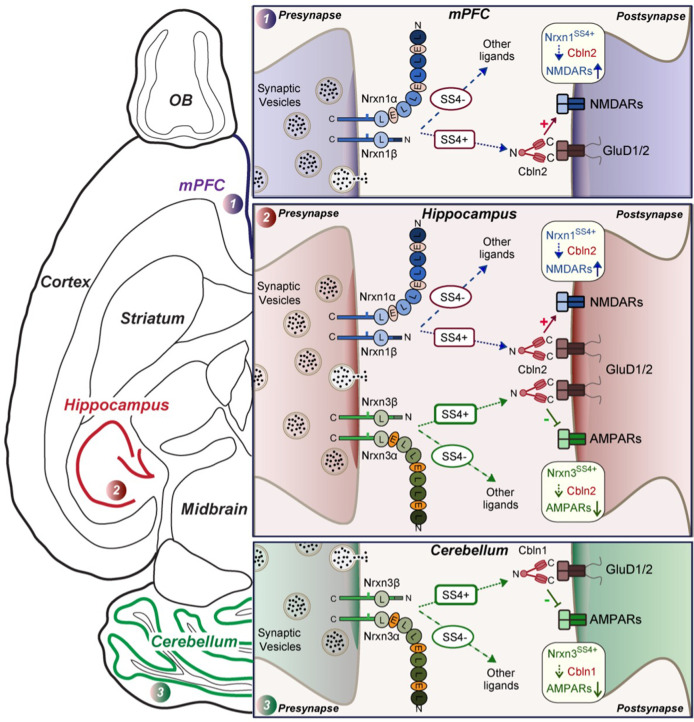
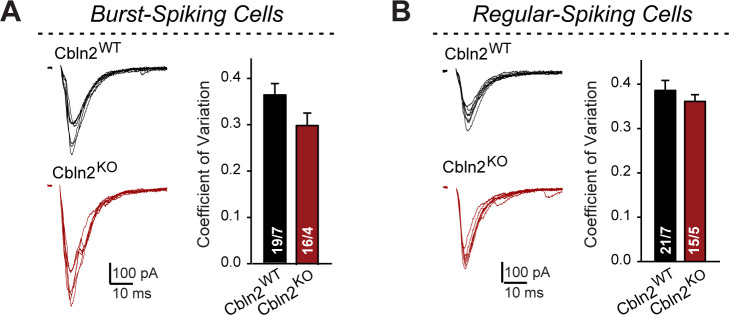
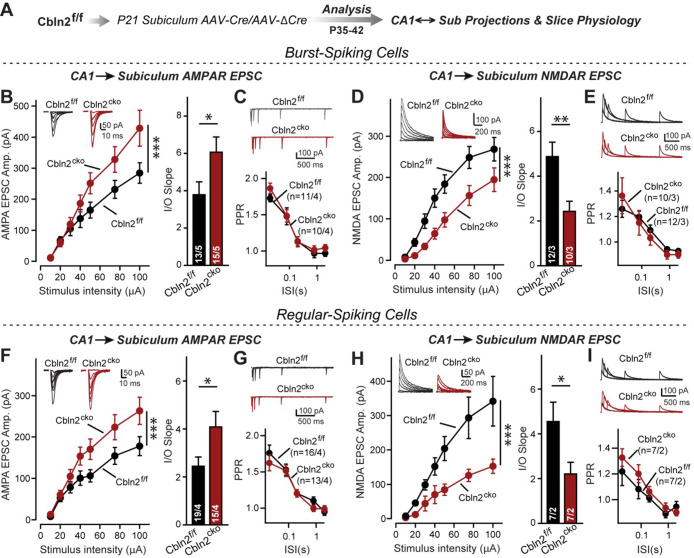
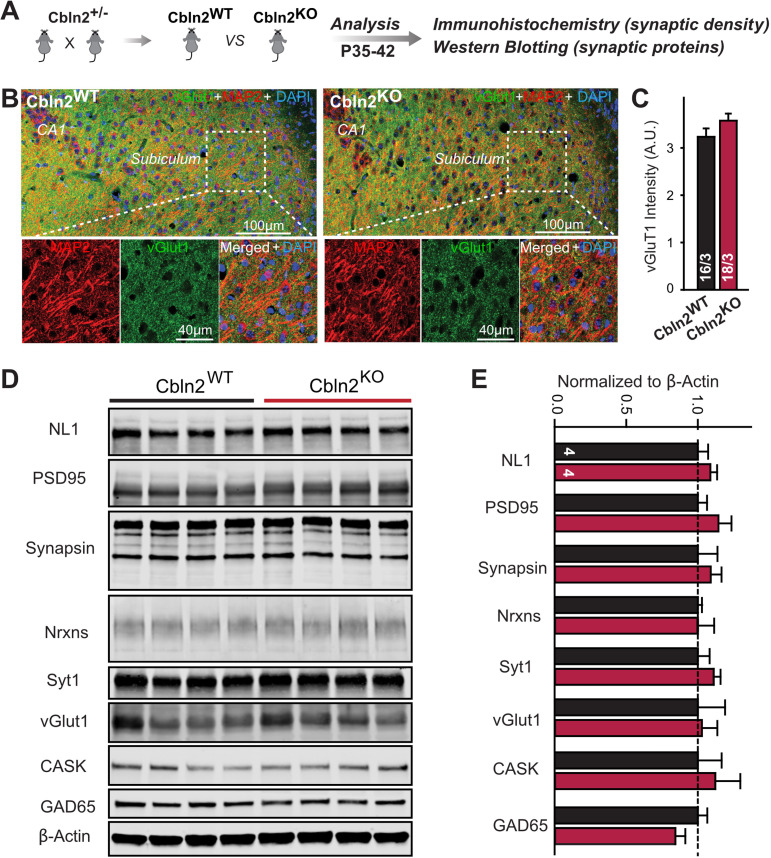
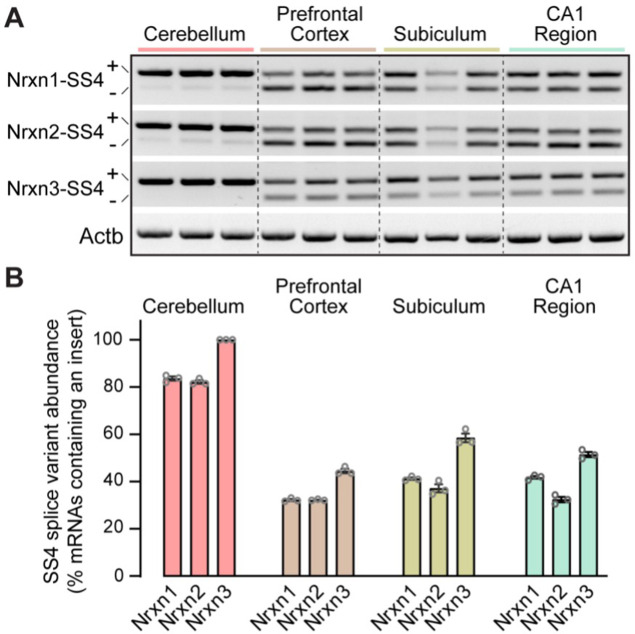
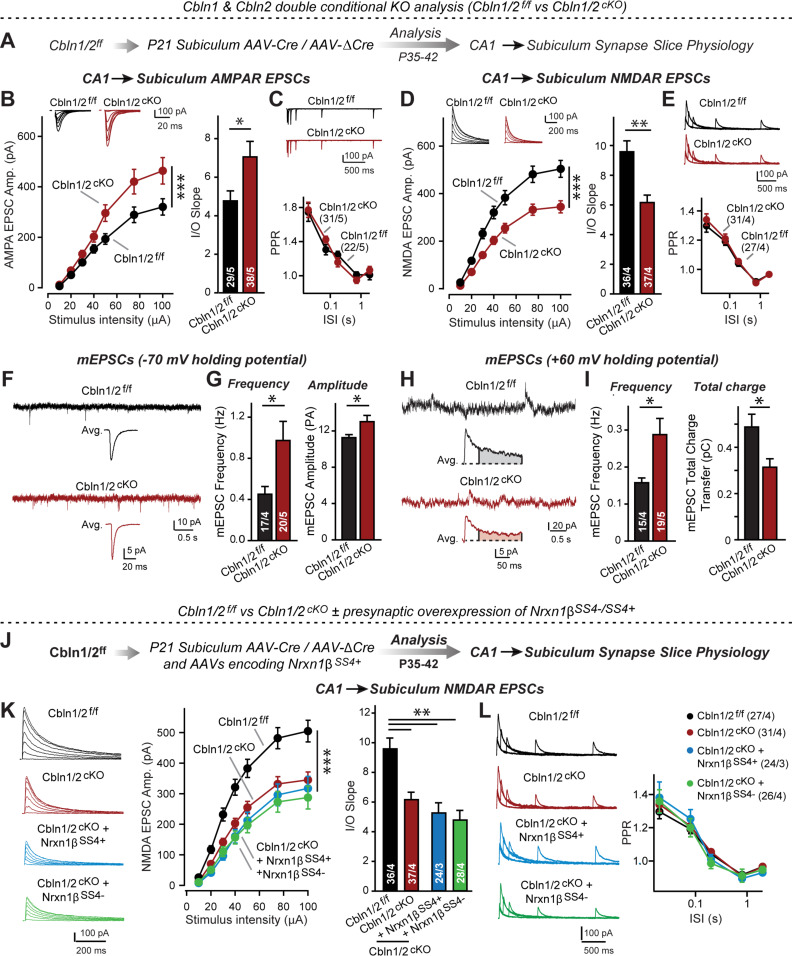
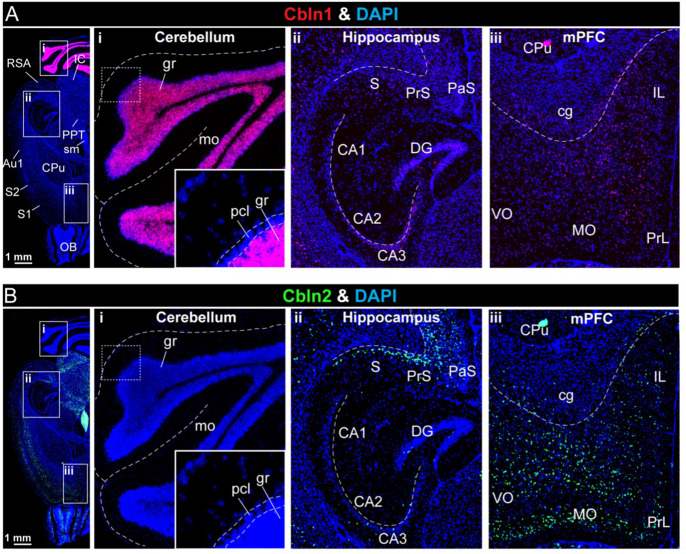
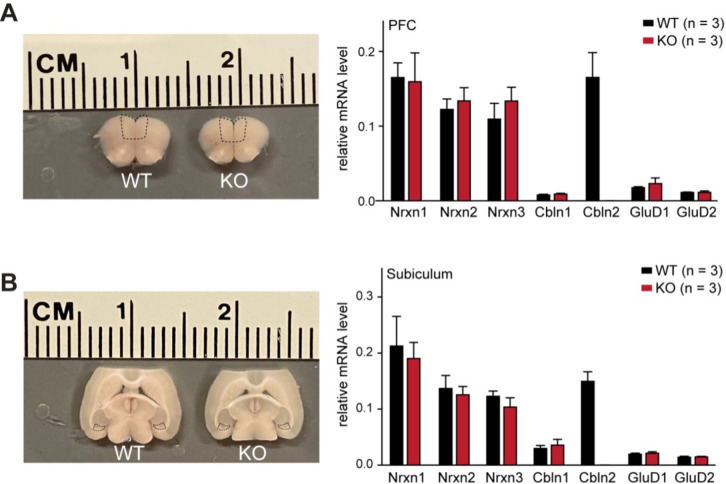
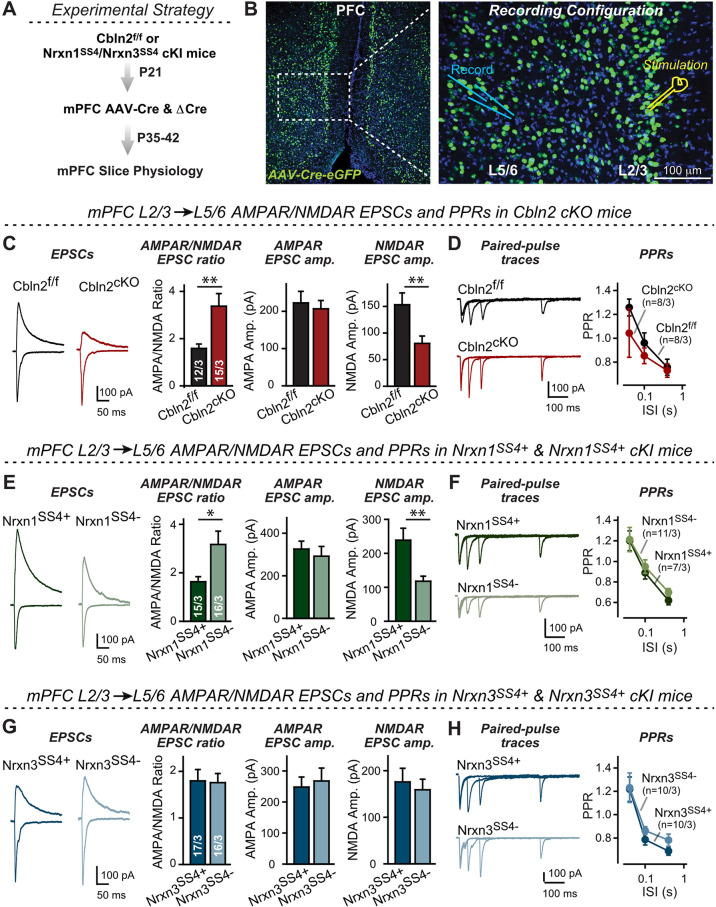
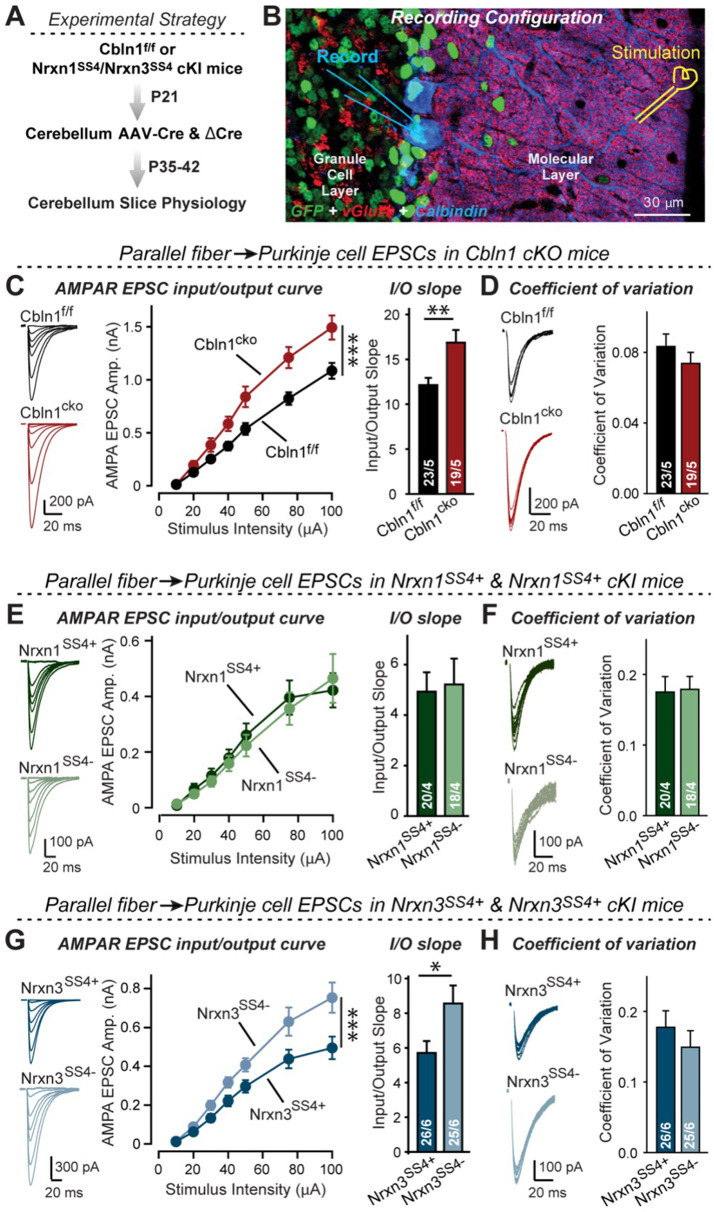
At CA1→subiculum synapses, alternatively spliced neurexin-1 (Nrxn1) and neurexin-3 (Nrxn3) enhance NMDA-receptors and suppress AMPA-receptors, respectively, without affecting synapse formation. Nrxn1 and Nrxn3 act by binding to secreted cerebellin-2 (Cbln2) that in turn activates postsynaptic GluD1 receptors. Whether neurexin-Cbln2-GluD1 signaling has additional functions besides regulating NMDA- and AMPA-receptors, and whether such signaling performs similar roles at other synapses, however, remains unknown. Here, we demonstrate using constitutive Cbln2 deletions in mice that at CA1→subiculum synapses, Cbln2 performs no additional developmental roles besides regulating AMPA- and NMDA-receptors. Moreover, low-level expression of functionally redundant Cbln1 did not compensate for a possible synapse-formation function of Cbln2 at CA1→subiculum synapses. In exploring the generality of these findings, we examined the prefrontal cortex where Cbln2 was recently implicated in spinogenesis, and the cerebellum where Cbln1 is known to regulate parallel-fiber synapses. In the prefrontal cortex, Nrxn1-Cbln2 signaling selectively controlled NMDA-receptors without affecting spine or synapse numbers, whereas Nrxn3-Cbln2 signaling had no apparent role. In the cerebellum, conversely, Nrxn3-Cbln1 signaling regulated AMPA-receptors, whereas now Nrxn1-Cbln1 signaling had no manifest effect. Thus, Nrxn1- and Nrxn3-Cbln1/2 signaling complexes differentially control NMDA- and AMPA-receptors in different synapses in diverse neural circuits without regulating synapse or spine formation.
在 CA1→subiculum 突触中,交替拼接的神经连接蛋白 1(Nrxn1)和神经连接蛋白 3(Nrxn3)分别增强 NMDA 受体并抑制 AMPA 受体,而不影响突触形成。Nrxn1 和 Nrxn3 通过与分泌的小脑蛋白 2(Cbln2)结合起作用,Cbln2 反过来激活突触后 GluD1 受体。神经连接蛋白-Cbln2-GluD1 信号是否具有调节 NMDA 和 AMPA 受体以外的其他功能,以及这种信号是否在其他突触中发挥类似作用,目前尚不清楚。在这里,我们使用小鼠中的组成型 Cbln2 缺失来证明,在 CA1→subiculum 突触中,Cbln2 除了调节 AMPA 和 NMDA 受体之外,没有其他发育作用。此外,功能冗余的 Cbln1 的低水平表达并不能补偿 Cbln2 在 CA1→subiculum 突触中可能的突触形成功能。在探索这些发现的普遍性时,我们检查了前额叶皮层,最近有研究表明 Cbln2 参与了 spinogenesis,以及小脑,已知 Cbln1 调节平行纤维突触。在前额叶皮层中,Nrxn1-Cbln2 信号选择性地控制 NMDA 受体,而不影响棘突或突触数量,而 Nrxn3-Cbln2 信号没有明显作用。相反,在小脑中,Nrxn3-Cbln1 信号调节 AMPA 受体,而现在 Nrxn1-Cbln1 信号没有明显影响。因此,Nrxn1 和 Nrxn3-Cbln1/2 信号复合物在不同的神经回路中的不同突触中差异地控制 NMDA 和 AMPA 受体,而不调节突触或棘突形成。