Peterson Jennifer M, Leclair Valérie, Oyebode Olumide E, Herzallah Dema M, Nestor-Kalinoski Andrea L, Morais Jose, Zahedi René P, Alamr Mazen, Di Battista John A, Hudson Marie
Department of Exercise and Rehabilitative Sciences, The University of Toledo, 2801 W. Bancroft St., MS 119, Toledo, OH, 43606, USA.
Division of Rheumatology, Department of Medicine, McGill University, Montreal, QC, Canada.
Inflamm Res. 2025 Jan 31;74(1):31. doi: 10.1007/s00011-025-01996-8.
Idiopathic inflammatory myopathies (IIM) are a heterogeneous group of inflammatory muscle disorders of unknown etiology. It is postulated that mitochondrial dysfunction and protein aggregation in skeletal muscle contribute to myofiber degeneration. However, molecular pathways that lead to protein aggregation in skeletal muscle are not well defined.
Here we have isolated membrane-bound organelles (e.g., nuclei, mitochondria, sarcoplasmic/endoplasmic reticulum, Golgi apparatus, and plasma membrane) from muscle biopsies of normal (n = 3) and muscle disease patients (n = 11). Of the myopathy group, 10 patients displayed mitochondrial abnormalities (IIM (n = 9); mitochondrial myopathy (n = 1)), and one IIM patient did not show mitochondrial abnormalities (polymyositis).
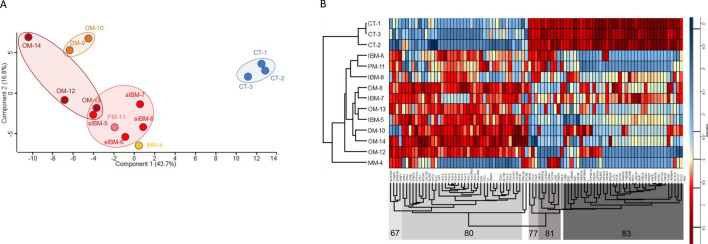
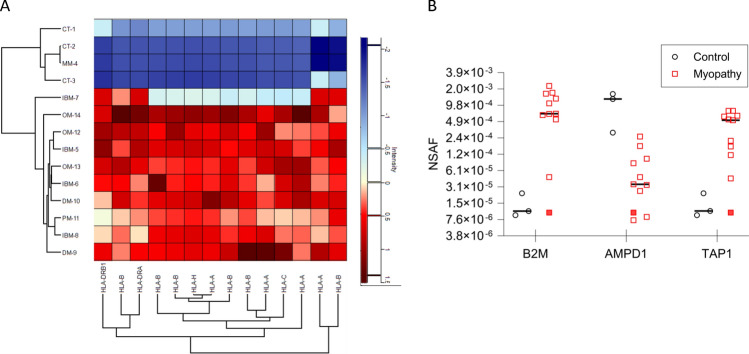
Global proteomic analysis was performed using an Orbitrap Fusion mass spectrometer. Upon unsupervised clustering, normal and mitochondrial myopathy muscle samples clustered separately from IIM samples.
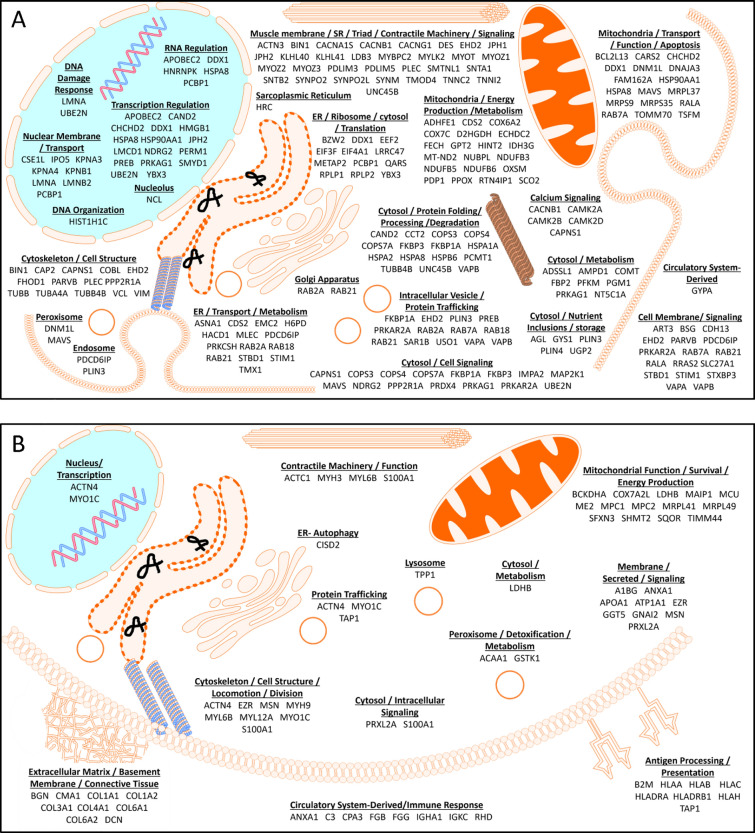
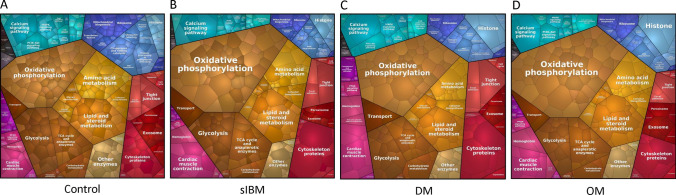
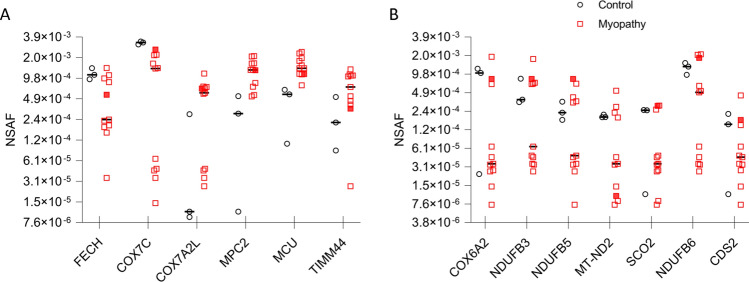
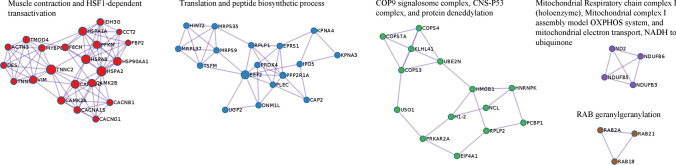
We have confirmed previously known protein alterations in IIM and identified several new ones. For example, we found differential expression of (i) nuclear proteins that control cell division, transcription, RNA regulation, and stability, (ii) ER and Golgi proteins involved in protein folding, degradation, and protein trafficking in the cytosol, and (iii) mitochondrial proteins involved in energy production/metabolism and alterations in cytoskeletal and contractile machinery of the muscle.
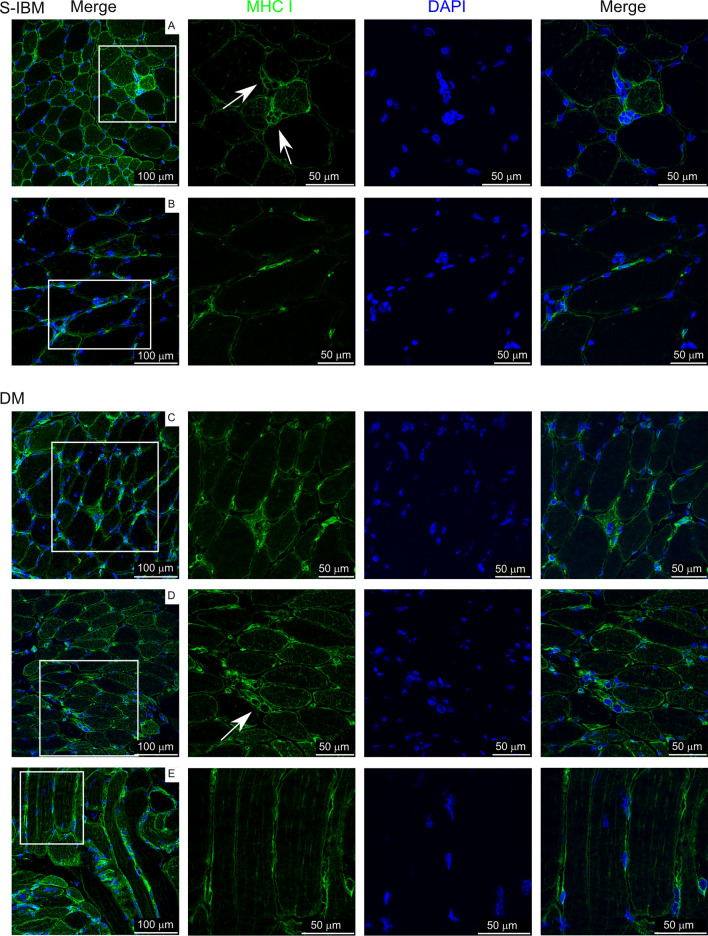
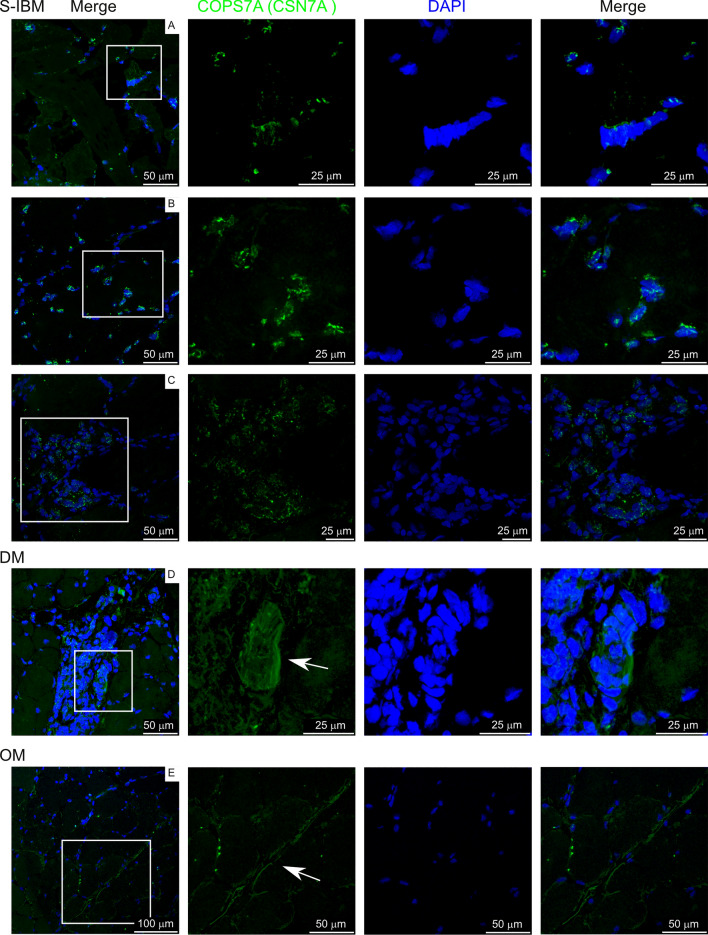
Our data demonstrates that molecular alterations are not limited to protein aggregations in the cytosol (inclusions) and occur in nuclear, mitochondrial, and membrane compartments of IIM skeletal muscle.
特发性炎性肌病(IIM)是一组病因不明的异质性炎性肌肉疾病。据推测,骨骼肌中的线粒体功能障碍和蛋白质聚集会导致肌纤维变性。然而,导致骨骼肌中蛋白质聚集的分子途径尚未明确。
我们从正常(n = 3)和肌肉疾病患者(n = 11)的肌肉活检中分离出膜结合细胞器(如细胞核、线粒体、肌浆网/内质网、高尔基体和质膜)。在肌病组中,10例患者表现出线粒体异常(IIM(n = 9);线粒体肌病(n = 1)),1例IIM患者未表现出线粒体异常(多发性肌炎)。
使用Orbitrap Fusion质谱仪进行全局蛋白质组分析。在无监督聚类分析中,正常和线粒体肌病肌肉样本与IIM样本分别聚类。
我们证实了IIM中先前已知的蛋白质改变,并鉴定出了几种新的改变。例如,我们发现:(i)控制细胞分裂、转录、RNA调节和稳定性的核蛋白表达存在差异;(ii)参与蛋白质折叠、降解和胞质溶胶中蛋白质运输的内质网和高尔基体蛋白存在差异;(iii)参与能量产生/代谢的线粒体蛋白以及肌肉细胞骨架和收缩机制的改变存在差异。
我们的数据表明,分子改变不仅限于胞质溶胶中的蛋白质聚集(包涵体),还发生在IIM骨骼肌的细胞核、线粒体和膜区室中。