
赞比亚和南非客户在接受艾滋病毒治疗的头六个月中的经历与偏好:PREFER研究横断面基线调查结果
Experiences and Preferences in Zambia and South Africa for Delivery of HIV Treatment During a Client's First Six Months: Results of the PREFER Study's Cross-Sectional Baseline Survey.
作者信息
Mutanda Nyasha, Morgan Allison, Kamanga Aniset, Sande Linda, Ntjikelane Vinolia, Maskew Mhairi, Haimbe Prudence, Lumano-Mulenga Priscilla, Rosen Sydney, Scott Nancy
机构信息
Health Economics and Epidemiology Research Office, Faculty of Health Sciences, University of the Witwatersrand, Johannesburg, South Africa.
Department of Global Health, Boston University School of Public Health, Boston, USA.
出版信息
AIDS Behav. 2025 Jun;29(6):1713-1728. doi: 10.1007/s10461-025-04640-y. Epub 2025 Feb 1.
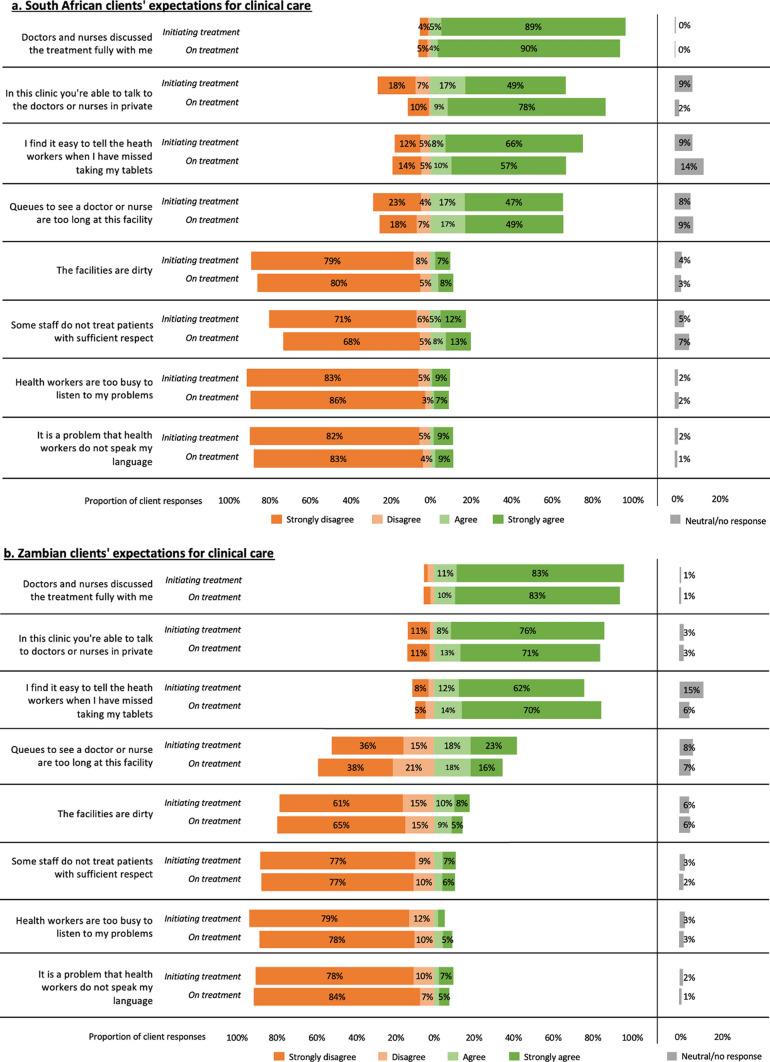
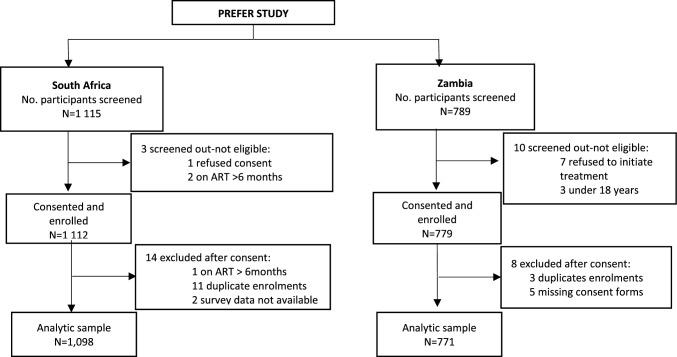
Disengagement from antiretroviral therapy (ART) is highest in the early treatment period (≤ 6 months after initiation/re-initiation), but low intensity models designed to increase retention generally exclude these clients. We describe client preferences for HIV service delivery in the early treatment period. From 9/2022 to 6/2023, we surveyed adult clients who were initiating or on ART for ≤ 6 months at primary health facilities in South Africa and Zambia. We collected data on experiences with and preferences for HIV treatment. We enrolled 1,098 participants in South Africa (72% female, median age 33) and 771 in Zambia (67% female, median age 32), 38% and 34% of whom were initiating/re-initiating ART in each country, respectively. While clients expressed varied preferences, most participants (94% in South Africa, 87% in Zambia) were not offered choices regarding service delivery. 82% of participants in South Africa and 36% in Zambia reported receiving a 1-month supply of medication at their most recent visit; however, South African participants preferred 2- or 3-month dispensing (69%), while Zambian participants preferred 3-or 6-month dispensing (85%). Many South African participants (65%) would prefer to collect medication in community settings, while Zambian participants (70%) preferred clinic-based collection. Half of participants desired more one-on-one counselling and health information. Most participants reported positive experiences with providers, but long waiting queues were reported by South African participants.During the first six months on ART, many clients would prefer less frequent clinic visits, longer dispensing intervals, and frequent, high-quality counselling. Care models for the early treatment period should reflect these preferences.Registration: Clinicaltrials.gov NCT05454839, Clinicaltrials.gov NCT05454852.
在抗逆转录病毒治疗(ART)的早期阶段(开始/重新开始治疗后的≤6个月),脱离治疗的情况最为严重,但旨在提高治疗依从性的低强度模式通常将这些患者排除在外。我们描述了患者在治疗早期对艾滋病毒服务提供方式的偏好。2022年9月至2023年6月,我们对南非和赞比亚初级卫生保健机构中开始接受ART治疗或接受ART治疗≤6个月的成年患者进行了调查。我们收集了有关艾滋病毒治疗经历和偏好的数据。我们在南非招募了1098名参与者(72%为女性,中位年龄33岁),在赞比亚招募了771名参与者(67%为女性,中位年龄32岁),每个国家分别有38%和34%的参与者开始/重新开始接受ART治疗。虽然患者表达了不同的偏好,但大多数参与者(南非为94%,赞比亚为87%)在服务提供方面没有被提供选择。南非82%的参与者和赞比亚36%的参与者报告说,在他们最近一次就诊时收到了为期1个月的药物供应;然而,南非参与者更喜欢2个月或3个月的配药方式(69%),而赞比亚参与者更喜欢3个月或6个月的配药方式(85%)。许多南非参与者(65%)更愿意在社区环境中领取药物,而赞比亚参与者(70%)更喜欢在诊所领取。一半的参与者希望获得更多一对一的咨询和健康信息。大多数参与者报告与医护人员的经历是积极的,但南非参与者报告说等待队伍很长。在接受ART治疗的前六个月中,许多患者更喜欢减少就诊频率、延长配药间隔,并获得频繁、高质量的咨询。治疗早期阶段的护理模式应反映这些偏好。注册信息:Clinicaltrials.gov NCT05454839,Clinicaltrials.gov NCT05454852。
 Zotero 插件