Rosen Bruce, Miaari Sami
Myers-JDC-Brookdale Institute, Jerusalem, Israel.
The Hebrew University, Jerusalem, Israel.
Isr J Health Policy Res. 2025 Feb 3;14(1):7. doi: 10.1186/s13584-024-00663-3.
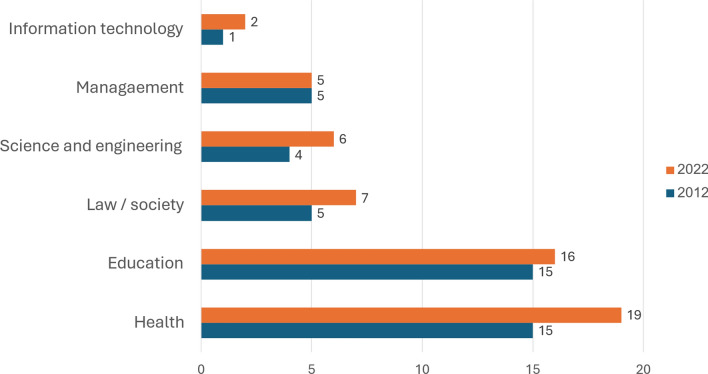
Israel is a multiethnic society with a population of 9.8 million at the end of 2023. Israeli Arabs (i.e., Arab Palestinian citizens of Israel) account for 21% of the Israel's overall population, 22% of its working age population and 16% of the employed population. This study has several objectives: (1) To provide an overview of the current representation of Israeli Arabs in four key health care professions (medicine, nursing, dentistry, and pharmacy) in terms of employment, licensure, and professional studies; (2) To document changes in those parameters over the past decade, subject to limitations of data availability; (3) To provide a broader context on the employment of Israeli Arabs; (4) To explore the policy implications of the key findings.
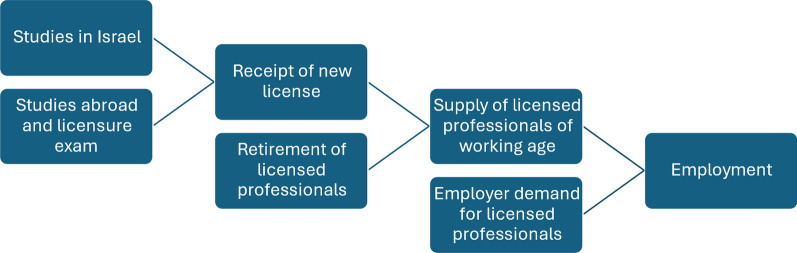
Estimates of employment levels are based on the Labor Force Survey (LFS) of the Central Bureau of Statistics (CBS). Data on licensure (i.e., professional qualification) and place of professional studies were extracted from the Ministry of Health report series entitled "The Health Care Professions". Data on enrollment in degree programs in Israel was provided by the Council of Higher Education. Important background information was elicited from relevant policy documents and policy experts.
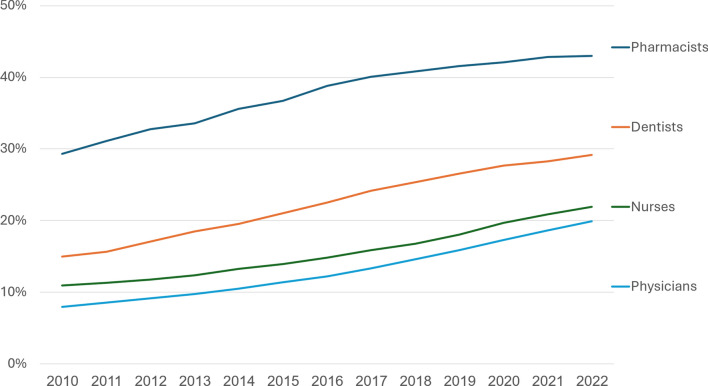
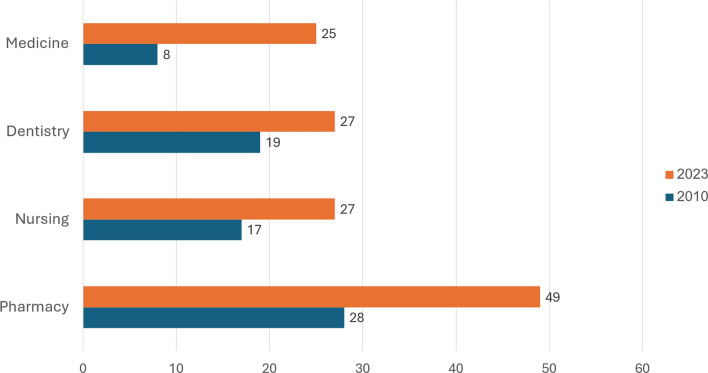
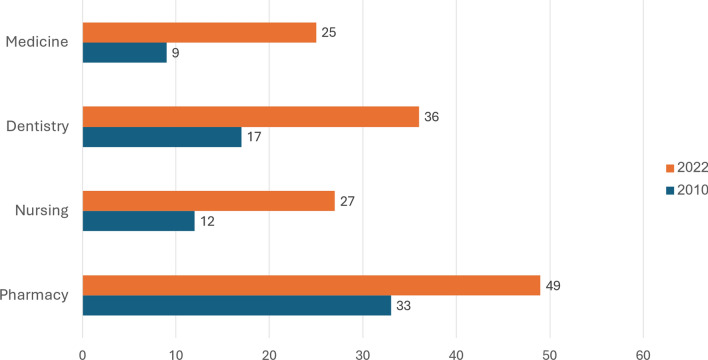
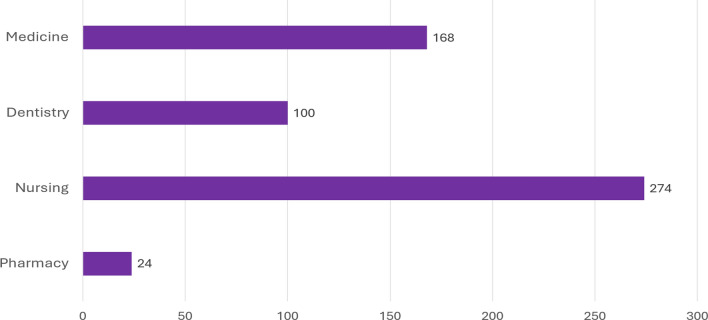
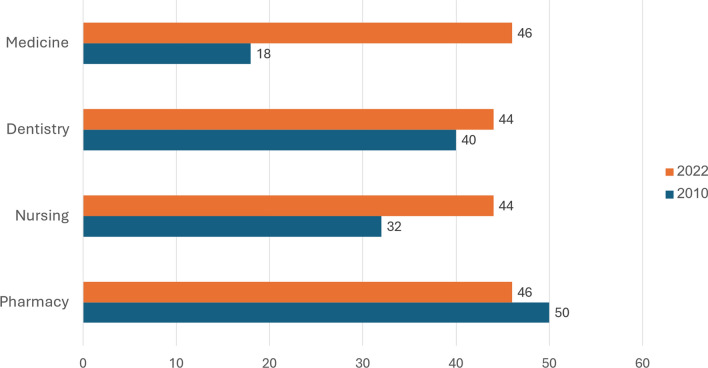
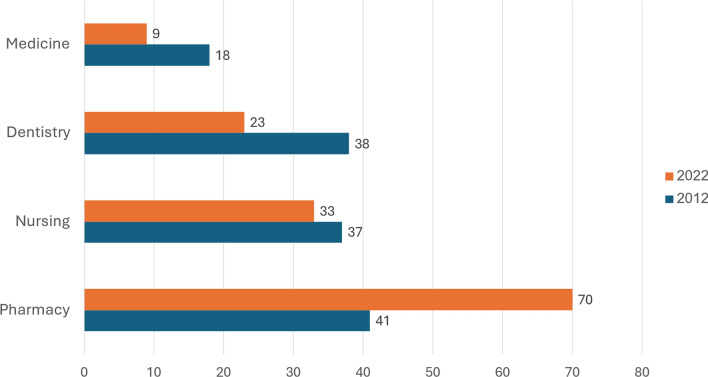
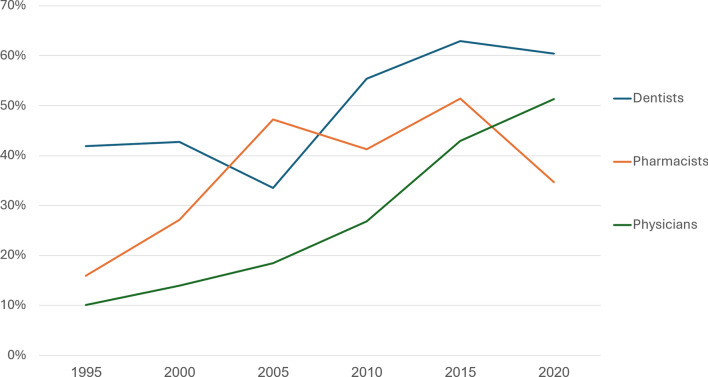
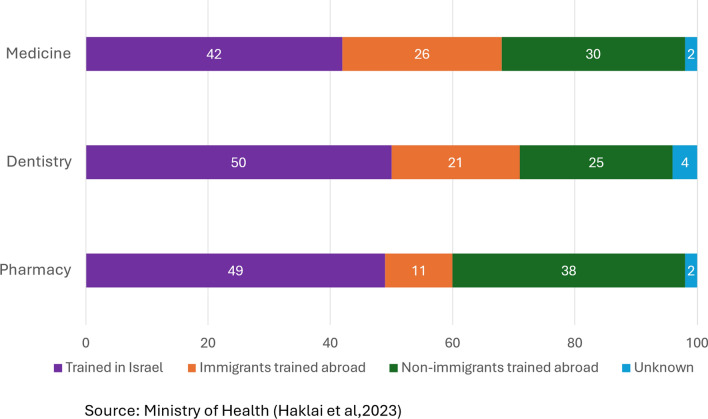
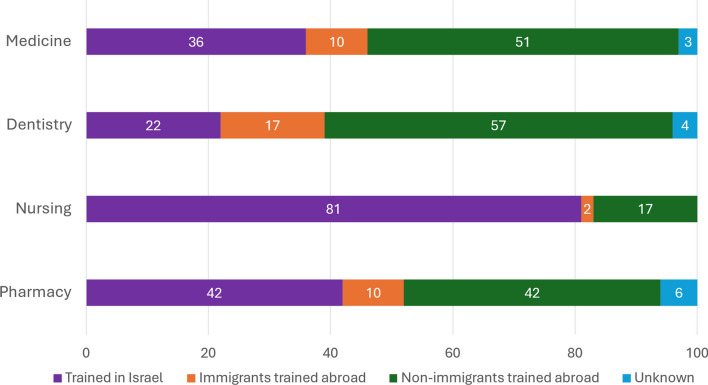
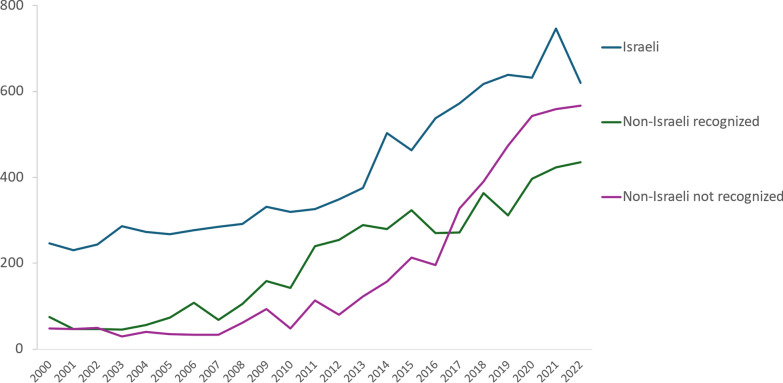
In 2023, among employed Israelis up to age 67, Arabs constituted approximately one-quarter of Israel's physicians (25%), nurses (27%), and dentists (27%), and half of Israel's pharmacists (49%). These percentages are substantially higher than they were in 2010, with the increase being particularly marked in the case of physicians (25% versus 8%). The number of new licenses granted annually increased significantly between 2010 and 2022 for both Arabs and Jews in each of the professions covered. The percentage of newly licensed professionals who are Arab increased substantially among physicians and nurses, while remaining stable among dentists and pharmacists. In medicine, dentistry, and pharmacy, many of the licensed Arab health professionals had studied outside of Israel; this phenomenon also exists for nursing but is less widespread there. In the 2022/3 academic year, the percentage of first-degree students in Israeli colleges and universities who were Arab was 70% in pharmacy, 33% in nursing, 23% in dentistry, and 9% in medicine. Between 2012/3 and 2022/3 the percentage of first-degree students who are Arab increased substantially for pharmacy, declined slightly for nursing, and declined substantially for medicine and dentistry.
Arab professionals play a substantial and recently increased role in the provision of health care services in Israel. It is important to recognize, appreciate, and maintain this substantial role. Moreover, its potential as a model for sectors other than health care should be explored. To build on achievements to date, and to promote continued progress, policymakers should expand access to health professional education within Israel, upgrade the skills of graduates of non-Israeli universities, promote diversity in leadership positions and key specialties, and expand specialty care services in Arab localities.
以色列是一个多民族社会,截至2023年底人口为980万。以色列阿拉伯人(即具有以色列公民身份的阿拉伯巴勒斯坦人)占以色列总人口的21%,占劳动年龄人口的22%,占就业人口的16%。本研究有几个目标:(1)概述以色列阿拉伯人目前在四个关键医疗保健专业(医学、护理、牙科和药学)中的就业、执照和专业学习情况;(2)记录过去十年中这些参数的变化,但受数据可得性的限制;(3)提供关于以色列阿拉伯人就业的更广泛背景;(4)探讨主要研究结果的政策含义。
就业水平估计基于中央统计局(CBS)的劳动力调查(LFS)。执照(即专业资格)和专业学习地点的数据取自卫生部题为《医疗保健专业》的报告系列。以色列高等学位课程的入学数据由高等教育委员会提供。重要的背景信息从相关政策文件和政策专家处获取。
2023年,在67岁及以下的就业以色列人中,阿拉伯人占以色列医生的约四分之一(25%)、护士的四分之一(27%)和牙医的四分之一(27%),以及药剂师的一半(49%)。这些百分比远高于2010年,医生的增长尤为显著(25%对8%)。在涵盖的每个专业中,2010年至2022年期间,阿拉伯人和犹太人每年获得的新执照数量都显著增加。新获得执照的专业人员中阿拉伯人的比例在医生和护士中大幅增加,而在牙医和药剂师中保持稳定。在医学、牙科和药学领域,许多获得执照的阿拉伯卫生专业人员在以色列境外学习;护理领域也存在这种现象,但不太普遍。在2022/23学年,以色列学院和大学中阿拉伯籍本科学生的比例在药学专业为70%,护理专业为33%,牙科专业为23%,医学专业为9%。2012/13年至2022/23年期间,阿拉伯籍本科学生的比例在药学专业大幅增加,护理专业略有下降,医学和牙科专业大幅下降。
阿拉伯专业人员在以色列医疗保健服务的提供中发挥着重要且最近有所增加的作用。认识、重视并维持这一重要作用很重要。此外,应探索其作为医疗保健以外其他部门模式的潜力。为了巩固迄今取得的成就并促进持续进步,政策制定者应扩大以色列境内卫生专业教育的机会,提升非以色列大学毕业生的技能,促进领导职位和关键专业的多样性,并在阿拉伯地区扩大专科护理服务。