• 文献检索
  • 文档翻译
  • 深度研究
  • 学术资讯
  • Suppr Zotero 插件Zotero 插件
  • 邀请有礼
  • 套餐&价格
  • 历史记录
应用&插件
Suppr Zotero 插件Zotero 插件浏览器插件Mac 客户端Windows 客户端微信小程序
定价
高级版会员购买积分包购买API积分包
服务
文献检索文档翻译深度研究API 文档MCP 服务
关于我们
关于 Suppr公司介绍联系我们用户协议隐私条款
关注我们

Suppr 超能文献

核心技术专利:CN118964589B侵权必究
粤ICP备2023148730 号-1Suppr @ 2026

文献检索

告别复杂PubMed语法,用中文像聊天一样搜索,搜遍4000万医学文献。AI智能推荐,让科研检索更轻松。

立即免费搜索

文件翻译

保留排版,准确专业,支持PDF/Word/PPT等文件格式,支持 12+语言互译。

免费翻译文档

深度研究

AI帮你快速写综述,25分钟生成高质量综述,智能提取关键信息,辅助科研写作。

立即免费体验

PolyWAG:用于环境DNA的自主过滤水样采集

PolyWAG: Autonomous filtered water sampling for eDNA.

作者信息

Prince Riley, Roy Kai, Jesudason Nathan, Belinga Marc, Field Jacob, Heiesy Dylan, Arvidson Aaron, Menne Torrey, Selker John, Udell Chet

机构信息

OPEnS Lab, Oregon State University, Corvallis, OR, United States.

出版信息

HardwareX. 2024 Dec 30;21:e00617. doi: 10.1016/j.ohx.2024.e00617. eCollection 2025 Mar.

DOI:10.1016/j.ohx.2024.e00617
PMID:39895911
原文链接:https://pmc.ncbi.nlm.nih.gov/articles/PMC11783023/
Abstract

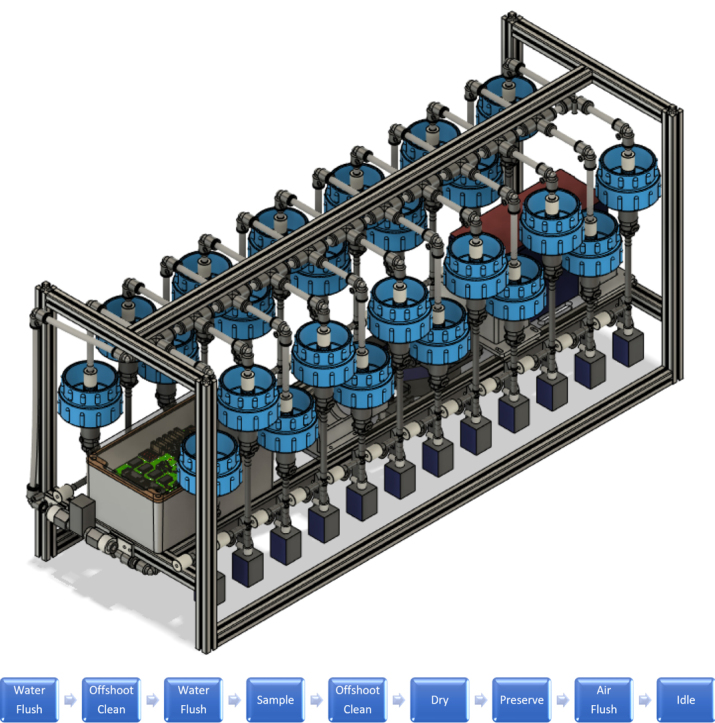
Environmental DNA (eDNA) is an ideal way of researching aquatic environments and determining what species are present in an area the biodiversity of an area, and if any invasive or endangered species are present. Traditional sampling of eDNA consists of manually filtering water, which is labor and cost-intensive for remote locations. Furthermore, commercialized solutions are either expensive or require a field operator to function. We have built a battery-powered eDNA sampler capable of autonomous multi-sampling for a greatly reduced price compared to existing technologies. Environmental DNA collection contains 3 main components: environmental DNA must be preserved, the filtered volume must be accurate, and there must be no cross-contamination between samples. The sampler operates in this way separating eDNA via filters, preserving DNA, and recording the filtered volume per sample. Our PolyWAG eDNA sampler system is a water sampling device that collects DNA samples via 47 mm filter and provides a non-invasive, safe and autonomous means of eDNA collection. The sampler can hold 24 filters and is designed to be easily replaced and reusable. A browser application is used for real-time monitoring, scheduling tasks, and data logging for time, pressure, flow, and filtered volume. Additionally, the sampler design is openly published, modular and is constantly being tested to help us optimize our software and hardware to give us the best results. The 13-step sampling sequence helps reduce cross contamination significantly. Our machine can be deployed for an extended period. It is completely autonomous and costs around $3800 for components or $6000 including labor.

摘要

环境DNA(eDNA)是研究水生环境、确定某一区域存在哪些物种、该区域生物多样性以及是否存在任何入侵物种或濒危物种的理想方法。传统的eDNA采样包括手动过滤水,对于偏远地区来说,这既耗费人力又成本高昂。此外,商业化解决方案要么昂贵,要么需要现场操作人员来操作。我们制造了一种电池供电的eDNA采样器,与现有技术相比,它能够以大幅降低的价格进行自主多次采样。环境DNA采集包含3个主要组成部分:环境DNA必须得到保存,过滤体积必须准确,并且样品之间不能有交叉污染。采样器通过过滤器分离eDNA、保存DNA并记录每个样品的过滤体积,以此方式运行。我们的PolyWAG eDNA采样器系统是一种水采样设备,它通过47毫米过滤器收集DNA样本,并提供一种非侵入性、安全且自主的eDNA采集方式。该采样器可容纳24个过滤器,设计易于更换且可重复使用。一个浏览器应用程序用于实时监测、安排任务以及记录时间、压力、流量和过滤体积的数据。此外,采样器的设计已公开,具有模块化特点,并且一直在进行测试,以帮助我们优化软件和硬件,从而获得最佳结果。13步采样序列有助于显著减少交叉污染。我们的机器可以长时间部署。它完全自主运行,组件成本约为3800美元,包括人工在内则为6000美元左右。
https://cdn.ncbi.nlm.nih.gov/pmc/blobs/9027/11783023/3602d0e586f3/gr108.jpg
https://cdn.ncbi.nlm.nih.gov/pmc/blobs/9027/11783023/3f2183f0e684/ga1.jpg
https://cdn.ncbi.nlm.nih.gov/pmc/blobs/9027/11783023/d4c4b62e3097/gr1.jpg
https://cdn.ncbi.nlm.nih.gov/pmc/blobs/9027/11783023/7c336ed8fb25/gr2.jpg
https://cdn.ncbi.nlm.nih.gov/pmc/blobs/9027/11783023/7c5cdfe512d2/gr6.jpg
https://cdn.ncbi.nlm.nih.gov/pmc/blobs/9027/11783023/86adf380f68e/gr7.jpg
https://cdn.ncbi.nlm.nih.gov/pmc/blobs/9027/11783023/f3eb1ab95341/gr8.jpg
https://cdn.ncbi.nlm.nih.gov/pmc/blobs/9027/11783023/3a4f5d58c9b6/gr12.jpg
https://cdn.ncbi.nlm.nih.gov/pmc/blobs/9027/11783023/92ad88bdcbdd/gr13.jpg
https://cdn.ncbi.nlm.nih.gov/pmc/blobs/9027/11783023/7e29a64609d4/gr14.jpg
https://cdn.ncbi.nlm.nih.gov/pmc/blobs/9027/11783023/d6e31312c489/gr17.jpg
https://cdn.ncbi.nlm.nih.gov/pmc/blobs/9027/11783023/25377a1482ff/gr18.jpg
https://cdn.ncbi.nlm.nih.gov/pmc/blobs/9027/11783023/5b74cce68e35/gr19.jpg
https://cdn.ncbi.nlm.nih.gov/pmc/blobs/9027/11783023/f3dd886b1bf0/gr20.jpg
https://cdn.ncbi.nlm.nih.gov/pmc/blobs/9027/11783023/3600959313a7/gr24.jpg
https://cdn.ncbi.nlm.nih.gov/pmc/blobs/9027/11783023/4059022d5971/gr28.jpg
https://cdn.ncbi.nlm.nih.gov/pmc/blobs/9027/11783023/1b1d0fa84821/gr29.jpg
https://cdn.ncbi.nlm.nih.gov/pmc/blobs/9027/11783023/4fdb56138d2a/gr30.jpg
https://cdn.ncbi.nlm.nih.gov/pmc/blobs/9027/11783023/f3284c70d5e4/gr35.jpg
https://cdn.ncbi.nlm.nih.gov/pmc/blobs/9027/11783023/f443d924c7f1/gr36.jpg
https://cdn.ncbi.nlm.nih.gov/pmc/blobs/9027/11783023/c5f213ec5702/gr37.jpg
https://cdn.ncbi.nlm.nih.gov/pmc/blobs/9027/11783023/4bd871bf3788/gr42.jpg
https://cdn.ncbi.nlm.nih.gov/pmc/blobs/9027/11783023/4ebbcfd14351/gr43.jpg
https://cdn.ncbi.nlm.nih.gov/pmc/blobs/9027/11783023/b0c4ae733a1c/gr50.jpg
https://cdn.ncbi.nlm.nih.gov/pmc/blobs/9027/11783023/66f44ec41293/gr51.jpg
https://cdn.ncbi.nlm.nih.gov/pmc/blobs/9027/11783023/508dd75b6be5/gr52.jpg
https://cdn.ncbi.nlm.nih.gov/pmc/blobs/9027/11783023/3f057856895b/gr53.jpg
https://cdn.ncbi.nlm.nih.gov/pmc/blobs/9027/11783023/b5bf18f6c7bf/gr55.jpg
https://cdn.ncbi.nlm.nih.gov/pmc/blobs/9027/11783023/5656f62acb71/gr56.jpg
https://cdn.ncbi.nlm.nih.gov/pmc/blobs/9027/11783023/7ba083f55f6c/gr57.jpg
https://cdn.ncbi.nlm.nih.gov/pmc/blobs/9027/11783023/74006c61e5f0/gr58.jpg
https://cdn.ncbi.nlm.nih.gov/pmc/blobs/9027/11783023/9c4712d66776/gr59.jpg
https://cdn.ncbi.nlm.nih.gov/pmc/blobs/9027/11783023/ed6c39aae972/gr61.jpg
https://cdn.ncbi.nlm.nih.gov/pmc/blobs/9027/11783023/72906fc65ba5/gr62.jpg
https://cdn.ncbi.nlm.nih.gov/pmc/blobs/9027/11783023/88fcfa1b57d4/gr63.jpg
https://cdn.ncbi.nlm.nih.gov/pmc/blobs/9027/11783023/456bd56fff70/gr64.jpg
https://cdn.ncbi.nlm.nih.gov/pmc/blobs/9027/11783023/85786a900e55/gr65.jpg
https://cdn.ncbi.nlm.nih.gov/pmc/blobs/9027/11783023/737e322e6b41/gr66.jpg
https://cdn.ncbi.nlm.nih.gov/pmc/blobs/9027/11783023/3f3f7747971c/gr67.jpg
https://cdn.ncbi.nlm.nih.gov/pmc/blobs/9027/11783023/f3ea0429225c/gr68.jpg
https://cdn.ncbi.nlm.nih.gov/pmc/blobs/9027/11783023/45776104a363/gr69.jpg
https://cdn.ncbi.nlm.nih.gov/pmc/blobs/9027/11783023/c3149d83a3af/gr70.jpg
https://cdn.ncbi.nlm.nih.gov/pmc/blobs/9027/11783023/5ba88da99818/gr71.jpg
https://cdn.ncbi.nlm.nih.gov/pmc/blobs/9027/11783023/54ab006d3eb0/gr72.jpg
https://cdn.ncbi.nlm.nih.gov/pmc/blobs/9027/11783023/fefd6fbe828c/gr73.jpg
https://cdn.ncbi.nlm.nih.gov/pmc/blobs/9027/11783023/cdfce8d511ca/gr74.jpg
https://cdn.ncbi.nlm.nih.gov/pmc/blobs/9027/11783023/880ebd45a30f/gr75.jpg
https://cdn.ncbi.nlm.nih.gov/pmc/blobs/9027/11783023/99e871d38e69/gr76.jpg
https://cdn.ncbi.nlm.nih.gov/pmc/blobs/9027/11783023/e919780b3149/gr78.jpg
https://cdn.ncbi.nlm.nih.gov/pmc/blobs/9027/11783023/32d324c46ea3/gr79.jpg
https://cdn.ncbi.nlm.nih.gov/pmc/blobs/9027/11783023/c82ea4d1a9df/gr80.jpg
https://cdn.ncbi.nlm.nih.gov/pmc/blobs/9027/11783023/486a6f994985/gr84.jpg
https://cdn.ncbi.nlm.nih.gov/pmc/blobs/9027/11783023/a7f25ccb8fc1/gr85.jpg
https://cdn.ncbi.nlm.nih.gov/pmc/blobs/9027/11783023/bf79349b3f18/gr86.jpg
https://cdn.ncbi.nlm.nih.gov/pmc/blobs/9027/11783023/831e9ccc72f8/gr90.jpg
https://cdn.ncbi.nlm.nih.gov/pmc/blobs/9027/11783023/7aeaedf0fde7/gr91.jpg
https://cdn.ncbi.nlm.nih.gov/pmc/blobs/9027/11783023/66b03245c10c/gr92.jpg
https://cdn.ncbi.nlm.nih.gov/pmc/blobs/9027/11783023/53cb855639f5/gr96.jpg
https://cdn.ncbi.nlm.nih.gov/pmc/blobs/9027/11783023/44f3423b17e9/gr102.jpg
https://cdn.ncbi.nlm.nih.gov/pmc/blobs/9027/11783023/3602d0e586f3/gr108.jpg
https://cdn.ncbi.nlm.nih.gov/pmc/blobs/9027/11783023/3f2183f0e684/ga1.jpg
https://cdn.ncbi.nlm.nih.gov/pmc/blobs/9027/11783023/d4c4b62e3097/gr1.jpg
https://cdn.ncbi.nlm.nih.gov/pmc/blobs/9027/11783023/7c336ed8fb25/gr2.jpg
https://cdn.ncbi.nlm.nih.gov/pmc/blobs/9027/11783023/7c5cdfe512d2/gr6.jpg
https://cdn.ncbi.nlm.nih.gov/pmc/blobs/9027/11783023/86adf380f68e/gr7.jpg
https://cdn.ncbi.nlm.nih.gov/pmc/blobs/9027/11783023/f3eb1ab95341/gr8.jpg
https://cdn.ncbi.nlm.nih.gov/pmc/blobs/9027/11783023/3a4f5d58c9b6/gr12.jpg
https://cdn.ncbi.nlm.nih.gov/pmc/blobs/9027/11783023/92ad88bdcbdd/gr13.jpg
https://cdn.ncbi.nlm.nih.gov/pmc/blobs/9027/11783023/7e29a64609d4/gr14.jpg
https://cdn.ncbi.nlm.nih.gov/pmc/blobs/9027/11783023/d6e31312c489/gr17.jpg
https://cdn.ncbi.nlm.nih.gov/pmc/blobs/9027/11783023/25377a1482ff/gr18.jpg
https://cdn.ncbi.nlm.nih.gov/pmc/blobs/9027/11783023/5b74cce68e35/gr19.jpg
https://cdn.ncbi.nlm.nih.gov/pmc/blobs/9027/11783023/f3dd886b1bf0/gr20.jpg
https://cdn.ncbi.nlm.nih.gov/pmc/blobs/9027/11783023/3600959313a7/gr24.jpg
https://cdn.ncbi.nlm.nih.gov/pmc/blobs/9027/11783023/4059022d5971/gr28.jpg
https://cdn.ncbi.nlm.nih.gov/pmc/blobs/9027/11783023/1b1d0fa84821/gr29.jpg
https://cdn.ncbi.nlm.nih.gov/pmc/blobs/9027/11783023/4fdb56138d2a/gr30.jpg
https://cdn.ncbi.nlm.nih.gov/pmc/blobs/9027/11783023/f3284c70d5e4/gr35.jpg
https://cdn.ncbi.nlm.nih.gov/pmc/blobs/9027/11783023/f443d924c7f1/gr36.jpg
https://cdn.ncbi.nlm.nih.gov/pmc/blobs/9027/11783023/c5f213ec5702/gr37.jpg
https://cdn.ncbi.nlm.nih.gov/pmc/blobs/9027/11783023/4bd871bf3788/gr42.jpg
https://cdn.ncbi.nlm.nih.gov/pmc/blobs/9027/11783023/4ebbcfd14351/gr43.jpg
https://cdn.ncbi.nlm.nih.gov/pmc/blobs/9027/11783023/b0c4ae733a1c/gr50.jpg
https://cdn.ncbi.nlm.nih.gov/pmc/blobs/9027/11783023/66f44ec41293/gr51.jpg
https://cdn.ncbi.nlm.nih.gov/pmc/blobs/9027/11783023/508dd75b6be5/gr52.jpg
https://cdn.ncbi.nlm.nih.gov/pmc/blobs/9027/11783023/3f057856895b/gr53.jpg
https://cdn.ncbi.nlm.nih.gov/pmc/blobs/9027/11783023/b5bf18f6c7bf/gr55.jpg
https://cdn.ncbi.nlm.nih.gov/pmc/blobs/9027/11783023/5656f62acb71/gr56.jpg
https://cdn.ncbi.nlm.nih.gov/pmc/blobs/9027/11783023/7ba083f55f6c/gr57.jpg
https://cdn.ncbi.nlm.nih.gov/pmc/blobs/9027/11783023/74006c61e5f0/gr58.jpg
https://cdn.ncbi.nlm.nih.gov/pmc/blobs/9027/11783023/9c4712d66776/gr59.jpg
https://cdn.ncbi.nlm.nih.gov/pmc/blobs/9027/11783023/ed6c39aae972/gr61.jpg
https://cdn.ncbi.nlm.nih.gov/pmc/blobs/9027/11783023/72906fc65ba5/gr62.jpg
https://cdn.ncbi.nlm.nih.gov/pmc/blobs/9027/11783023/88fcfa1b57d4/gr63.jpg
https://cdn.ncbi.nlm.nih.gov/pmc/blobs/9027/11783023/456bd56fff70/gr64.jpg
https://cdn.ncbi.nlm.nih.gov/pmc/blobs/9027/11783023/85786a900e55/gr65.jpg
https://cdn.ncbi.nlm.nih.gov/pmc/blobs/9027/11783023/737e322e6b41/gr66.jpg
https://cdn.ncbi.nlm.nih.gov/pmc/blobs/9027/11783023/3f3f7747971c/gr67.jpg
https://cdn.ncbi.nlm.nih.gov/pmc/blobs/9027/11783023/f3ea0429225c/gr68.jpg
https://cdn.ncbi.nlm.nih.gov/pmc/blobs/9027/11783023/45776104a363/gr69.jpg
https://cdn.ncbi.nlm.nih.gov/pmc/blobs/9027/11783023/c3149d83a3af/gr70.jpg
https://cdn.ncbi.nlm.nih.gov/pmc/blobs/9027/11783023/5ba88da99818/gr71.jpg
https://cdn.ncbi.nlm.nih.gov/pmc/blobs/9027/11783023/54ab006d3eb0/gr72.jpg
https://cdn.ncbi.nlm.nih.gov/pmc/blobs/9027/11783023/fefd6fbe828c/gr73.jpg
https://cdn.ncbi.nlm.nih.gov/pmc/blobs/9027/11783023/cdfce8d511ca/gr74.jpg
https://cdn.ncbi.nlm.nih.gov/pmc/blobs/9027/11783023/880ebd45a30f/gr75.jpg
https://cdn.ncbi.nlm.nih.gov/pmc/blobs/9027/11783023/99e871d38e69/gr76.jpg
https://cdn.ncbi.nlm.nih.gov/pmc/blobs/9027/11783023/e919780b3149/gr78.jpg
https://cdn.ncbi.nlm.nih.gov/pmc/blobs/9027/11783023/32d324c46ea3/gr79.jpg
https://cdn.ncbi.nlm.nih.gov/pmc/blobs/9027/11783023/c82ea4d1a9df/gr80.jpg
https://cdn.ncbi.nlm.nih.gov/pmc/blobs/9027/11783023/486a6f994985/gr84.jpg
https://cdn.ncbi.nlm.nih.gov/pmc/blobs/9027/11783023/a7f25ccb8fc1/gr85.jpg
https://cdn.ncbi.nlm.nih.gov/pmc/blobs/9027/11783023/bf79349b3f18/gr86.jpg
https://cdn.ncbi.nlm.nih.gov/pmc/blobs/9027/11783023/831e9ccc72f8/gr90.jpg
https://cdn.ncbi.nlm.nih.gov/pmc/blobs/9027/11783023/7aeaedf0fde7/gr91.jpg
https://cdn.ncbi.nlm.nih.gov/pmc/blobs/9027/11783023/66b03245c10c/gr92.jpg
https://cdn.ncbi.nlm.nih.gov/pmc/blobs/9027/11783023/53cb855639f5/gr96.jpg
https://cdn.ncbi.nlm.nih.gov/pmc/blobs/9027/11783023/44f3423b17e9/gr102.jpg
https://cdn.ncbi.nlm.nih.gov/pmc/blobs/9027/11783023/3602d0e586f3/gr108.jpg

相似文献

1
PolyWAG: Autonomous filtered water sampling for eDNA.PolyWAG:用于环境DNA的自主过滤水样采集
HardwareX. 2024 Dec 30;21:e00617. doi: 10.1016/j.ohx.2024.e00617. eCollection 2025 Mar.
2
Subsurface automated samplers for eDNA (SASe) for biological monitoring and research.用于生物监测和研究的地下环境DNA自动采样器(SASe)
HardwareX. 2021 Oct 14;10:e00239. doi: 10.1016/j.ohx.2021.e00239. eCollection 2021 Oct.
3
Compact and automated eDNA sampler for in situ monitoring of marine environments.用于海洋环境原位监测的紧凑型自动化 eDNA 采样器。
Sci Rep. 2023 Mar 30;13(1):5210. doi: 10.1038/s41598-023-32310-3.
4
Biodiversity monitoring in remote marine environments: Advancing environmental DNA/RNA sampling workflows.偏远海洋环境中的生物多样性监测:推进环境DNA/RNA采样工作流程。
Mar Environ Res. 2025 Apr;206:107041. doi: 10.1016/j.marenvres.2025.107041. Epub 2025 Feb 26.
5
Field Trials of an Autonomous eDNA Sampler in Lotic Waters.自主式环境DNA采样器在流水水域的现场试验
Environ Sci Technol. 2024 Nov 26;58(47):20942-20953. doi: 10.1021/acs.est.4c04970. Epub 2024 Nov 14.
6
Advances in environmental DNA monitoring: standardization, automation, and emerging technologies in aquatic ecosystems.环境 DNA 监测的进展:水生生态系统中的标准化、自动化和新兴技术。
Sci China Life Sci. 2024 Jul;67(7):1368-1384. doi: 10.1007/s11427-023-2493-5. Epub 2024 Mar 18.
7
An aquatic environmental DNA filtration system to maximize recovery potential and promote filtration approach standardization.一种水生生境 DNA 过滤系统,以最大限度地提高回收潜力并促进过滤方法的标准化。
PeerJ. 2023 Jul 12;11:e15360. doi: 10.7717/peerj.15360. eCollection 2023.
8
Evaluating environmental DNA detection of a rare fish in turbid water using field and experimental approaches.采用野外和实验方法评估浑浊水中稀有鱼类的环境 DNA 检测。
PeerJ. 2024 Jan 2;12:e16453. doi: 10.7717/peerj.16453. eCollection 2024.
9
Comparative Evaluation of Common Materials as Passive Samplers of Environmental DNA.常见材料作为环境 DNA 被动采样器的比较评估。
Environ Sci Technol. 2022 Aug 2;56(15):10798-10807. doi: 10.1021/acs.est.2c02506. Epub 2022 Jul 20.
10
Modeling the Sensitivity of Field Surveys for Detection of Environmental DNA (eDNA).模拟用于检测环境DNA(eDNA)的野外调查的灵敏度
PLoS One. 2015 Oct 28;10(10):e0141503. doi: 10.1371/journal.pone.0141503. eCollection 2015.

引用本文的文献

1
Education and technology synergy in environmental sensing.环境传感中的教育与技术协同作用。
Philos Trans A Math Phys Eng Sci. 2025 Jul 31;383(2302):20240281. doi: 10.1098/rsta.2024.0281.

本文引用的文献

1
Evaluating environmental DNA detection of a rare fish in turbid water using field and experimental approaches.采用野外和实验方法评估浑浊水中稀有鱼类的环境 DNA 检测。
PeerJ. 2024 Jan 2;12:e16453. doi: 10.7717/peerj.16453. eCollection 2024.
2
Compact and automated eDNA sampler for in situ monitoring of marine environments.用于海洋环境原位监测的紧凑型自动化 eDNA 采样器。
Sci Rep. 2023 Mar 30;13(1):5210. doi: 10.1038/s41598-023-32310-3.
3
A multiplex PCR method for the identification of commercially important salmon and trout species (Oncorhynchus and Salmo) in North America.
一种用于鉴定北美的商业重要鲑鱼和鳟鱼品种(Oncorhynchus 和 Salmo)的多重 PCR 方法。
J Food Sci. 2010 Sep;75(7):C595-606. doi: 10.1111/j.1750-3841.2010.01752.x.