
利用纳米技术克服中枢神经系统疾病中的血脑屏障。
Utilization of nanotechnology to surmount the blood-brain barrier in disorders of the central nervous system.
作者信息
Luo Qian, Yang Jiaying, Yang Mei, Wang Yingtong, Liu Yiran, Liu Jixuan, Kalvakolanu Dhan V, Cong Xianling, Zhang Jinnan, Zhang Ling, Guo Baofeng, Duo Yanhong
机构信息
Department of Plastic Surgery, China-Japan Union Hospital, Jilin University, Changchun, 130033, China.
Key Laboratory of Pathobiology, Ministry of Education, And Department of Biomedical Science, College of Basic Medical Sciences, Jilin University, Changchun, 130021, China.
出版信息
Mater Today Bio. 2025 Jan 4;31:101457. doi: 10.1016/j.mtbio.2025.101457. eCollection 2025 Apr.
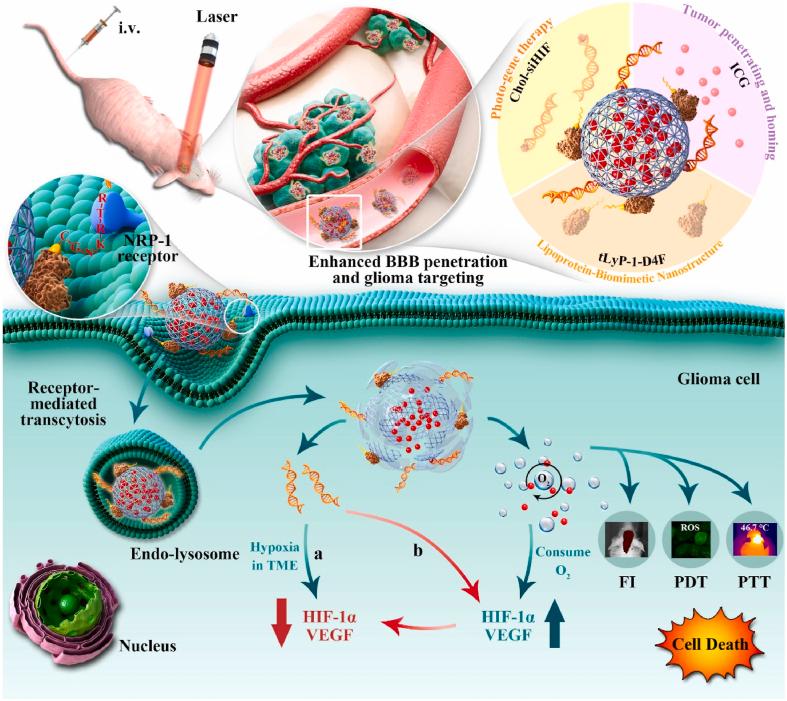
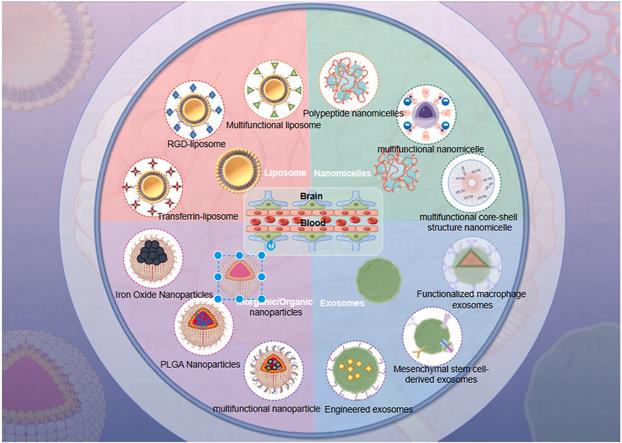
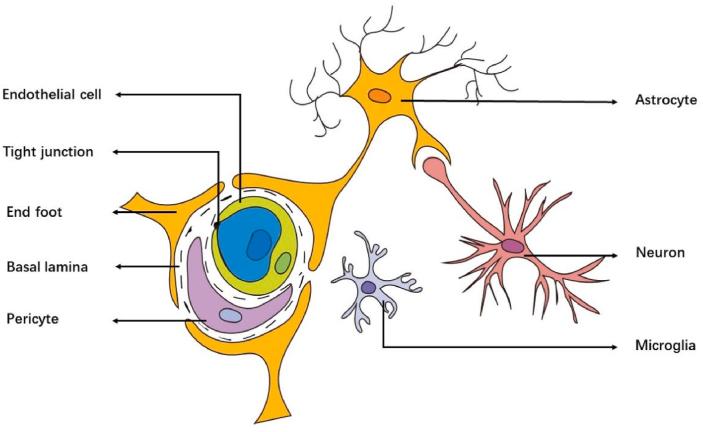
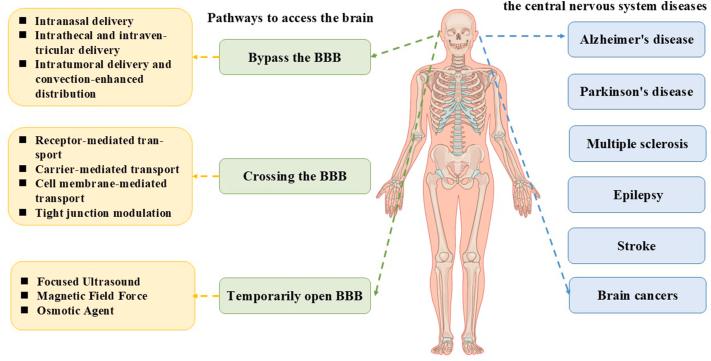
Central nervous system (CNS) diseases are a major cause of disability and death worldwide. Due to the blood-brain barrier (BBB), drug delivery for CNS diseases is extremely challenging. Nano-delivery systems can overcome the limitations of BBB to deliver drugs to the CNS, improve the ability of drugs to target the brain and provide potential therapeutic methods for CNS diseases. At the same time, the choice of different drug delivery methods (bypassing BBB or crossing BBB) can further optimize the therapeutic effect of the nano-drug delivery system. This article reviews the different methods of nano-delivery systems to overcome the way BBB enters the brain. Different kinds of nanoparticles to overcome BBB were discussed in depth.
中枢神经系统(CNS)疾病是全球致残和致死的主要原因。由于血脑屏障(BBB)的存在,中枢神经系统疾病的药物递送极具挑战性。纳米递送系统可以克服血脑屏障的限制,将药物递送至中枢神经系统,提高药物靶向脑部的能力,并为中枢神经系统疾病提供潜在的治疗方法。同时,选择不同的药物递送方式(绕过血脑屏障或穿过血脑屏障)可以进一步优化纳米药物递送系统的治疗效果。本文综述了纳米递送系统克服血脑屏障进入大脑的不同方法。深入讨论了不同种类用于克服血脑屏障的纳米颗粒。
 Zotero 插件