• 文献检索
  • 文档翻译
  • 深度研究
  • 学术资讯
  • Suppr Zotero 插件Zotero 插件
  • 邀请有礼
  • 套餐&价格
  • 历史记录
应用&插件
Suppr Zotero 插件Zotero 插件浏览器插件Mac 客户端Windows 客户端微信小程序
定价
高级版会员购买积分包购买API积分包
服务
文献检索文档翻译深度研究API 文档MCP 服务
关于我们
关于 Suppr公司介绍联系我们用户协议隐私条款
关注我们

Suppr 超能文献

核心技术专利:CN118964589B侵权必究
粤ICP备2023148730 号-1Suppr @ 2026

文献检索

告别复杂PubMed语法,用中文像聊天一样搜索,搜遍4000万医学文献。AI智能推荐,让科研检索更轻松。

立即免费搜索

文件翻译

保留排版,准确专业,支持PDF/Word/PPT等文件格式,支持 12+语言互译。

免费翻译文档

深度研究

AI帮你快速写综述,25分钟生成高质量综述,智能提取关键信息,辅助科研写作。

立即免费体验

皮肤病学中的精神药物 第1部分:抗抑郁药和心境稳定剂

Psychotropic Drugs in Dermatology Part 1: Anti-depressants and Mood Stabilisers.

作者信息

Kenkare Varsha L, Madke Bhushan, Choudhary Ankita, Bose Shiti

机构信息

From the Department of Dermatology, Venereology and Leprosy, Dr. Surya's Skin Clinic, Sainikpuri, Secunderabad, Telangana, India.

Department of Dermatology, Venereology and Leprosy, Jawaharlal Nehru Medical College, Datta Meghe Institute of Higher Education and Research, Sawangi Meghe, Wardha, Maharashtra, India.

出版信息

Indian J Dermatol. 2025 Jan-Feb;70(1):23-37. doi: 10.4103/ijd.ijd_792_23. Epub 2024 Dec 30.

DOI:10.4103/ijd.ijd_792_23
PMID:39896303
原文链接:https://pmc.ncbi.nlm.nih.gov/articles/PMC11784973/
Abstract

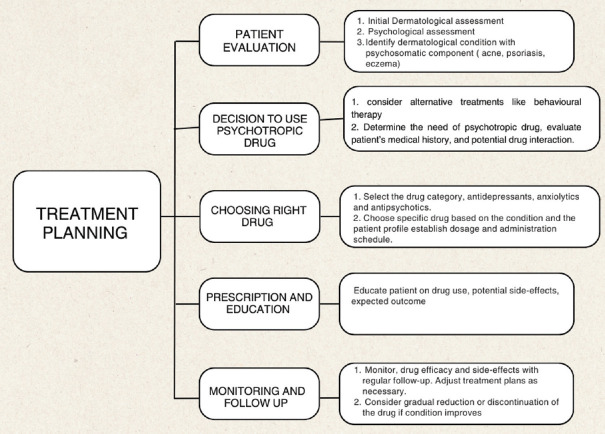
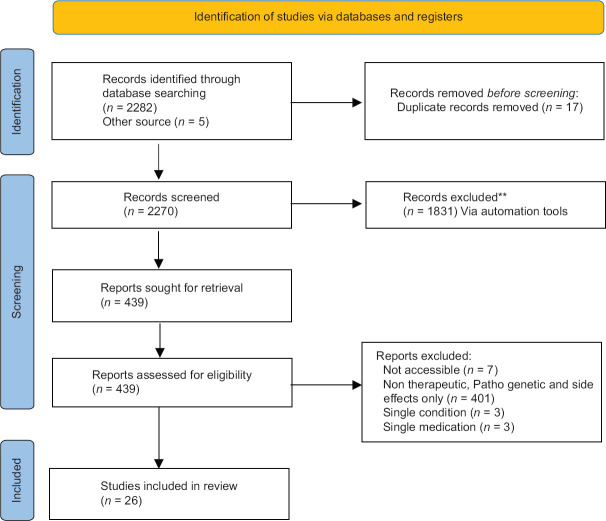
Psycho-dermatology is an evolving speciality of psychosomatic medicine where psychological factors play a role in initiating and/or exacerbating the dermatological conditions. Dermatologists should be well versed with the basic pharmacotherapy of psycho-cutaneous disorders and work in close liaison with the psychiatrists when it comes to the holistic management of the same. The review has been divided into two parts, with part 1 consisting of anti-depressants and mood stabilisers and part 2 consisting of anti-psychotics, anxiolytics, and sedative-hypnotic agents used in psycho-dermatology. This comprehensive review focusses on the various psychotropic drugs which are of paramount significance to the dermatologists. The knowledge of these drugs will lead to the pertinent treatment of the psychiatric dermatoses, which has been a less explored territory in the arena of dermatology. Within the realm of psycho-dermatology, a diverse array of anti-depressants is utilised to address psychiatric dermatoses. These include selective serotonin reuptake inhibitors like citalopram, escitalopram, fluoxetine, fluvoxamine, paroxetine, and sertraline, alongside selective serotonin norepinephrine reuptake inhibitors such as venlafaxine, desvenlafaxine, and duloxetine. Additionally, norepinephrine dopamine reuptake inhibitors like bupropion; tricyclic antidepressants including doxepin, amitriptyline, imipramine, and clomipramine; and tetracyclic antidepressants like mirtazapine are commonly employed. Supplementary medications like anti-convulsants (e.g., gabapentin and pregabalin) further enrich the therapeutic landscape in psycho-dermatology. The approach to treatment in psycho-dermatology is meticulous, starting with a precise psychiatric diagnosis and followed by tailored drug interventions. Factors such as individual response, side-effect profiles, potential drug interactions, and concurrent medical conditions guide the selection and titration of medications. Typically, treatment initiates at conservative doses, with adjustments made based on patient progress and tolerability. This comprehensive review not only illuminates the psycho-cutaneous indications of these medications including in patients with co-morbidties but also underscores the imperative of vigilant monitoring for adverse effects and its management. This systematic review aimed to evaluate the use of psychotropic medications, including antidepressants and mood stabilizers, in dermatology. A comprehensive search of PubMed Central was conducted for studies published between 1986 and 2023, focusing on meta-analyses, reviews, and systematic reviews. After screening 2287 records, 26 studies met the inclusion criteria. The findings underscore the potential role of psychotropic drugs in managing dermatological conditions, highlighting the need for further research to strengthen the evidence base in psycho-dermatology.

摘要

心理皮肤病学是身心医学中一个不断发展的专业领域,其中心理因素在引发和/或加重皮肤病方面发挥作用。皮肤科医生应精通心理皮肤疾病的基本药物治疗,在对其进行整体管理时,应与精神科医生密切合作。本综述分为两部分,第1部分包括抗抑郁药和情绪稳定剂,第2部分包括用于心理皮肤病学的抗精神病药、抗焦虑药和镇静催眠药。这一全面综述聚焦于对皮肤科医生至关重要的各种精神药物。了解这些药物将有助于对精神性皮肤病进行恰当治疗,而精神性皮肤病在皮肤科领域一直是一个较少被探索的领域。在心理皮肤病学领域,各种各样的抗抑郁药被用于治疗精神性皮肤病。这些药物包括选择性5-羟色胺再摄取抑制剂,如西酞普兰、艾司西酞普兰、氟西汀、氟伏沙明、帕罗西汀和舍曲林,以及选择性5-羟色胺去甲肾上腺素再摄取抑制剂,如文拉法辛、去甲文拉法辛和度洛西汀。此外,去甲肾上腺素多巴胺再摄取抑制剂,如安非他酮;三环类抗抑郁药,包括多塞平、阿米替林、丙咪嗪和氯米帕明;以及四环类抗抑郁药,如米氮平,也经常被使用。补充药物,如抗惊厥药(如加巴喷丁和普瑞巴林),进一步丰富了心理皮肤病学的治疗手段。心理皮肤病学的治疗方法细致入微,首先要进行精确的精神科诊断,然后进行针对性的药物干预。个体反应、副作用情况、潜在药物相互作用以及并发疾病等因素指导药物的选择和滴定。通常,治疗从保守剂量开始,根据患者的进展和耐受性进行调整。这一全面综述不仅阐明了这些药物在包括合并症患者在内的心理皮肤疾病方面的适应证,还强调了对不良反应进行密切监测及其管理的必要性。本系统综述旨在评估精神药物,包括抗抑郁药和情绪稳定剂,在皮肤科的应用。对1986年至2023年期间发表在《美国国立医学图书馆医学期刊数据库》上的研究进行了全面检索,重点是荟萃分析、综述和系统评价。在筛选了2287条记录后,有26项研究符合纳入标准。研究结果强调了精神药物在管理皮肤病方面的潜在作用,突出了进一步研究以加强心理皮肤病学证据基础的必要性。
https://cdn.ncbi.nlm.nih.gov/pmc/blobs/90ff/11784973/e09effdd649e/IJD-70-23-g002.jpg
https://cdn.ncbi.nlm.nih.gov/pmc/blobs/90ff/11784973/84dd28ae7685/IJD-70-23-g001.jpg
https://cdn.ncbi.nlm.nih.gov/pmc/blobs/90ff/11784973/e09effdd649e/IJD-70-23-g002.jpg
https://cdn.ncbi.nlm.nih.gov/pmc/blobs/90ff/11784973/84dd28ae7685/IJD-70-23-g001.jpg
https://cdn.ncbi.nlm.nih.gov/pmc/blobs/90ff/11784973/e09effdd649e/IJD-70-23-g002.jpg

相似文献

1
Psychotropic Drugs in Dermatology Part 1: Anti-depressants and Mood Stabilisers.皮肤病学中的精神药物 第1部分:抗抑郁药和心境稳定剂
Indian J Dermatol. 2025 Jan-Feb;70(1):23-37. doi: 10.4103/ijd.ijd_792_23. Epub 2024 Dec 30.
2
Update on Pharmacotherapy in Psychodermatological Disorders.精神皮肤病药物治疗的最新进展
Indian Dermatol Online J. 2020 May 10;11(3):307-318. doi: 10.4103/idoj.IDOJ_330_19. eCollection 2020 May-Jun.
3
Selective serotonin reuptake inhibitors (SSRIs) and serotonin-norepinephrine reuptake inhibitors (SNRIs) for the prevention of tension-type headache in adults.用于预防成人紧张型头痛的选择性5-羟色胺再摄取抑制剂(SSRIs)和5-羟色胺-去甲肾上腺素再摄取抑制剂(SNRIs)
Cochrane Database Syst Rev. 2015 May 1;2015(5):CD011681. doi: 10.1002/14651858.CD011681.
4
New generation antidepressants for depression in children and adolescents: a network meta-analysis.新一代抗抑郁药治疗儿童和青少年抑郁症:网络荟萃分析。
Cochrane Database Syst Rev. 2021 May 24;5(5):CD013674. doi: 10.1002/14651858.CD013674.pub2.
5
Pharmacological treatments in panic disorder in adults: a network meta-analysis.成人惊恐障碍的药物治疗:网络荟萃分析。
Cochrane Database Syst Rev. 2023 Nov 28;11(11):CD012729. doi: 10.1002/14651858.CD012729.pub3.
6
Paroxetine : a review of its pharmacology and therapeutic potential in the management of panic disorder.帕罗西汀:在治疗惊恐障碍中的药理学和治疗潜力的综述。
CNS Drugs. 1997 Aug;8(2):163-88. doi: 10.2165/00023210-199708020-00010.
7
Safety of 80 antidepressants, antipsychotics, anti-attention-deficit/hyperactivity medications and mood stabilizers in children and adolescents with psychiatric disorders: a large scale systematic meta-review of 78 adverse effects.80种抗抑郁药、抗精神病药、抗注意力缺陷/多动障碍药物及心境稳定剂在患有精神疾病的儿童和青少年中的安全性:对78种不良反应的大规模系统性荟萃综述
World Psychiatry. 2020 Jun;19(2):214-232. doi: 10.1002/wps.20765.
8
Selective serotonin reuptake inhibitors and CNS drug interactions. A critical review of the evidence.选择性5-羟色胺再摄取抑制剂与中枢神经系统药物的相互作用。证据的批判性综述。
Clin Pharmacokinet. 1997 Dec;33(6):454-71. doi: 10.2165/00003088-199733060-00004.
9
Duloxetine versus other anti-depressive agents for depression.度洛西汀与其他抗抑郁药治疗抑郁症的比较
Cochrane Database Syst Rev. 2012 Oct 17;10(10):CD006533. doi: 10.1002/14651858.CD006533.pub2.
10
Effectiveness of Antidepressants in Combination with Psychotherapy.抗抑郁药联合心理治疗的疗效。
J Ment Health Policy Econ. 2024 Mar 1;27(1):3-12.

本文引用的文献

1
Pharmacological Interventions for Primary Psychodermatologic Disorders: An Evidence Mapping and Appraisal of Randomized Controlled Trials.原发性精神皮肤病障碍的药物干预:随机对照试验的证据绘图和评估。
J Cutan Med Surg. 2023 Mar-Apr;27(2):140-149. doi: 10.1177/12034754231155888. Epub 2023 Feb 20.
2
Update on Pharmacotherapy in Psychodermatological Disorders.精神皮肤病药物治疗的最新进展
Indian Dermatol Online J. 2020 May 10;11(3):307-318. doi: 10.4103/idoj.IDOJ_330_19. eCollection 2020 May-Jun.
3
Psychopharmacology in dermatology: Treatment of primary psychiatric conditions in dermatology.
皮肤病学中的精神药理学:皮肤病学中原发性精神疾病的治疗。
Dermatol Ther. 2020 Jul;33(4):e13557. doi: 10.1111/dth.13557. Epub 2020 Jun 29.
4
Psychotropic drugs in dermatology: A dermatologist's approach and choice of medications.皮肤科中的精神药物:皮肤科医生的用药方法与药物选择
Dermatol Ther. 2020 May;33(3):e13385. doi: 10.1111/dth.13385. Epub 2020 Apr 20.
5
Use of psychiatric drugs in Dermatology.精神科药物在皮肤科的应用。
An Bras Dermatol. 2020 Mar-Apr;95(2):133-143. doi: 10.1016/j.abd.2019.12.002. Epub 2020 Feb 18.
6
Use of antiepileptic mood stabilizers in dermatology.抗癫痫心境稳定剂在皮肤科的应用。
Clin Dermatol. 2018 Nov-Dec;36(6):756-764. doi: 10.1016/j.clindermatol.2018.08.005. Epub 2018 Aug 16.
7
Use of psychotropic drugs in the dermatology patient: When to start and stop?皮肤科患者使用精神药物:何时开始及停药?
Clin Dermatol. 2018 Nov-Dec;36(6):748-755. doi: 10.1016/j.clindermatol.2018.08.012. Epub 2018 Aug 16.
8
Psychocutaneous disease: Pharmacotherapy and psychotherapy.心身疾病:药物治疗与心理治疗。
J Am Acad Dermatol. 2017 May;76(5):795-808. doi: 10.1016/j.jaad.2016.11.021.
9
Psychopharmacological therapies in dermatology.皮肤病学中的精神药理学疗法。
Dermatol Online J. 2013 May 15;19(5):18169.
10
Psychopharmacology in psychodermatology.心理皮肤病学中的精神药理学。
J Cutan Med Surg. 2008 Nov-Dec;12(6):255-67. doi: 10.2310/7750.2008.07062.