Yi Ying, Wu Min-Yu, Chen Kai-Tian, Chen An-Hai, Li Lin-Qiu, Xiong Qin, Wang Xian-Ren, Lei Wen-Bin, Xiong Guan-Xia, Fang Shu-Bin
Otorhinolaryngology Hospital, The First Affiliated Hospital, Sun Yat-sen University, 58 Zhongshan Road II, Guangzhou, Guangdong, 510080, China.
Cell Death Dis. 2025 Feb 3;16(1):65. doi: 10.1038/s41419-025-07394-6.
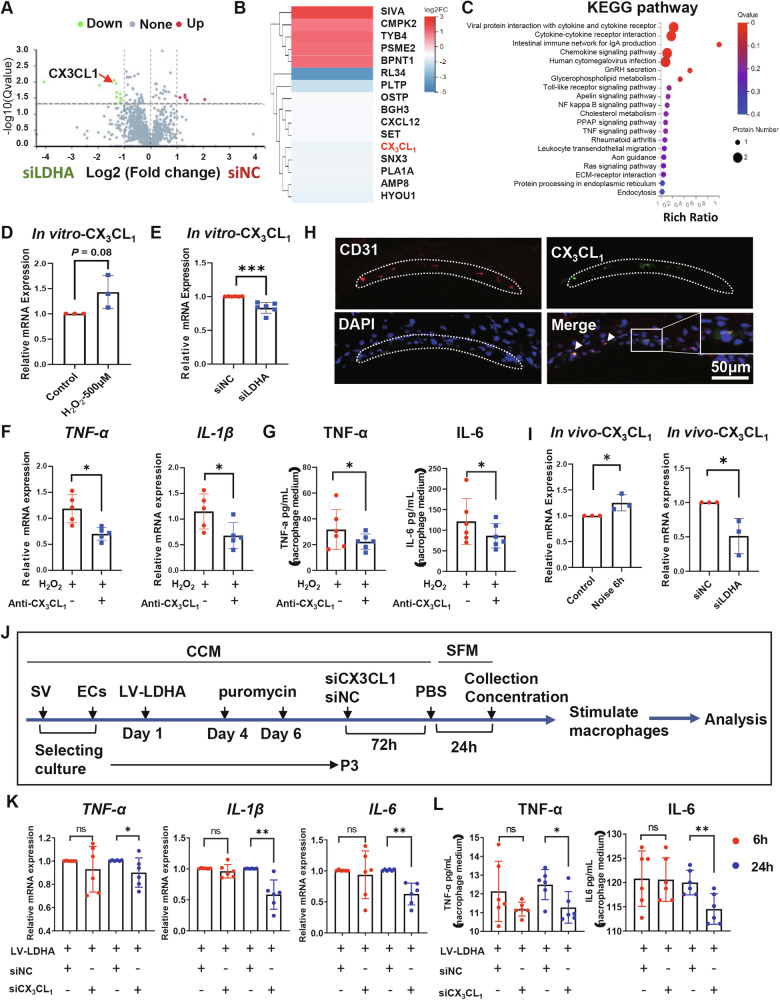
According to the World Health Organization, more than 12% of the world's population suffers from noise-induced hearing loss (NIHL). Oxidative stress-mediated damage to the stria vascularis (SV) is one of the pathogenic mechanisms of NIHL. Recent studies indicate that glycolysis plays a critical role in endothelial cells (ECs)-related diseases. However, the specific role of glycolysis in dysfunction of SV-ECs remain largely unknown. In this study, we investigated the effects of glycolysis on SV-ECs in vitro and on the SV in vivo. Our previous research identified the glycolysis pathway as a potential mechanism underlying the SV-ECs injuries induced by oxidative stress. We further examined the expression levels of glycolytic genes in SV-ECs under HO stimulation and in noise-exposed mice. We found that the gene and protein expression levels of glycolytic-related enzyme LDHA significantly decreased at early phase after oxidative stress injury both in vitro and in vivo, and exhibited anti-inflammatory effects on macrophages (Mφ). Moreover, we analyzed the differential secretomes of SV-ECs with and without inhibition of LDHA using LC-MS/MS technology, identifying CX3CL1 as a candidate mediator for cellular communication between SV-ECs and Mφ. We found that CX3CL1 secretion from SV-ECs was decreased following LDHA inhibition and exhibited anti-inflammatory effects on Mφ via the CX3CR1 pathway. Similarly, the pro-inflammatory effect of LDHA-overexpressing SV-ECs was attenuated following inhibition of CX3CL1. In conclusion, our study revealed that glycolysis-related LDHA was reduced in oxidative stress-induced SV-ECs, and that LDHA inhibition in SV-ECs elicited anti-inflammatory effects on Mφ, at least partially through the CX3CL1-CX3CR1 pathway. These findings suggest that LDHA represent a novel therapeutic strategy for the treatment of NIHL.
根据世界卫生组织的数据,全球超过12%的人口患有噪声性听力损失(NIHL)。氧化应激介导的血管纹(SV)损伤是NIHL的致病机制之一。最近的研究表明,糖酵解在内皮细胞(ECs)相关疾病中起关键作用。然而,糖酵解在SV-ECs功能障碍中的具体作用在很大程度上仍不清楚。在本研究中,我们调查了糖酵解在体外对SV-ECs以及在体内对SV的影响。我们之前的研究确定糖酵解途径是氧化应激诱导SV-ECs损伤的潜在机制。我们进一步检测了HO刺激下的SV-ECs以及噪声暴露小鼠中糖酵解相关基因的表达水平。我们发现,在氧化应激损伤后的早期,糖酵解相关酶LDHA的基因和蛋白表达水平在体外和体内均显著降低,并且对巨噬细胞(Mφ)具有抗炎作用。此外,我们使用LC-MS/MS技术分析了LDHA抑制前后SV-ECs的差异分泌组,确定CX3CL1是SV-ECs与Mφ之间细胞通讯的候选介质。我们发现,抑制LDHA后,SV-ECs分泌的CX3CL1减少,并且通过CX3CR1途径对Mφ具有抗炎作用。同样,抑制CX3CL1后,过表达LDHA的SV-ECs的促炎作用减弱。总之,我们的研究表明,在氧化应激诱导的SV-ECs中,与糖酵解相关的LDHA减少,并且抑制SV-ECs中的LDHA至少部分通过CX3CL1-CX3CR1途径对Mφ产生抗炎作用。这些发现表明,LDHA代表了一种治疗NIHL的新策略。