Din Nurul Saidah, Mohd Rani Farahiyah, Alattraqchi Ahmed Ghazi, Ismail Salwani, A Rahman Nor Iza, Cleary David W, Clarke Stuart C, Yeo Chew Chieng
Centre for Research in Infectious Diseases and Biotechnology, Faculty of Medicine, Universiti Sultan Zainal Abidin, Kuala Terengganu, Malaysia.
Department of Microbes, Infections and Microbiomes, School of Infection, Inflammation and Immunology, College of Medicine and Health, University of Birmingham, Birmingham, UK.
Microb Genom. 2025 Feb;11(2). doi: 10.1099/mgen.0.001345.
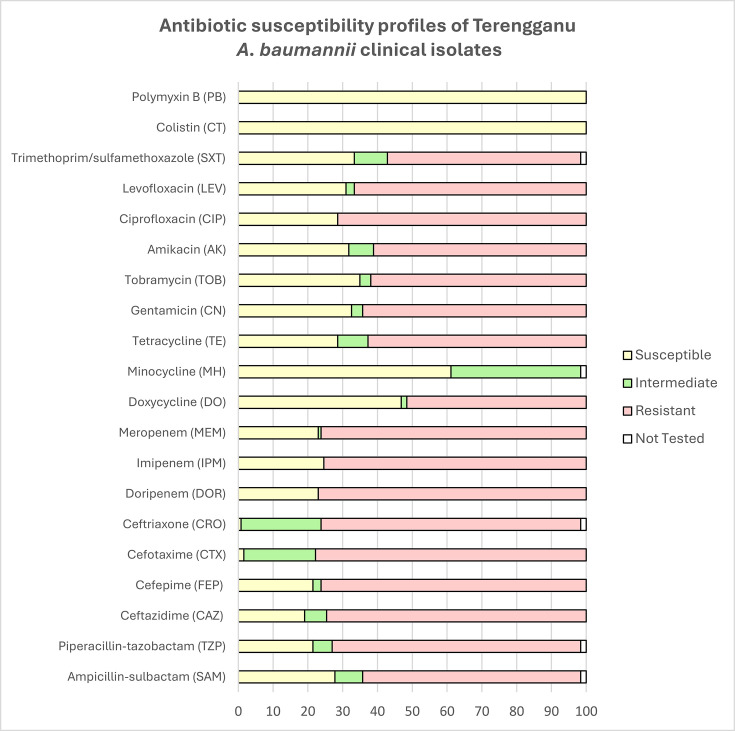
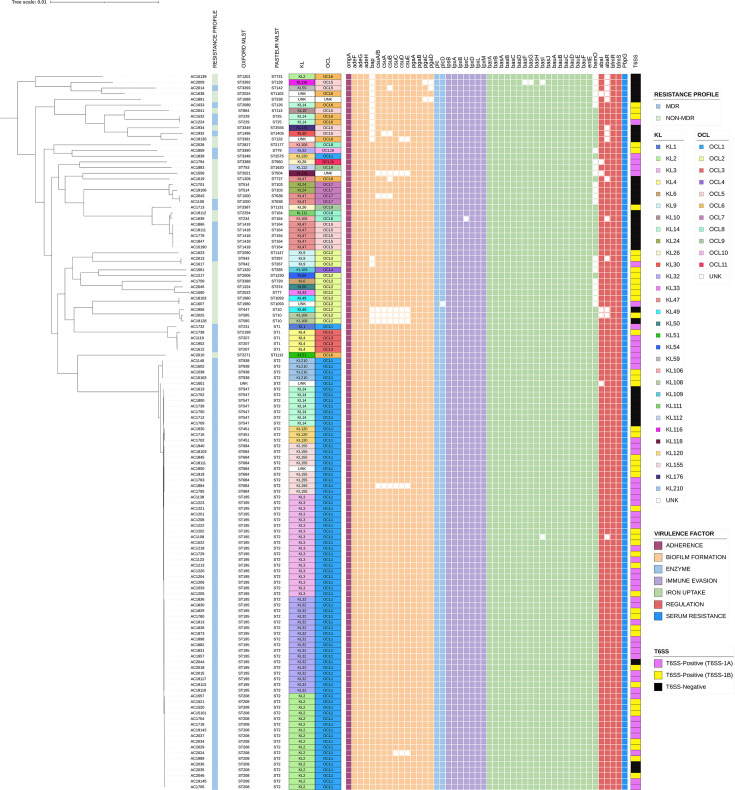
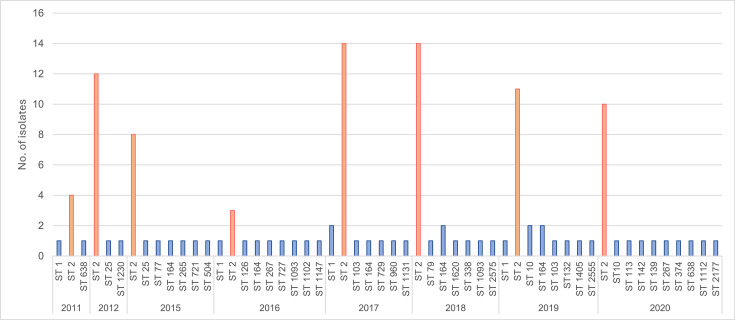
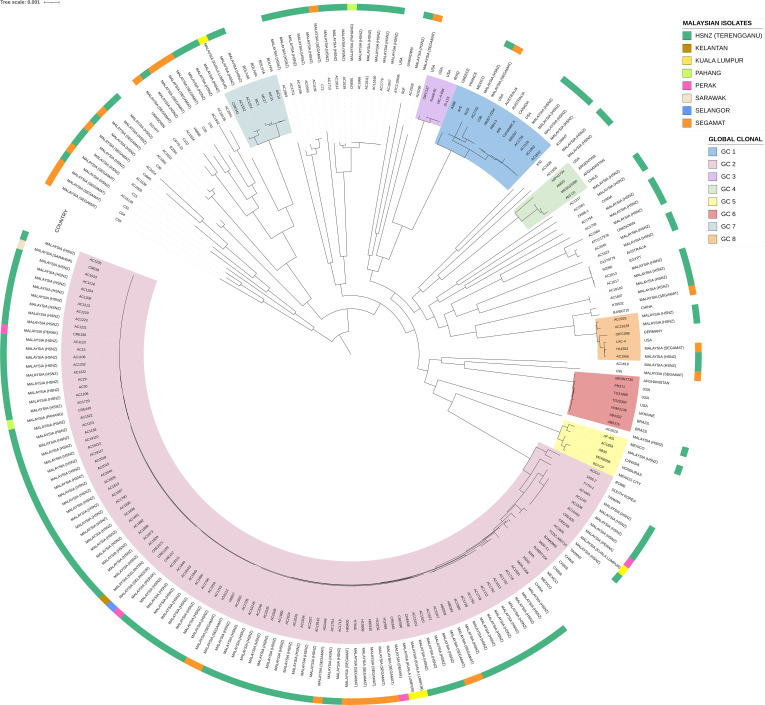
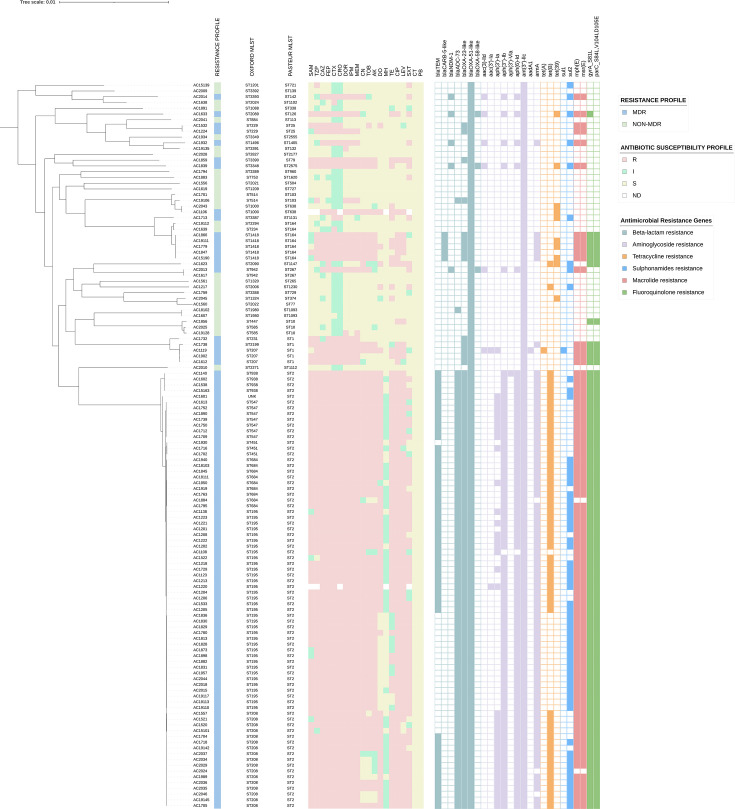
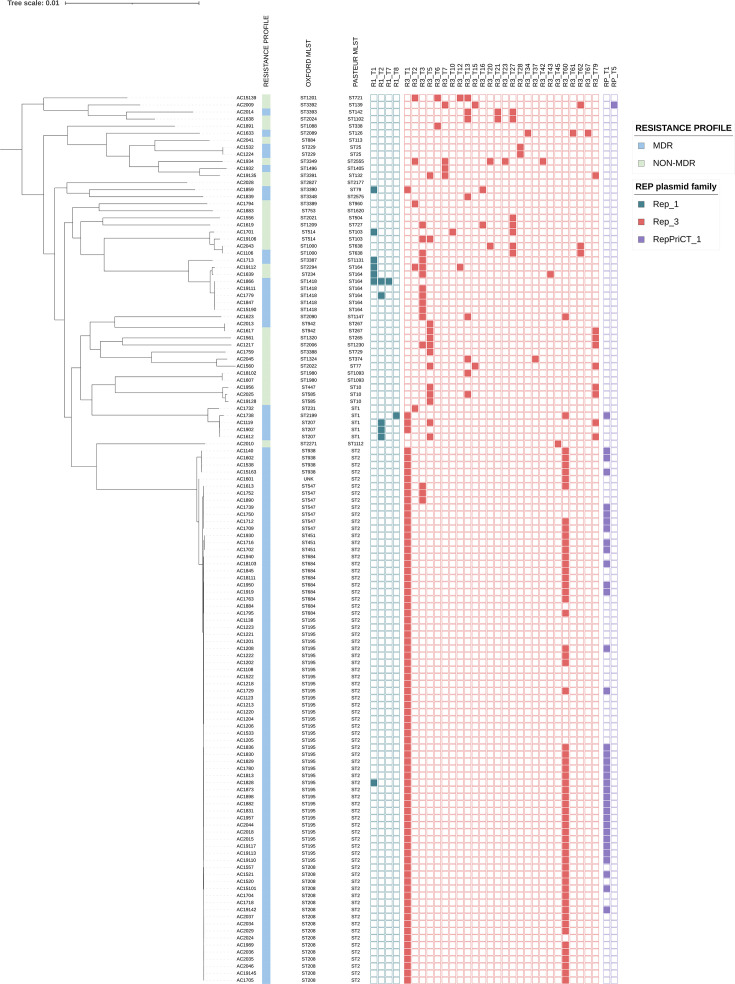
Carbapenem-resistant is recognized by the World Health Organization (WHO) as one of the top priority pathogens. Despite its public health importance, genomic data of clinical isolates from Malaysia remain scarce. In this study, whole-genome sequencing was performed on 126 . isolates collected from the main tertiary hospital in the state of Terengganu, Malaysia, over a 10-year period (2011-2020). Antimicrobial susceptibilities determined for 20 antibiotics belonging to 8 classes showed that 77.0% (=97/126) of the isolates were categorized as multidrug resistant (MDR), with all MDR isolates being carbapenem resistant. Multilocus sequence typing analysis categorized the Terengganu clinical isolates into 34 Pasteur and 44 Oxford sequence types (STs), with ST2 of the Global Clone 2 lineage identified as the dominant ST (=76/126; 60.3%). The ST2 isolates could be subdivided into six Oxford STs with the majority being ST195 (=35) and ST208 (=17). Various antimicrobial resistance genes were identified with the -encoded carbapenemase being the predominant acquired carbapenemase gene (=90/126; 71.4%). Plasmid-encoded genes were identified in nearly all (=122/126; 96.8%) of the isolates with the majority being Rep_3 family (=121). Various virulence factors were identified, highlighting the pathogenic nature of this bacterium. Only 14/126 (11.1%) of the isolates were positive for the carriage of CRISPR-Cas arrays with none of the prevalent ST2 isolates harbouring them. This study provided a genomic snapshot of the isolates obtained from a single tertiary healthcare centre in Malaysia over a 10-year period and showed the predominance of a single closely related ST2 lineage, indicating the entrenchment of this clone in the hospital.
耐碳青霉烯类细菌被世界卫生组织(WHO)认定为最优先关注的病原体之一。尽管其对公共卫生具有重要意义,但马来西亚临床分离株的基因组数据仍然匮乏。在本研究中,对126株从马来西亚丁加奴州主要三级医院在10年期间(2011 - 2020年)收集的分离株进行了全基因组测序。对属于8类的20种抗生素进行的药敏试验表明,77.0%(=97/126)的分离株被归类为多重耐药(MDR),所有MDR分离株均耐碳青霉烯类。多位点序列分型分析将丁加奴临床分离株分为34个巴斯德序列型和44个牛津序列型(STs),其中全球克隆2谱系的ST2被确定为主要的序列型(=76/126;60.3%)。ST2分离株可细分为6个牛津STs,其中大多数是ST195(=35)和ST208(=17)。鉴定出了各种抗菌耐药基因,其中编码碳青霉烯酶的基因是主要的获得性碳青霉烯酶基因(=90/126;71.4%)。几乎所有(=122/126;96.8%)的分离株中都鉴定出了质粒编码的基因,其中大多数属于Rep_3家族(=121)。鉴定出了各种毒力因子,突出了这种细菌的致病性质。只有14/126(11.1%)的分离株携带CRISPR - Cas阵列呈阳性,流行的ST2分离株均未携带。本研究提供了马来西亚一家单一三级医疗中心在10年期间获得的分离株的基因组概况,并显示了单一密切相关的ST2谱系的优势,表明该克隆在医院中已根深蒂固。