Chanie Wagaye Fentahun, Berhe Aster, Tilahun Ambaye Dejen, Liyew Bikis, Baye Chernet, Akalie Tarekegn Asemaw, Alemu Destaye Shiferaw, Limenih Miteku Andualem
United Nation Population Fund Supported Maternal Project, University of Gondar, Gondar, Ethiopia.
United Nation Population Fund Agency, Addis Ababa, Ethiopia.
Sci Rep. 2025 Feb 6;15(1):4514. doi: 10.1038/s41598-025-87192-4.
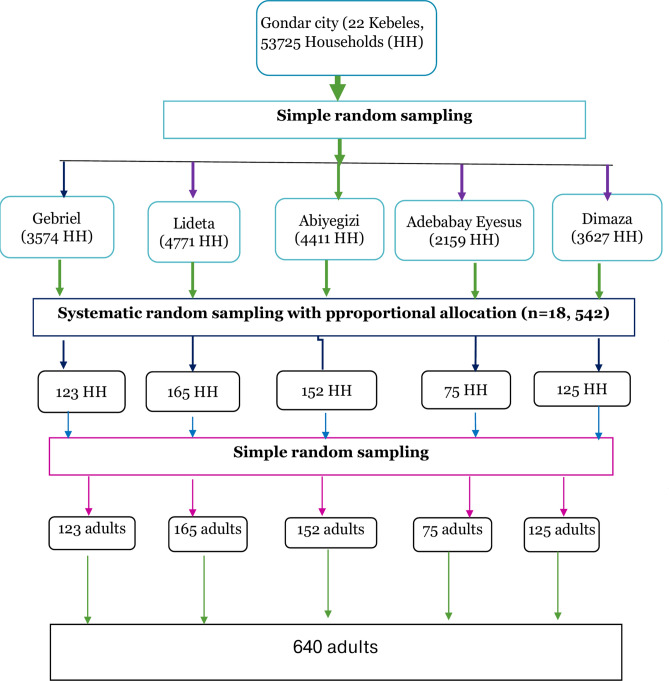
Obstetric fistula is a major maternal health challenge in low-income countries like Ethiopia. Misperceptions about obstetric fistula delay seeking and accessing healthcare. Understanding community attitudes is crucial for prevention, early detection, and support for affected women. A community-based study was conducted from February 1 to April 26, 2024, among 640 women and men to assess attitudes and influencing factors. Participants were selected using a multistage sampling. Multivariable logistic regression analysis was performed, with a p-value < 0.05 considered statistically significant. The study included nearly equal proportions of males (49.1%) and females (50.9%), with a median age of 32 years (IQR: 19-64). Among participants, 47.8% (95%CI: 43.7-51.6) had a favourable attitude towards obstetric fistula. Those under 20 years (AOR: 7.7; 95%CI: 2.3-28.6), aged 20-35 (AOR: 3.9; 95%CI: 1.8-8.5), and aged 36-50 (AOR: 6.36; 95%CI: 3.0-14.1) were more likely to have a favourable attitude compared to those over 50 years. Female gender (AOR: 1.5; 95%CI: 1.1-2.2), primary education (AOR: 1.86; 95%CI: 1.3-2.9), and awareness of obstetric fistula (AOR: 3.04; 95%CI: 2.0-4.6) were significant determinants. The study revealed unfavourable community attitudes towards obstetric fistula, with notable gender and age differences. Enhancing attitudes requires a comprehensive, tailored program involving all relevant stakeholders.
产科瘘是埃塞俄比亚等低收入国家面临的一项重大孕产妇健康挑战。对产科瘘的误解会延误寻求和获得医疗保健的时机。了解社区态度对于预防、早期发现以及为受影响妇女提供支持至关重要。2024年2月1日至4月26日,在640名女性和男性中开展了一项基于社区的研究,以评估态度及影响因素。采用多阶段抽样方法选取参与者。进行了多变量逻辑回归分析,p值<0.05被视为具有统计学意义。该研究纳入的男性(49.1%)和女性(50.9%)比例几乎相等,中位年龄为32岁(四分位间距:19 - 64岁)。在参与者中,47.8%(95%置信区间:43.7 - 51.6)对产科瘘持积极态度。与50岁以上者相比,20岁以下者(调整后比值比:7.7;95%置信区间:2.3 - 28.6)、20 - 35岁者(调整后比值比:3.9;95%置信区间:1.8 - 8.5)以及36 - 50岁者(调整后比值比:6.36;95%置信区间:3.0 - 14.1)更有可能持积极态度。女性(调整后比值比:1.5;95%置信区间:1.1 - 2.2)、接受小学教育(调整后比值比:1.86;95%置信区间:1.3 - 2.9)以及对产科瘘的认知(调整后比值比:3.04;95%置信区间:2.0 - 4.6)是显著的决定因素。该研究揭示了社区对产科瘘的负面态度,存在明显的性别和年龄差异。改善态度需要一个由所有相关利益攸关方参与的全面、量身定制的项目。