de Lima Cinthya Lais, Pohl Paula C, Villas-Boas Isadora M, Pidde Giselle, Tambourgi Denise V
Immunochemistry Laboratory, Instituto Butantan, São Paulo, Brazil.
PLoS Negl Trop Dis. 2025 Feb 10;19(2):e0012816. doi: 10.1371/journal.pntd.0012816. eCollection 2025 Feb.
The caterpillar of Premolis semirufa, known as Pararama, is found in the Brazilian Amazon, primarily on rubber trees of the genus Hevea. Pararamosis is an inflammatory disease resulting from accidental contact with the caterpillar's bristles, leading to acute and chronic symptoms. Chronic exposure can cause significant osteoarticular deformities, similar to those seen in osteoarthritis and rheumatoid arthritis, due to cartilage degradation and synovial inflammation. Currently, there are no specific treatments for Pararamosis, and research on the molecular mechanisms of the caterpillar's venom and its role in disease pathogenesis is limited. The chronic changes in Pararamosis are thought to be linked to chondrocyte activation and the NF-κB signaling pathway, influenced by the toxic components in the bristles. Understanding these interactions is crucial for developing preventive measures and therapeutic strategies, especially for rubber tappers at risk in the Amazon region.
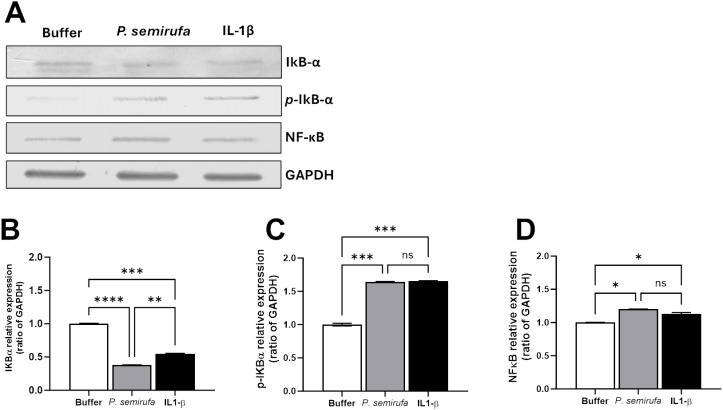
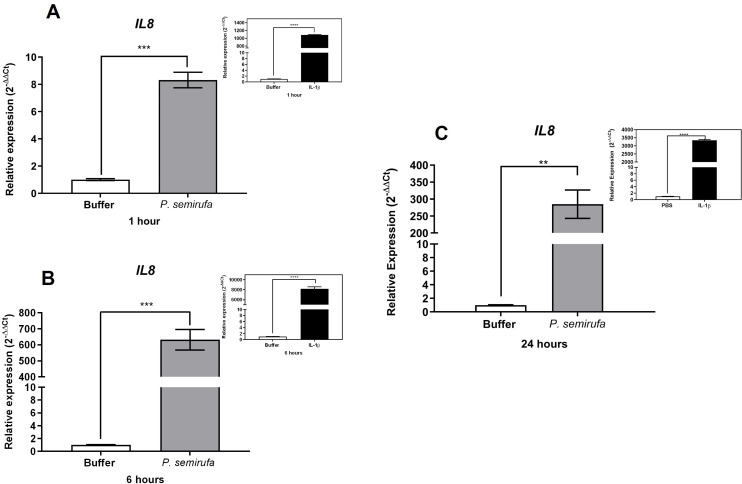
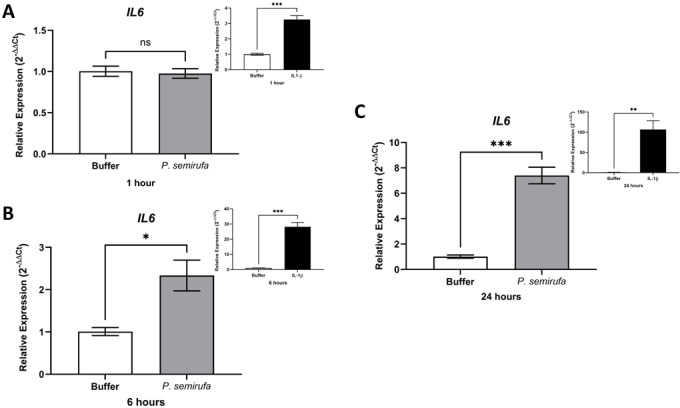
METHODOLOGY/PRINCIPAL FINDINGS: This study investigated the effects of P. semirufa bristle extracts on human chondrocytes, focusing on the activation mechanism of the NF-κB transcription factor and the expression of osteoarthritis markers. Cell viability tests indicated that the extracts did not significantly affect chondrocyte survival. However, supernatant analysis revealed a time- and dose-dependent increase in IL-6 and IL-8 levels. Additionally, the expression of NF-κB and its inhibitor, IκB, was assessed, showing higher levels of phosphorylated IκB, which induces its proteosomal degradation, compared to the negative control, while native IκB expression was greater in the control group. Furthermore, the gene expression profile of treated chondrocytes demonstrated modulation in matrix metalloproteinases (MMPs), aggrecan (ACAN), collagen type II (COL2A1), interleukins (IL6 and IL8), and complement system molecules.
CONCLUSIONS/SIGNIFICANCE: These findings highlight the significant impact of P. semirufa bristle extracts on human chondrocyte activation and the inflammatory processes associated with pararamosis.
半红普摩刺蛾的幼虫,即帕拉拉马毛虫,发现于巴西亚马逊地区,主要寄生在三叶橡胶属的橡胶树上。帕拉拉马毛虫病是一种因意外接触毛虫刚毛而引发的炎症性疾病,会导致急性和慢性症状。由于软骨降解和滑膜炎症,长期接触可导致严重的骨关节畸形,类似于骨关节炎和类风湿关节炎患者的症状。目前,尚无针对帕拉拉马毛虫病的特效治疗方法,且关于毛虫毒液的分子机制及其在疾病发病机制中的作用的研究有限。帕拉拉马毛虫病的慢性变化被认为与软骨细胞活化和核因子-κB信号通路有关,受刚毛中有毒成分的影响。了解这些相互作用对于制定预防措施和治疗策略至关重要,特别是对于亚马逊地区面临风险的橡胶采集工而言。
方法/主要发现:本研究调查了半红普摩刺蛾刚毛提取物对人软骨细胞的影响,重点关注核因子-κB转录因子的激活机制和骨关节炎标志物的表达。细胞活力测试表明,提取物对软骨细胞存活没有显著影响。然而,上清液分析显示白细胞介素-6(IL-6)和白细胞介素-8(IL-8)水平呈时间和剂量依赖性增加。此外,评估了核因子-κB及其抑制剂IκB的表达,结果显示与阴性对照组相比,磷酸化IκB水平更高,磷酸化IκB会诱导其蛋白酶体降解,而对照组中天然IκB的表达更高。此外,经处理的软骨细胞的基因表达谱显示,基质金属蛋白酶(MMPs)、聚集蛋白聚糖(ACAN)、II型胶原(COL2A1)、白细胞介素(IL6和IL8)和补体系统分子发生了调节。
结论/意义:这些发现突出了半红普摩刺蛾刚毛提取物对人软骨细胞活化以及与帕拉拉马毛虫病相关的炎症过程的重大影响。