
芳香烃受体-芳烃受体核转运蛋白-细胞色素P450 1A1轴对多环芳烃暴露相关稽留流产的预测价值及中介效应分析
Predictive value and mediating effect analysis of the AHR-ARNT-CYP1A1 axis for missed abortion related to polycyclic aromatic hydrocarbons exposure.
作者信息
Cao Jiuru, Han Mei, Li Fuxing, Zhang Jiayu, Ji Jingru, Wei Junni
机构信息
Department of Epidemiology, School of Public Health, Shanxi Medical University, No. 56 Xinjian South Road, Taiyuan, 030001, Shanxi, China.
Department of Obstetrics and Gynecology, First Hospital of Shanxi Medical University, Taiyuan, 030001, China.
出版信息
Sci Rep. 2025 Feb 10;15(1):4920. doi: 10.1038/s41598-025-88464-9.
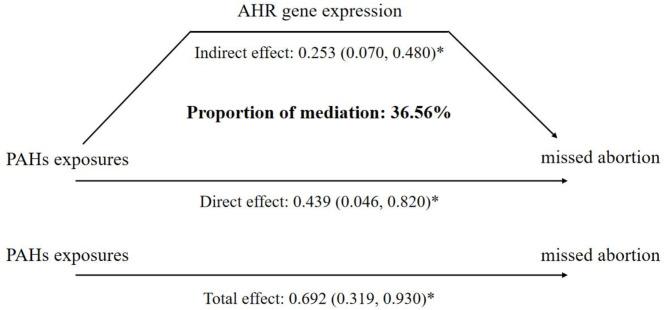
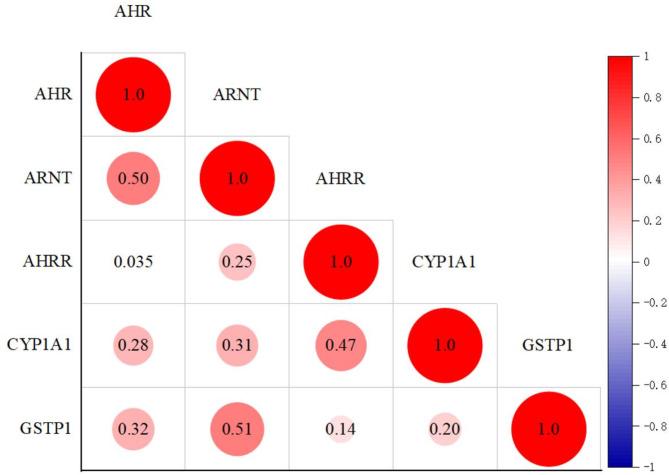
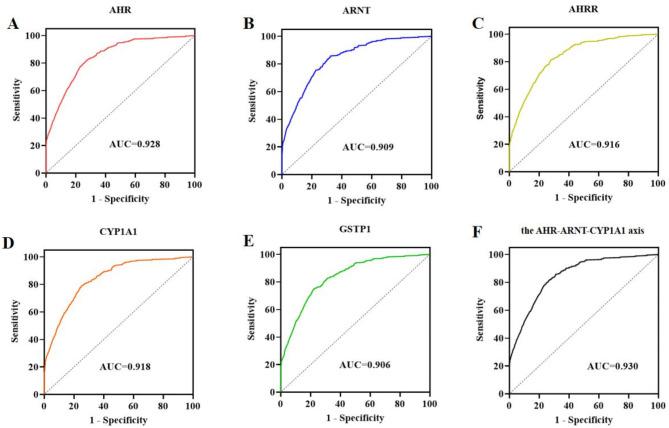
This study aimed to determine the predictive value of aryl hydrocarbon receptor (AHR) signaling pathway genes, and to detect the mediating effect of AHR that may mediate the influence of polycyclic aromatic hydrocarbons (PAHs) on missed abortion. The present study was conducted using a 1:2 matched case-control study, a total of 94 cases of women with missed abortion and 188 matched women controls with normal pregnancy but voluntarily abortion were included. The receiver operating characteristic curve (ROC) and the area under the ROC curve (AUC) were used to evaluate the predictive value of AHR signaling pathway genes for missed abortion. The mediating role of AHR within the effect pathway between PAHs exposure and missed abortion was performed using the mediation package of the R language. The results showed that the level of PAH-DNA adducts in the case group (487.61 ± 6.29) pg/ml was higher than that in the control group (446.86 ± 5.95) pg/ml (P < 0.001). There were significant differences in the expression levels of AHR, aryl hydrocarbon receptor nuclear translocator (ARNT), aryl hydrocarbon receptor repressor (AHRR), cytochrome P450 enzymes 1A1 (CYP1A1) and glutathione S-transferase P1 (GSTP1) genes between the case group and the control group (P < 0.01). After adjusting for covariates, high exposure of PAH-DNA adducts levels increased AHR and CYP1A1 expression. The 5-fold cross-validation results revealed that the mean value of the area under the ROC curve (AUC) of AHR-ARNT-CYP1A1 axis was 0.931 (95%CI: 0.858 ~ 0.999), which had good predictive performance in assessing the risk of prevalence of missed abortion. AHR gene might play a partial mediating effect in the association between PAHs exposure and missed abortion, and the percentage of mediating effect was 36.56%.
本研究旨在确定芳烃受体(AHR)信号通路基因的预测价值,并检测AHR可能介导多环芳烃(PAHs)对稽留流产影响的中介作用。本研究采用1:2匹配病例对照研究,共纳入94例稽留流产妇女和188例匹配的自愿流产的正常妊娠妇女作为对照。采用受试者工作特征曲线(ROC)及ROC曲线下面积(AUC)评估AHR信号通路基因对稽留流产的预测价值。使用R语言的中介分析包来分析AHR在PAHs暴露与稽留流产效应通路中的中介作用。结果显示,病例组PAH-DNA加合物水平(487.61±6.29)pg/ml高于对照组(446.86±5.95)pg/ml(P<0.001)。病例组与对照组之间AHR、芳烃受体核转运蛋白(ARNT)、芳烃受体阻遏蛋白(AHRR)、细胞色素P450酶1A1(CYP1A1)和谷胱甘肽S-转移酶P1(GSTP1)基因的表达水平存在显著差异(P<0.01)。在调整协变量后,PAH-DNA加合物水平的高暴露增加了AHR和CYP1A1的表达。5倍交叉验证结果显示,AHR-ARNT-CYP1A1轴的ROC曲线下面积(AUC)平均值为0.931(95%CI:0.858~0.999),在评估稽留流产患病风险方面具有良好的预测性能。AHR基因可能在PAHs暴露与稽留流产的关联中起部分中介作用,中介效应百分比为36.56%。
 Zotero 插件