Bernad Brenda-Cristiana, Tomescu Mirela-Cleopatra, Velimirovici Dana Emilia, Andor Minodora, Lungeanu Diana, Enătescu Virgil, Bucur Adina-Ioana, Lascu Ana, Raţă Andreea-Luciana, Bernad Elena Silvia, Nicoraș Vlad, Arnăutu Diana-Aurora, Neda-Stepan Oana, Hogea Lavinia
Doctoral School, "Victor Babes" University of Medicine and Pharmacy, 300041 Timisoara, Romania.
Center for Neuropsychology and Behavioral Medicine, "Victor Babes" University of Medicine and Pharmacy, 300041 Timisoara, Romania.
J Clin Med. 2025 Jan 30;14(3):909. doi: 10.3390/jcm14030909.
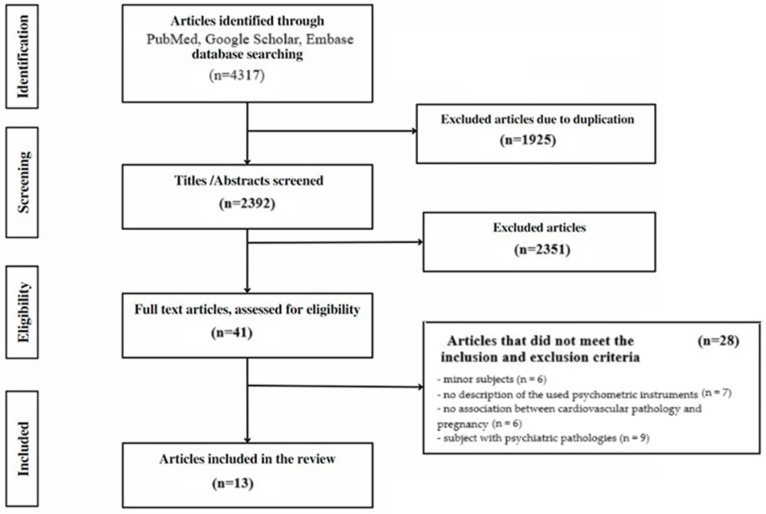
Complex biological processes that enable optimal foetal growth throughout pregnancy are linked to notable haemodynamic and metabolic changes in the mother's body. An inability to adapt to these changes can affect cardiovascular health. During pregnancy, women may experience mood swings, anxiety, and emotional ambivalence. These symptoms can lead to stress and harm the mental well-being of expectant mothers. It is crucial to know the aspects that can influence the development of cardiovascular problems among pregnant women. Effective management requires identifying risk factors. Applying the PRISMA ScR guidelines, we conducted a scoping review to explore and summarise the evidence regarding the impact of stress and anxiety on cardiovascular health in pregnant women. The following enquiries were looked into as research topics: What effects do anxiety and stress have on a pregnant woman's cardiovascular health? How is it quantifiable? It is essential to comprehend the physiological changes that the body undergoes throughout pregnancy in order to inform and assist both patients and medical professionals. This makes it possible for them to identify any pathological disorders or risk factors that could worsen the health of expectant mothers. Psychological and cardiovascular risk factor screening, either before or during pregnancy, may be able to uncover circumstances that require specific medical and psychological therapies in order to lower maternal morbidity and death from cardiovascular disease. Our findings underscore the need for systematic psychological and cardiovascular screening during prenatal care to mitigate adverse outcomes and improve maternal-foetal health.
在整个孕期使胎儿实现最佳生长的复杂生物过程与母亲身体显著的血流动力学和代谢变化相关联。无法适应这些变化会影响心血管健康。孕期女性可能会经历情绪波动、焦虑和情感矛盾。这些症状会导致压力并损害准妈妈的心理健康。了解可能影响孕妇心血管问题发展的因素至关重要。有效的管理需要识别风险因素。我们运用PRISMA ScR指南进行了一项范围综述,以探索和总结有关压力和焦虑对孕妇心血管健康影响的证据。以下问题作为研究主题进行了探讨:焦虑和压力对孕妇心血管健康有何影响?如何进行量化?为了为患者和医疗专业人员提供信息并提供帮助,了解身体在整个孕期所经历的生理变化至关重要。这使得他们能够识别任何可能使准妈妈健康恶化的病理紊乱或风险因素。在怀孕前或孕期进行心理和心血管风险因素筛查,或许能够发现需要特定医学和心理治疗的情况,以降低孕产妇因心血管疾病导致的发病率和死亡率。我们的研究结果强调了在产前护理期间进行系统的心理和心血管筛查以减轻不良后果并改善母婴健康的必要性。