Dinoto Alessandro, Pacenti Monia, Mariotto Sara, Abate Davide, Lisi Vittoria, Satto Sorsha, Vogiatzis Stefania, Chiodega Vanessa, Carta Sara, Ferrari Sergio, Barzon Luisa
Section of Neurology, Department of Neurosciences, Biomedicine and Movement Sciences, University of Verona, Verona, Italy.
Microbiology and Virology Unit, Padova University Hospital, Padova, Italy.
Emerg Microbes Infect. 2025 Dec;14(1):2447606. doi: 10.1080/22221751.2024.2447606. Epub 2025 Feb 21.
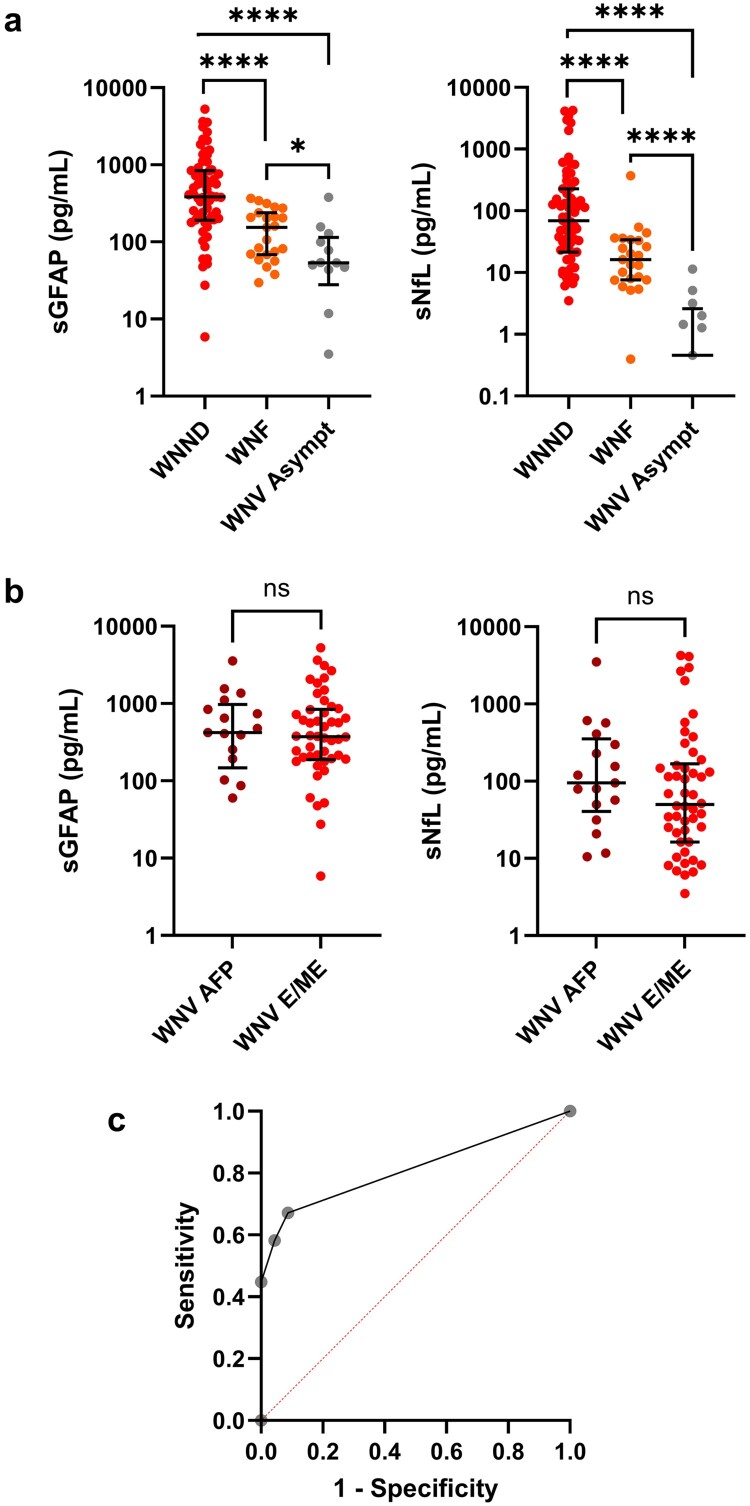
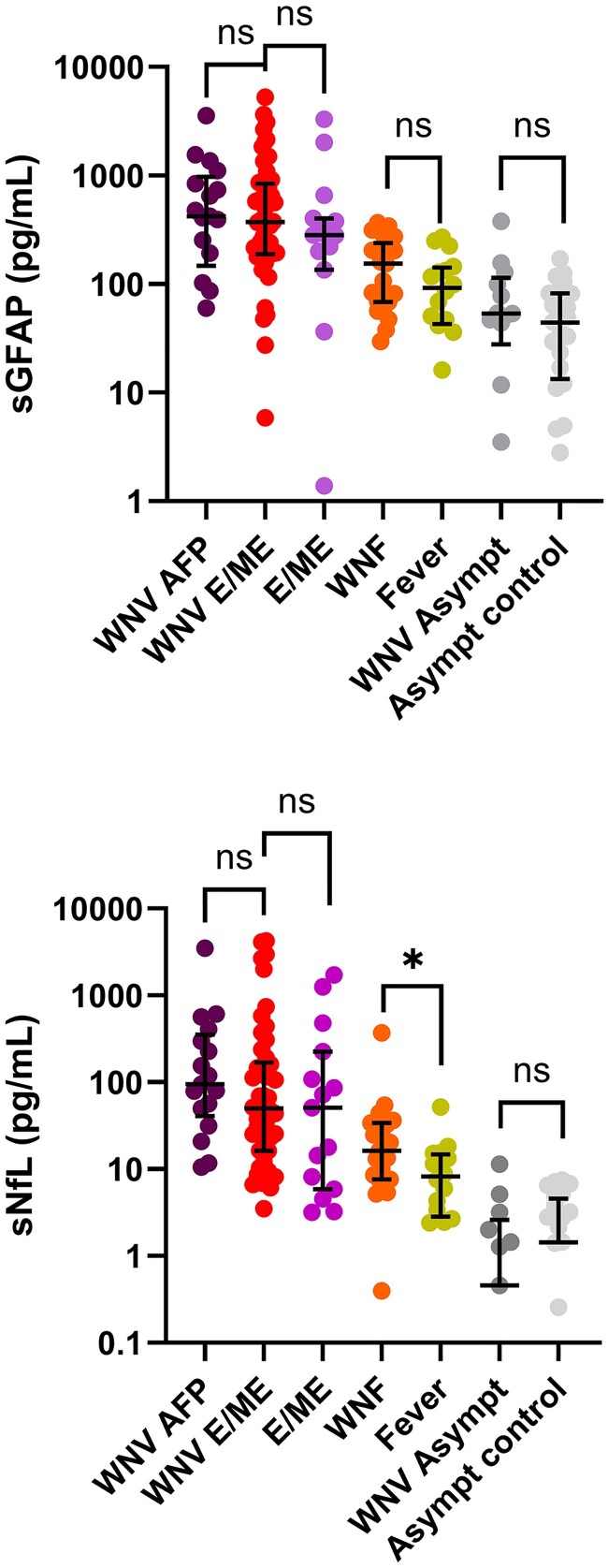
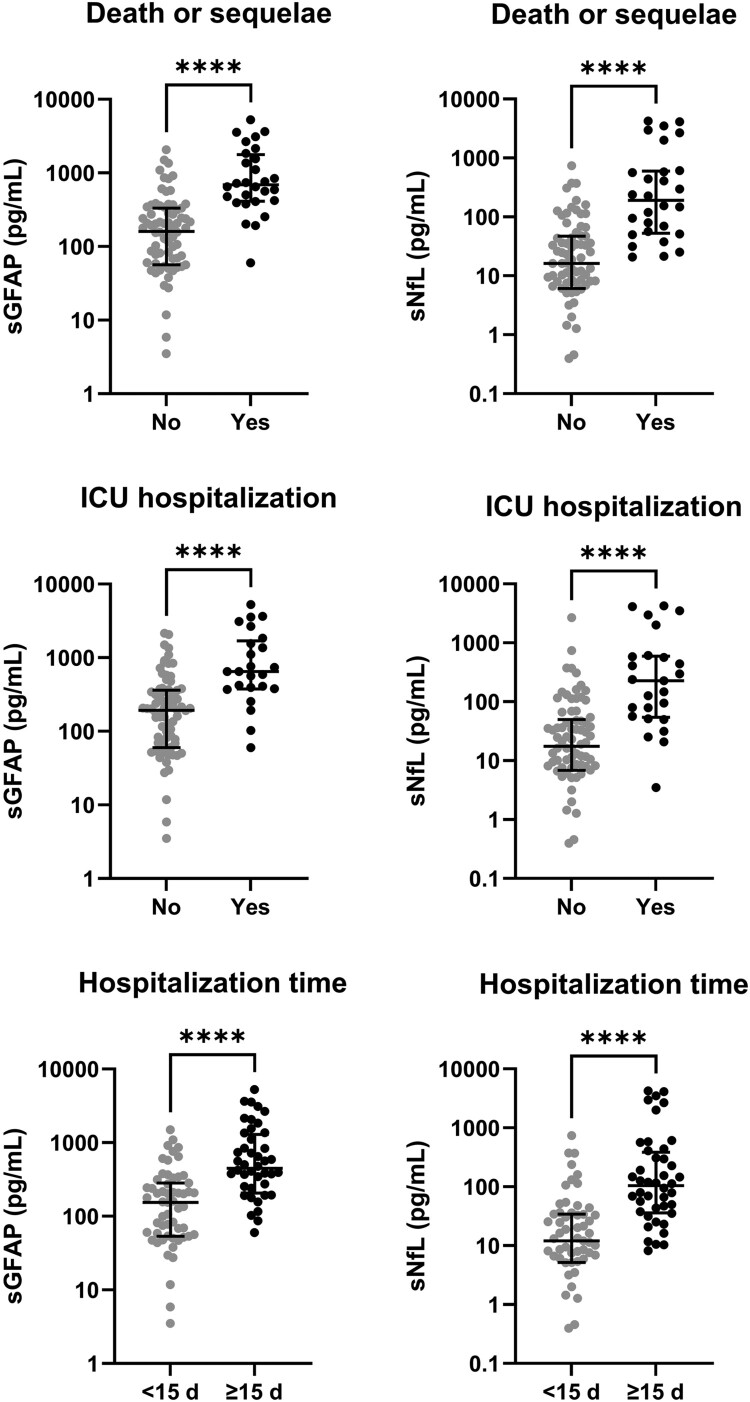
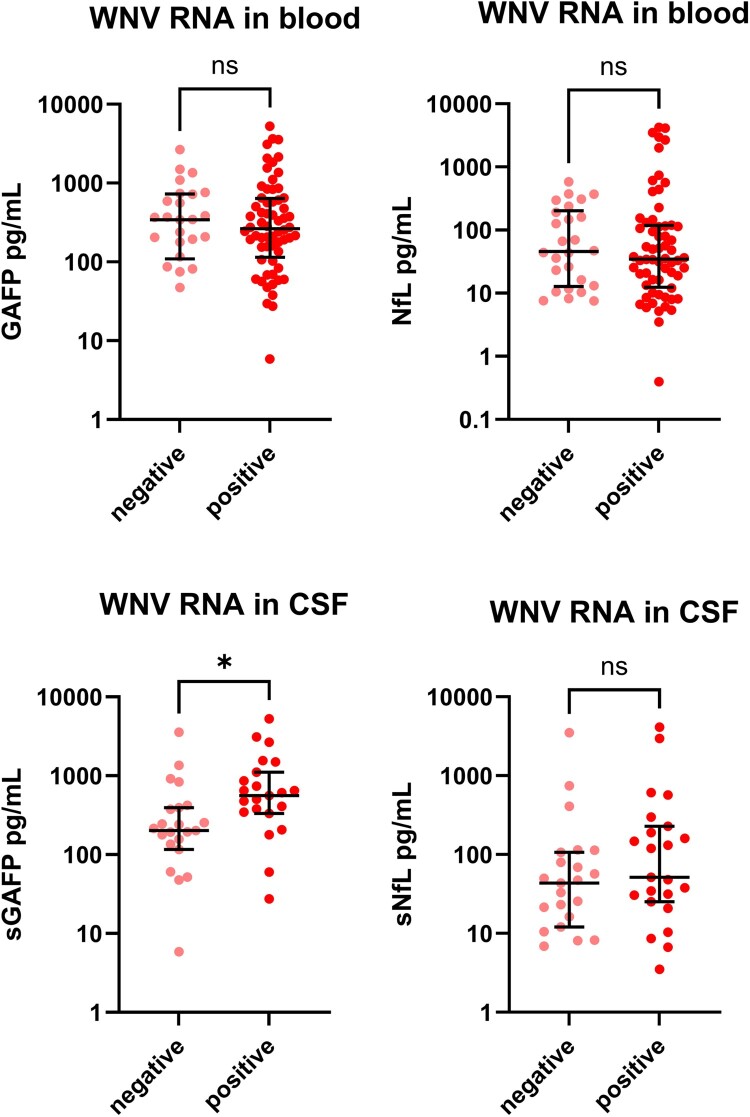
West Nile virus (WNV) is a neurotropic mosquito-borne orthoflavivirus, representing a relevant public health threat. Identification of biomarkers that would predict the course of WNV infection is of interest for the early identification of patients at risk and for supporting decisions on therapeutic interventions. In this study, serum levels of glial fibrillary acidic protein (sGFAP) and neurofilament light chain (sNfL), which are markers of brain tissue damage and inflammation, were analysed in 103 subjects with laboratory-confirmed WNV infection, comprising 13 asymptomatic blood donors, 23 with WN fever (WNF), 50 with encephalitis/meningoencephalitis (E/ME) and 17 with acute flaccid paralysis (AFP). In addition, 55 WNV-negative subjects with fever, encephalitis or healthy asymptomatic were included as controls. Age-adjusted levels of both sNfL and sGFAP were significantly higher in patients with neuroinvasive disease than in those with fever or asymptomatic (both WNV-positive and WNV-negative), suggesting a broad association of these biomarkers with systemic inflammation and brain injury resulting from infection. In WNV patients, the combined analysis of sNfL and sGFAP early after symptom onset allowed discrimination between neuroinvasive disease and fever with 67.2% sensitivity and 91.3% specificity, but not between E/ME and AFP. Furthermore, high levels of sNfL and sGFAP were significantly associated with prolonged hospital stay, intensive care unit admission and the occurrence of death or severe sequelae. Detection of WNV RNA in CSF was associated with increased sGFAP. In conclusion, our study indicates the potential utility of sNfL and sGFAP as biomarkers of WNV disease severity and adverse outcome.
西尼罗河病毒(WNV)是一种嗜神经性蚊媒正黄病毒,对公共卫生构成重大威胁。识别能够预测WNV感染病程的生物标志物,对于早期识别高危患者以及支持治疗干预决策具有重要意义。在本研究中,我们分析了103例实验室确诊的WNV感染患者血清中的胶质纤维酸性蛋白(sGFAP)和神经丝轻链(sNfL)水平,这些蛋白是脑组织损伤和炎症的标志物。这103例患者包括13名无症状献血者、23例西尼罗河热(WNF)患者、50例脑炎/脑膜脑炎(E/ME)患者和17例急性弛缓性麻痹(AFP)患者。此外,还纳入了55例发热、患脑炎或健康无症状的WNV阴性受试者作为对照。经年龄调整后,神经侵袭性疾病患者的sNfL和sGFAP水平均显著高于发热或无症状(包括WNV阳性和WNV阴性)患者,这表明这些生物标志物与感染引起的全身炎症和脑损伤广泛相关。在WNV患者中,症状出现后早期对sNfL和sGFAP进行联合分析,能够以67.2%的敏感性和91.3%的特异性区分神经侵袭性疾病和发热,但无法区分E/ME和AFP。此外,高水平的sNfL和sGFAP与住院时间延长、入住重症监护病房以及死亡或严重后遗症的发生显著相关。脑脊液中检测到WNV RNA与sGFAP升高有关。总之,我们的研究表明sNfL和sGFAP作为WNV疾病严重程度和不良预后生物标志物具有潜在应用价值。