Ugwu Chinyere N, Ugwu Okechukwu Paul-Chima, Alum Esther Ugo, Eze Val Hyginus Udoka, Basajja Mariam, Ugwu Jovita Nnenna, Ogenyi Fabian C, Ejemot-Nwadiaro Regina Idu, Okon Michael Ben, Egba Simeon Ikechukwu, Uti Daniel Ejim
Department of Publication and Extension, Kampala International University, Kampala, Uganda.
Health Care and Data Management, Leiden University, Leiden, Netherlands.
Medicine (Baltimore). 2025 Feb 14;104(7):e41535. doi: 10.1097/MD.0000000000041535.
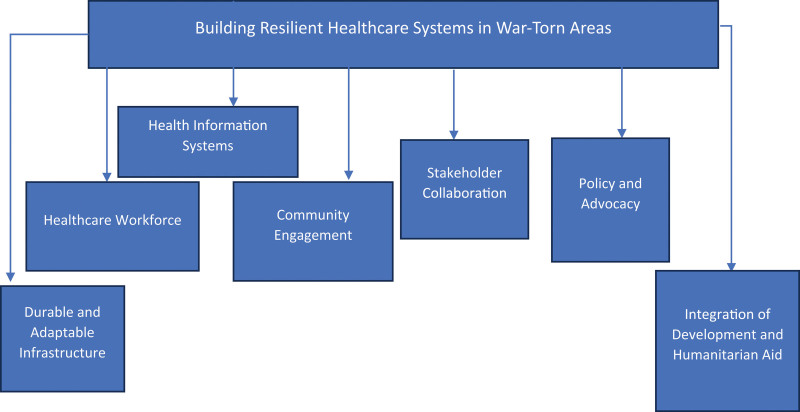
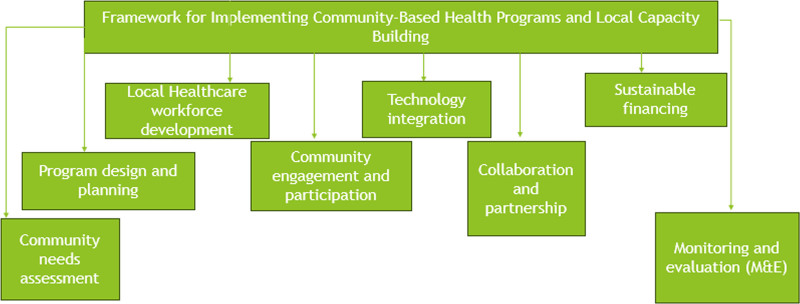
This review explores the integration of sustainable development goals (SDGs) into healthcare organizations in conflict zones, with a specific focus on emergent models aimed at improving population health. The primary objective is to examine how innovative approaches such as telemedicine, mobile health clinics, and community health worker initiatives can be aligned with SDG targets, thereby enhancing healthcare outcomes in conflict-affected regions. The review focuses on the important areas of concern which encompasses technology, infrastructure, community engagement, and social/psychological factors. Particularly, strategies of improving existing technologies such as electronic health records and mobile health applications, enhancing health systems and community-based interventions, and integrating of mental health services are highlighted. Other focal points include advancing better water, sanitation and hygienic practices, sustainable water resource management, and other alternative financing mechanisms, such as public-private partnerships. Integrating these strategies are closely linked with the active participation of international, local governments, and affected communities in their effective implementation. This review highlights the need for monitoring and evaluation to assess intervention effectiveness and advocacy efforts to ensure that interventions supported and advocated by the international community are creating successful outcomes towards the SDG goals and improving population health in post conflict settings.
本综述探讨了将可持续发展目标(SDGs)纳入冲突地区医疗机构的情况,特别关注旨在改善民众健康的新兴模式。主要目的是研究远程医疗、移动健康诊所和社区卫生工作者倡议等创新方法如何与可持续发展目标的各项指标保持一致,从而改善受冲突影响地区的医疗保健成果。该综述聚焦于技术、基础设施、社区参与以及社会/心理因素等重要关注领域。特别强调了改进电子健康记录和移动健康应用等现有技术、加强卫生系统和基于社区的干预措施以及整合心理健康服务的策略。其他重点包括推进更好的水、环境卫生和卫生习惯、可持续水资源管理以及其他替代融资机制,如公私伙伴关系。整合这些策略与国际、地方政府及受影响社区积极参与其有效实施密切相关。本综述强调了监测和评估以评估干预效果的必要性,以及倡导努力,以确保国际社会支持和倡导的干预措施朝着可持续发展目标取得成功成果,并改善冲突后环境中的民众健康。