Matsuda Ryosuke, Tamamoto Tetsuro, Inooka Nobuyoshi, Hontsu Shigeto, Doi Akihiro, Maeoka Ryosuke, Nakazawa Tsutomu, Morimoto Takayuki, Yamaki Kaori, Miura Sachiko, Morisaki Yudai, Yokoyama Shohei, Kotsugi Masashi, Takeshima Yasuhiro, Isohashi Fumiaki, Nakagawa Ichiro
Department of Neurosurgery, Nara Medical University, 840 Shijo-cho, Kashihara, Nara 634-8522, Japan.
Department of Radiation Oncology, Nara Medical University, 840 Shijo-cho, Kashihara, Nara 634-8522, Japan.
J Radiat Res. 2025 Mar 24;66(2):129-136. doi: 10.1093/jrr/rrae099.
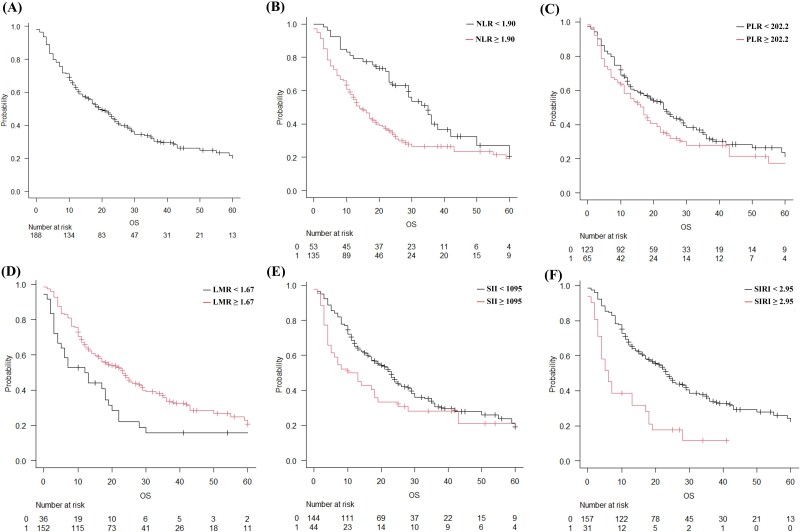
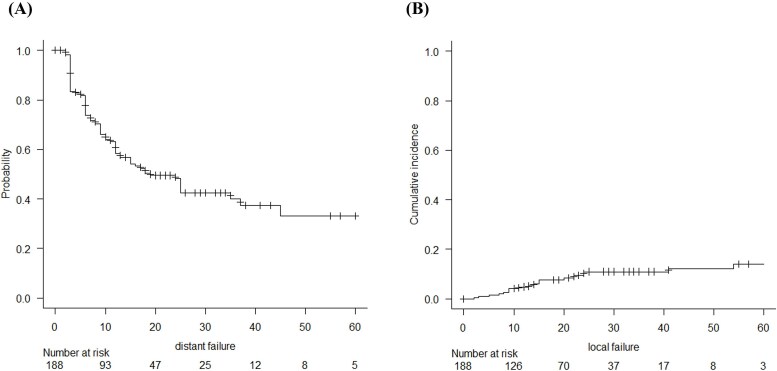
This study aimed to evaluate the prognostic value of pre-treatment blood cell counts in patients with brain metastasis (BM) from non-small cell lung cancer (NSCLC) who were treated using linear accelerator (linac)-based stereotactic radiosurgery (SRS) and fractionated stereotactic radiotherapy (fSRT) with a micro-multileaf collimator. Between January 2011 and November 2022, 271 consecutive patients underwent linac-based SRS/fSRT for BM from NSCLC. Thirty patients with insufficient blood test data during this period were excluded from this analysis. Thirty-five patients with steroid intake at the time point of the blood test and 18 patients with higher C-reactive protein were excluded. Thus, 188 patients were eventually enrolled in this study. The median follow-up period after SRS/fSRT was 21 months (range: 0-121 months), and the median survival time after SRS/fSRT was 19 months. Neutrophil-lymphocyte ratio ≥ 1.90, lymphocyte-monocyte ratio ≤ 1.67 and systemic inflammation response index (SIRI) ≥ 2.95 were unfavorable predictors of prognosis for patients who underwent SRS/fSRT for BM from NSCLC. Cox proportional-hazard multivariate analysis revealed that the SIRI was independent prognostic factors for increased risk of death. Thus, simple, less expensive, and routinely performed pre-treatment blood cell count measurements such as SIRI can predict the overall survival of patients treated with SRS/fSRT for BM from NSCLC.
本研究旨在评估对于采用基于直线加速器(linac)的立体定向放射外科(SRS)和带有微型多叶准直器的分次立体定向放射治疗(fSRT)治疗的非小细胞肺癌(NSCLC)脑转移(BM)患者,治疗前血细胞计数的预后价值。在2011年1月至2022年11月期间,271例连续的患者接受了基于linac的SRS/fSRT治疗NSCLC脑转移。在此期间,30例血液检测数据不足的患者被排除在本分析之外。35例在血液检测时间点服用类固醇的患者和18例C反应蛋白较高的患者被排除。最终,188例患者纳入本研究。SRS/fSRT后的中位随访期为21个月(范围:0 - 121个月),SRS/fSRT后的中位生存时间为19个月。中性粒细胞与淋巴细胞比值≥1.90、淋巴细胞与单核细胞比值≤1.67以及全身炎症反应指数(SIRI)≥2.95是接受SRS/fSRT治疗NSCLC脑转移患者预后的不良预测因素。Cox比例风险多因素分析显示,SIRI是死亡风险增加的独立预后因素。因此,简单、成本较低且常规进行的治疗前血细胞计数测量,如SIRI,可以预测接受SRS/fSRT治疗NSCLC脑转移患者的总生存期。