Yang Junchen, Agrawal Kriti, Stanley Jay, Li Ruiqi, Jacobs Nicholas, Wang Haowei, Lu Chang, Qu Rihao, Clarke Declan, Chen Yuhang, Jiang Yunzhe, Bai Donglu, Zheng Suchen, Fox Howard, Ho Ya-Chi, Huttner Anita, Gerstein Mark, Kluger Yuval, Zhang Le, Spudich Serena
Interdepartmental Program in Computational Biology and Bioinformatics, Yale University, New Haven, CT, USA.
Program in Applied Mathematics, Yale University, New Haven, CT, USA.
bioRxiv. 2025 Feb 8:2025.02.05.636707. doi: 10.1101/2025.02.05.636707.
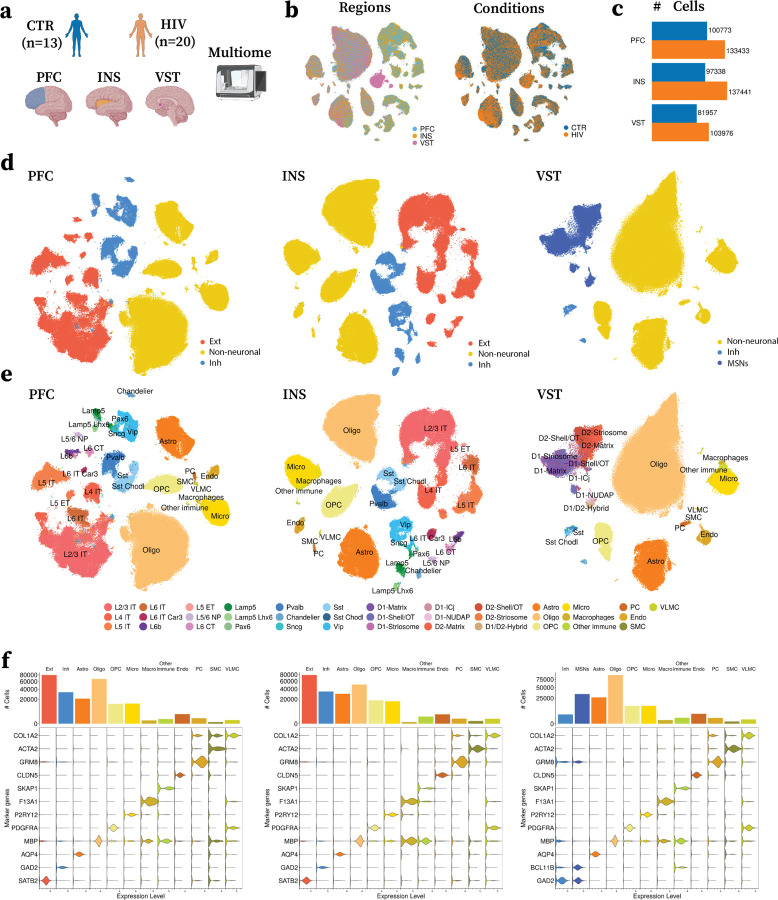
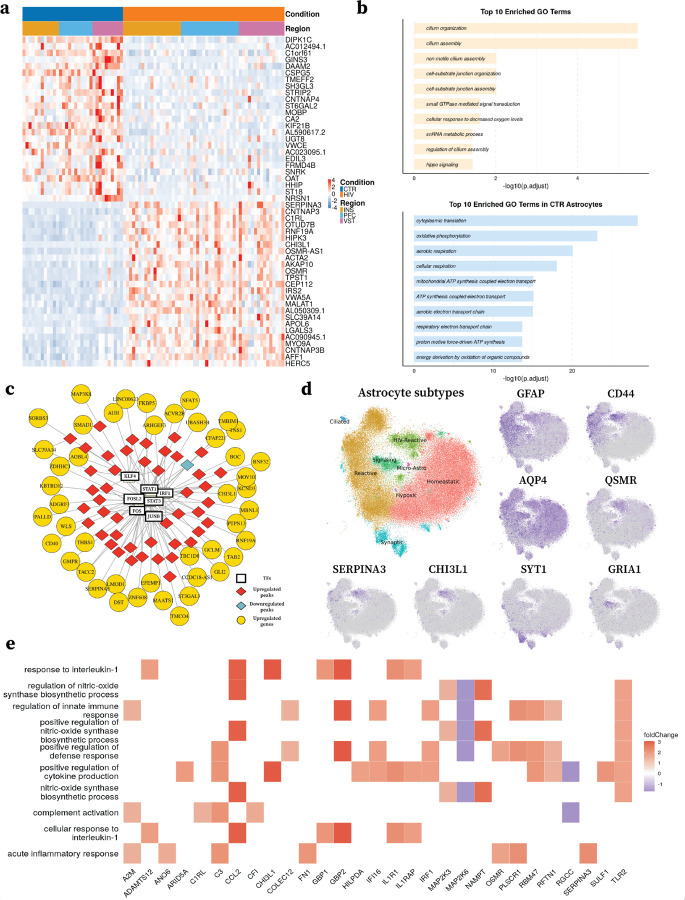
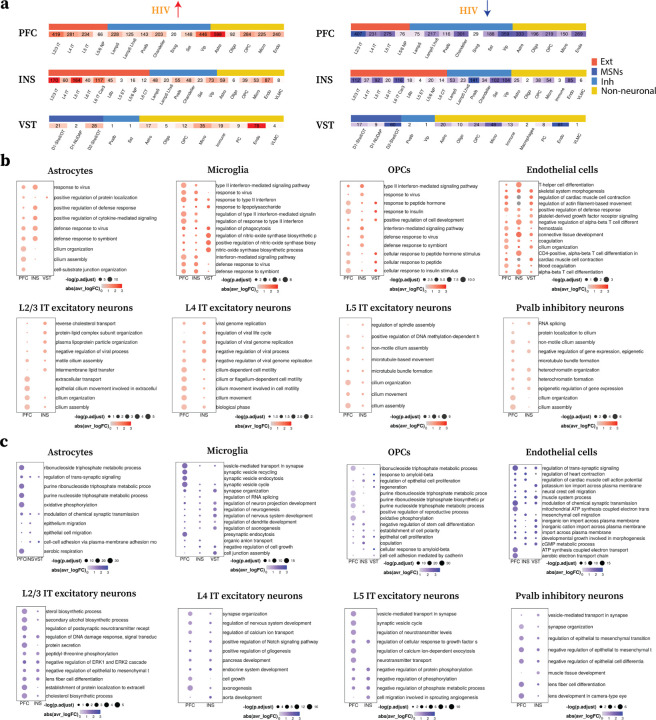
HIV infection exerts profound and long-lasting neurodegenerative effects on the central nervous system (CNS) that can persist despite antiretroviral therapy (ART). Here, we used single-nucleus multiome sequencing to map the transcriptomic and epigenetic landscapes of postmortem human brains from 13 healthy individuals and 20 individuals with HIV who have a history of treatment with ART. Our study spanned three distinct regions-the prefrontal cortex, insular cortex, and ventral striatum-enabling a comprehensive exploration of region-specific and cross-regional perturbations. We found widespread and persistent HIV-associated transcriptional and epigenetic alterations across multiple cell types. Detailed analyses of microglia revealed state changes marked by immune activation and metabolic dysregulation, while integrative multiomic profiling of astrocytes identified multiple subpopulations, including a reactive subpopulation unique to HIV-infected brains. These findings suggest that cells from people with HIV exhibit molecular shifts that may underlie ongoing neuroinflammation and CNS dysfunction. Furthermore, cell-cell communication analyses uncovered dysregulated and pro-inflammatory interactions among glial populations, underscoring the multifaceted and enduring impact of HIV on the brain milieu. Collectively, our comprehensive atlas of HIV-associated brain changes reveals distinct glial cell states with signatures of proinflammatory signaling and metabolic dysregulation, providing a framework for developing targeted therapies for HIV-associated neurological dysfunction.
尽管接受了抗逆转录病毒疗法(ART),但HIV感染对中枢神经系统(CNS)仍会产生深远且持久的神经退行性影响。在此,我们使用单核多组学测序技术,描绘了13名健康个体以及20名有ART治疗史的HIV感染者死后人类大脑的转录组和表观遗传图谱。我们的研究涵盖了三个不同区域——前额叶皮层、岛叶皮层和腹侧纹状体,从而能够全面探索区域特异性和跨区域的扰动。我们发现,在多种细胞类型中存在广泛且持久的与HIV相关的转录和表观遗传改变。对小胶质细胞的详细分析揭示了以免疫激活和代谢失调为特征的状态变化,而对星形胶质细胞的综合多组学分析则确定了多个亚群,包括HIV感染大脑特有的反应性亚群。这些发现表明,HIV感染者的细胞表现出分子变化,这可能是持续神经炎症和中枢神经系统功能障碍的基础。此外,细胞间通讯分析揭示了胶质细胞群体之间失调的促炎相互作用,突显了HIV对脑环境的多方面持久影响。总体而言,我们全面的HIV相关脑变化图谱揭示了具有促炎信号和代谢失调特征的不同胶质细胞状态,为开发针对HIV相关神经功能障碍的靶向治疗提供了框架。