
中国过去四十年来的性别选择性堕胎。
Sex-selective abortions over the past four decades in China.
作者信息
Mei Li, Jiang Quanbao
机构信息
School of Sports Economics and Management, Xi'an Physical Education University, No. 65 Hanguang Road, Xi'an, Shaanxi, 710068, China.
Institute for Population and Development Studies, Xi'an Jiaotong University, No. 28 Xianning West Road, Xi'an, Shaanxi, 710049, China.
出版信息
Popul Health Metr. 2025 Feb 21;23(1):6. doi: 10.1186/s12963-025-00368-y.
BACKGROUND
China now faces multiple challenging demographic and public policy problems that have emerged from four decades of sex-selective induced abortions. The sex-selective induced abortion of female fetuses has been under-examined quantitatively in China.
METHODS
Using annual data on the officially registered number of births, induced abortions, and SRB data, we estimate the annual number of sex-selective abortions and then estimated two related proportions over the past decades.
RESULTS
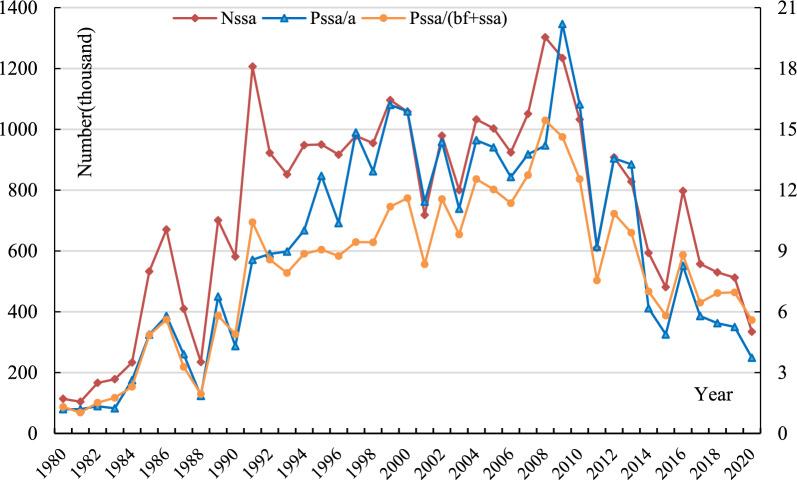
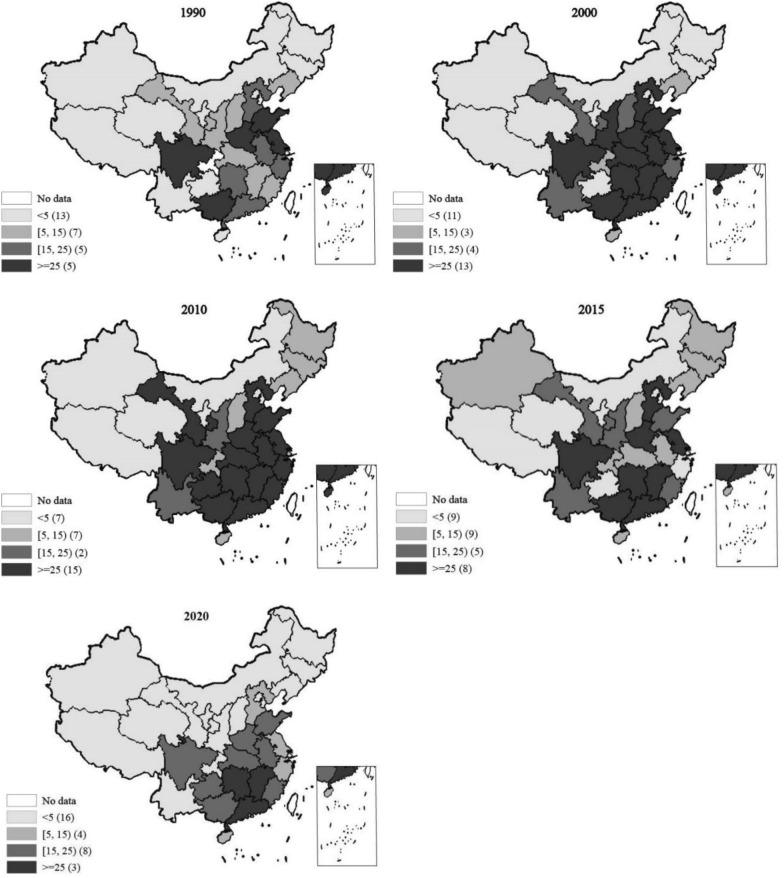
The annual proportions and number of selective abortions rose in the 1980s with the strict family planning policy and the diffusion of sex identification technology, remained at a high level between 1990 and 2010, and then declined, totaling 30.04 million. The abortion of second-order female fetuses was the largest proportion of all sex-selective abortions but declined after 2000 partly due to the change in birth composition by order. Children's composition affected sex-selective practice. Village selective abortions accounted for the majority of all selective abortions but decreased markedly in 2010 with changes in birth composition by residence. The rural-urban comparison by order indicated that urban couples were not less likely to abort female fetuses than their rural counterparts. Sex-selective abortions still exhibit provincial differences.
CONCLUSIONS
In China, the long-standing preference for sons, easy access to sex-selective technologies, and the spontaneous fertility decline have led to the continued practice of selectively aborting female fetuses, despite its prohibition. As a result, the imbalanced sex ratio may take years to normalize.
背景
中国目前面临着因四十年来的性别选择性人工流产而出现的多个具有挑战性的人口和公共政策问题。在中国,对女性胎儿的性别选择性人工流产在定量研究方面一直未得到充分考察。
方法
利用官方登记的年度出生数、人工流产数和出生性别比数据,我们估算了年度性别选择性人工流产数,然后估算了过去几十年中两个相关比例。
结果
20世纪80年代,随着严格的计划生育政策和性别鉴定技术的普及,选择性人工流产的年度比例和数量有所上升,在1990年至2010年间保持在较高水平,随后下降,总数达3004万。二胎女性胎儿人工流产在所有性别选择性人工流产中占比最大,但在2000年后有所下降,部分原因是出生顺序构成的变化。儿童构成影响性别选择行为。农村地区的选择性人工流产占所有选择性人工流产的大部分,但在2010年随着居住地区出生构成的变化而显著下降。按顺序进行的城乡比较表明,城市夫妇人工流产女胎的可能性并不低于农村夫妇。性别选择性人工流产仍存在省级差异。
结论
在中国,长期以来对男孩的偏好、性别选择技术的容易获取以及生育率的自然下降,导致尽管禁止,但选择性人工流产女胎的行为仍在继续。因此,失衡的性别比可能需要数年时间才能恢复正常。


 Zotero 插件