Cheng Guangyang, Zhou Zhaokai, Li Shiqi, Peng Fu, Yang Shuai, Ren Chuanchuan
Department of Urology, The First Affiliated Hospital of Zhengzhou University, Zhengzhou, 450052, Henan, China.
Bladder Structure and Function Reconstruction Henan Engineering Laboratory, The First Affiliated Hospital of Zhengzhou University, Zhengzhou, 450052, Henan, China.
Cancer Immunol Immunother. 2025 Feb 25;74(4):113. doi: 10.1007/s00262-025-03967-8.
The pathogenesis and progression of renal cell carcinoma (RCC) involve complex programmed cell death (PCD) processes. As the powerhouse of the cell, mitochondria can influence cell death mechanisms. However, the prognostic significance of the interplay between mitochondrial function (MF) and PCD remains unclear.
We collected sets of genes related to PCD and MF. Using a powerful machine learning algorithm framework, we investigated the relationship between MF and PCD in different cohorts of patients and developed a machine learning-derived prognostic signature (mpMLDPS) related to MF and PCD. Finally, the most appropriate prognostic markers for RCC were screened by survival analysis and clinical correlation analysis, and the effects on renal cancer cells were analysed in vitro.
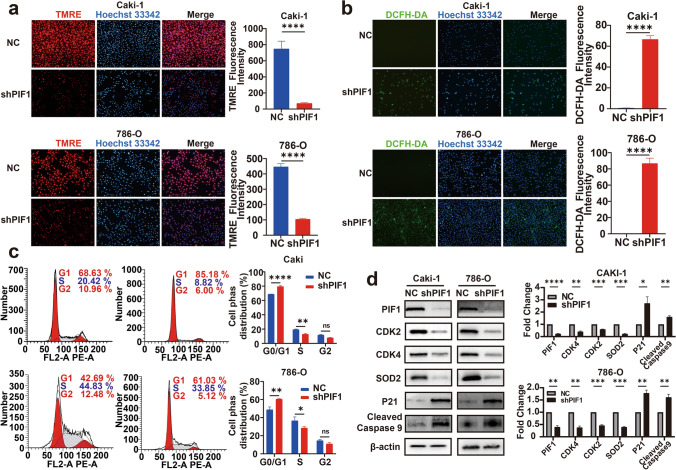
mpMLDPS was significantly correlated with the prognosis of RCC patients, and the prognosis was worse in the high mpMLDPS group, and this result was also validated in external independent cohorts. There were associations between mpMLDPS and immune checkpoints, tumour microenvironment, somatic mutations, and drug sensitivity. Finally, a novel RCC prognostic marker PIF1 was identified in model genes. The knockdown of PIF1 in vitro inhibited the progression of renal carcinoma cells.
mpMLDPS has great potential to serve as a reliable clinical signature to improve the accuracy and reliability of prognostic assessment in RCC patients, thereby choosing the appropriate therapeutic regimen in clinical practice. PIF1 is also expected to be a novel target for the clinical treatment of RCC.
肾细胞癌(RCC)的发病机制和进展涉及复杂的程序性细胞死亡(PCD)过程。线粒体作为细胞的动力源,可影响细胞死亡机制。然而,线粒体功能(MF)与PCD之间相互作用的预后意义仍不清楚。
我们收集了与PCD和MF相关的基因集。使用强大的机器学习算法框架,我们研究了不同患者队列中MF与PCD之间的关系,并开发了一种与MF和PCD相关的机器学习衍生预后特征(mpMLDPS)。最后,通过生存分析和临床相关性分析筛选出RCC最合适的预后标志物,并在体外分析其对肾癌细胞的影响。
mpMLDPS与RCC患者的预后显著相关,高mpMLDPS组的预后较差,这一结果在外部独立队列中也得到了验证。mpMLDPS与免疫检查点、肿瘤微环境、体细胞突变和药物敏感性之间存在关联。最后,在模型基因中鉴定出一种新的RCC预后标志物PIF1。体外敲低PIF1可抑制肾癌细胞的进展。
mpMLDPS有很大潜力作为一种可靠的临床特征,以提高RCC患者预后评估的准确性和可靠性,从而在临床实践中选择合适的治疗方案。PIF1也有望成为RCC临床治疗的新靶点。