Ciuca-Pană Maria-Alexandra, Boulmpou Aristi, Ileri Cigdem, Manzi Giovanna, Golino Michele, Ostojic Marina, Galimzhanov Akhmetzhan, Busnatu Stefan, Mega Simona, Perone Francesco
Cardiology Department, Carol Davila University of Medicine and Pharmacy, Bagdasar-Arseni Emergency Clinical Hospital, 041915 Bucharest, Romania.
Third Department of Cardiology, Aristotle University of Thessaloniki, Ippokratio General Hospital, 54636 Thessaloniki, Greece.
Medicina (Kaunas). 2025 Jan 24;61(2):211. doi: 10.3390/medicina61020211.
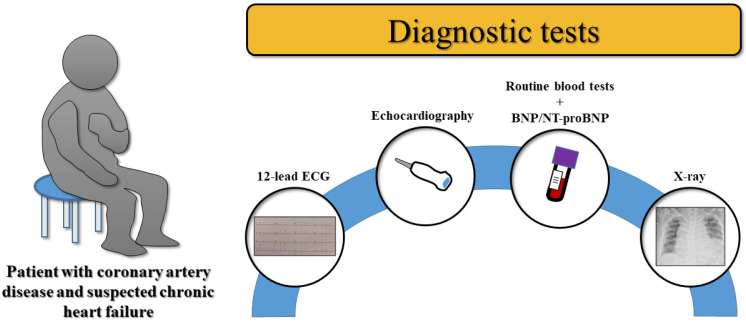
Coronary artery disease is the leading cause of acute and chronic heart failure. Patients with heart failure and ischemic heart disease need a tailored assessment to define the appropriate treatment, while a specific multidisciplinary management plan should be followed. Indeed, several factors should be assessed before starting treatment, such as heart failure symptoms and/or signs, angina, electrocardiographic features, right and left ventricular systolic and diastolic function, serological abnormalities, cardiac structural and functional integrity, and pulmonary function. New scenarios and developments have emerged recently in this field, increasing our knowledge regarding pathophysiology, exercise, and pharmacology. Effective and appropriate management and treatment reduce the risk of death and hospitalization for heart failure. Herein, we provide an updated, state-of-the-art overview of pharmacological treatment and cardiac rehabilitation in patients with chronic heart failure and coronary artery disease. Furthermore, tailored and contemporary management in clinical practice will be proposed for this specific and fragile patient population.
冠状动脉疾病是急慢性心力衰竭的主要原因。心力衰竭和缺血性心脏病患者需要进行针对性评估以确定合适的治疗方法,同时应遵循特定的多学科管理计划。确实,在开始治疗前应评估多个因素,如心力衰竭的症状和/或体征、心绞痛、心电图特征、左右心室的收缩和舒张功能、血清学异常、心脏结构和功能完整性以及肺功能。该领域最近出现了新情况和新进展,增加了我们对病理生理学、运动和药理学的认识。有效且恰当的管理与治疗可降低心力衰竭患者的死亡风险和住院风险。在此,我们提供了关于慢性心力衰竭和冠状动脉疾病患者药物治疗及心脏康复的最新、前沿概述。此外,还将针对这一特殊且脆弱的患者群体提出临床实践中的针对性当代管理方法。