Dai Feiyang, Wengler Kenneth, He Xiang, Wang Junying, Yang Jie, Parsey Ramin V, DeLorenzo Christine
UC Berkeley, Berkeley, CA, USA.
Department of Psychiatry, Icahn School of Medicine at Mount Sinai, New York, NY, USA.
Transl Psychiatry. 2025 Mar 2;15(1):71. doi: 10.1038/s41398-025-03292-9.
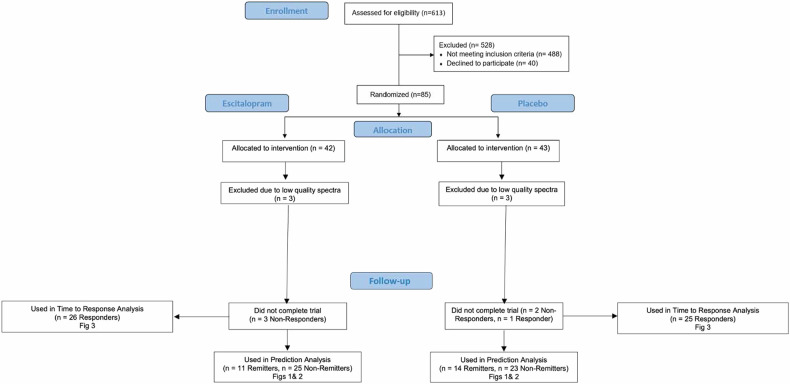
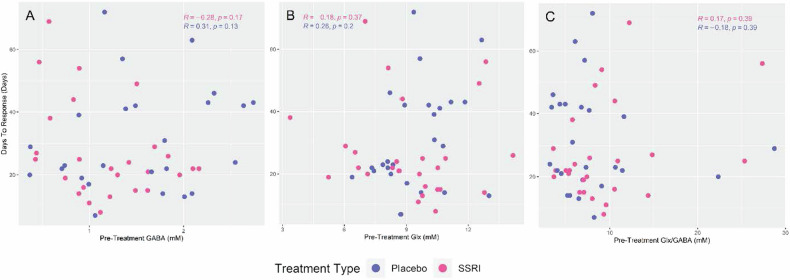
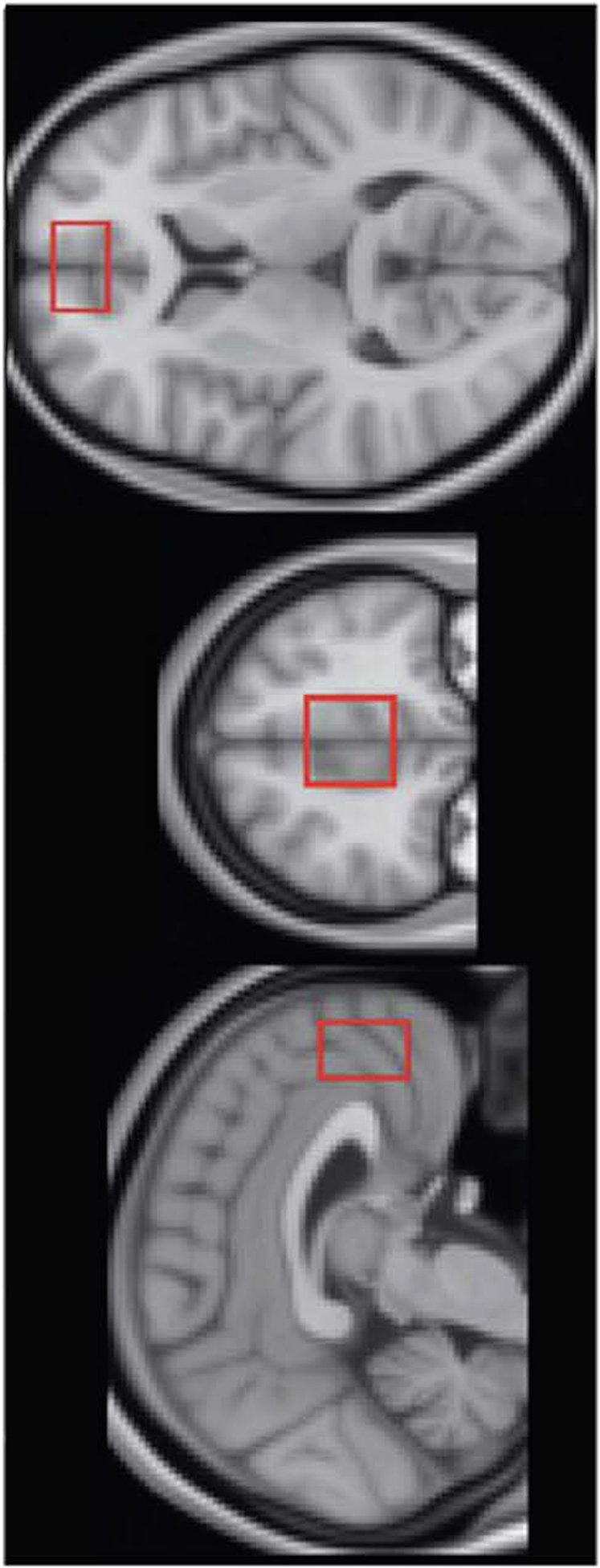
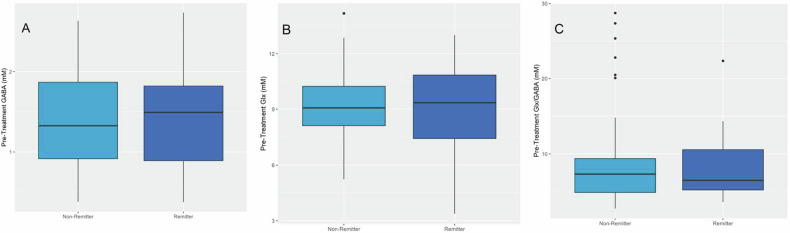
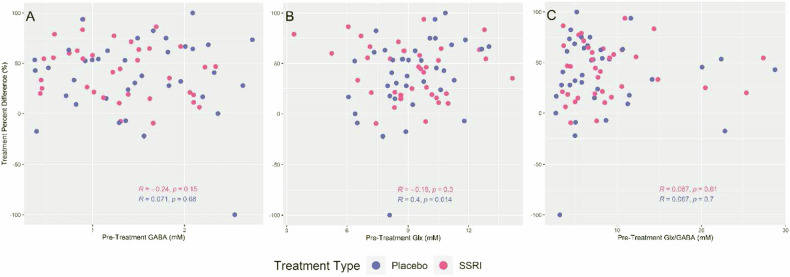
Studies have shown gamma-amino-butyric acid (GABA) and Glx (a combination of glutamate and glutamine) to be altered in major depressive disorder (MDD). Using proton Magnetic Resonance Spectroscopy (H-MRS), this study aimed to determine whether lower pretreatment GABA and Glx levels in the medial frontal cortex, a region implicated in MDD pathophysiology, are associated with better antidepressant treatment response. Participants with MDD (N = 74) were antidepressant naïve or medication-free for at least three weeks before imaging. Two MEGA-PRESS H-MRS acquisitions were collected, interleaved with a water unsuppressed reference scan. GABA and Glx concentrations were quantified from an average difference spectrum, with preprocessing using Gannet and spectral fitting using TARQUIN. Following imaging, participants were randomized to escitalopram or placebo for 8 weeks in a double-blind design. Multivariable logistic regression models were applied with treatment type and age as covariates. Bayes Factor hypothesis testing was used to interpret the strength of the evidence. No significant association was found between pretreatment Glx, GABA, or Glx/GABA and depression remission status or the continuous outcome, percent change in symptom severity. In an exploratory analysis, no significant correlation was found between pretreatment Glx, GABA or Glx/GABA and days to response. Bayes factor analysis showed strong evidence towards the null hypotheses in all cases. To date, there are no replicated biomarkers in psychiatry. To address this, well-powered, placebo-controlled trials need to be undertaken and reported. The present analysis suggests pretreatment GABA, Glx, or their ratio cannot predict antidepressant treatment response. Future direction including examining glutamate and glutamine separately or examining biological subtypes of MDD separately.Trial Name: Advancing Personalized Antidepressant Treatment Using PET/MRI.Registration Number: NCT02623205 URL: https://clinicaltrials.gov/ct2/show/NCT02623205.
研究表明,γ-氨基丁酸(GABA)和Glx(谷氨酸和谷氨酰胺的组合)在重度抑郁症(MDD)中会发生改变。本研究使用质子磁共振波谱(H-MRS),旨在确定内侧前额叶皮质(一个与MDD病理生理学相关的区域)中较低的治疗前GABA和Glx水平是否与更好的抗抑郁治疗反应相关。患有MDD的参与者(N = 74)在成像前未服用过抗抑郁药物或至少停药三周。采集了两次MEGA-PRESS H-MRS数据,并与水未抑制的参考扫描交错进行。从平均差异谱中量化GABA和Glx浓度,使用Gannet进行预处理,使用TARQUIN进行谱拟合。成像后,参与者被随机分为艾司西酞普兰组或安慰剂组,采用双盲设计,为期8周。应用多变量逻辑回归模型,将治疗类型和年龄作为协变量。使用贝叶斯因子假设检验来解释证据的强度。未发现治疗前Glx、GABA或Glx/GABA与抑郁缓解状态或连续结果(症状严重程度的百分比变化)之间存在显著关联。在探索性分析中,未发现治疗前Glx、GABA或Glx/GABA与起效天数之间存在显著相关性。贝叶斯因子分析在所有情况下均显示出强烈的证据支持零假设。迄今为止,精神病学中尚无重复验证的生物标志物。为了解决这一问题,需要开展并报告有充分效力的、安慰剂对照试验。本分析表明,治疗前GABA、Glx或其比例无法预测抗抑郁治疗反应。未来的方向包括分别研究谷氨酸和谷氨酰胺,或分别研究MDD的生物学亚型。试验名称:使用PET/MRI推进个性化抗抑郁治疗。注册号:NCT02623205。网址:https://clinicaltrials.gov/ct2/show/NCT02623205