Yao Yuqing, Luo Yusheng, Liang Xiaomei, Zhong Li, Wang Yannan, Hong Zhengchao, Song Chao, Xu Zeyu, Wang Jiancheng, Zhang Miao
Scientific Research Center, The Seventh Affiliated Hospital of Sun Yat-sen University, Shenzhen, Guangdong, 518107, China.
Guangdong Provincial Key Laboratory of Digestive Cancer Research, The Seventh Affiliated Hospital of Sun Yat-sen University, Shenzhen, China.
Stem Cell Res Ther. 2025 Mar 1;16(1):104. doi: 10.1186/s13287-025-04242-4.
Stem cells play a pivotal role in tissue regeneration and repair. Skeletal muscle comprises two main stem cells: muscle stem cells (MuSCs) and fibro-adipogenic progenitors (FAPs). FAPs are essential for maintaining the regenerative milieu of muscle tissue and modulating the activation of muscle satellite cells. However, during acute skeletal muscle injury, the alterations and mechanisms of action of FAPs remain unclear.
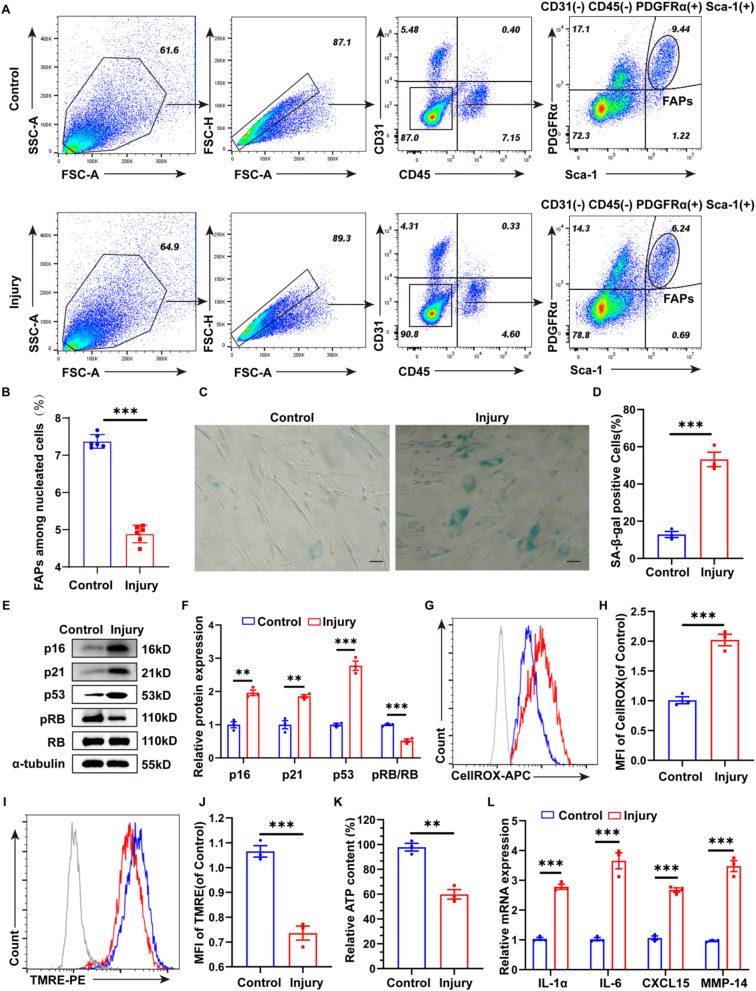
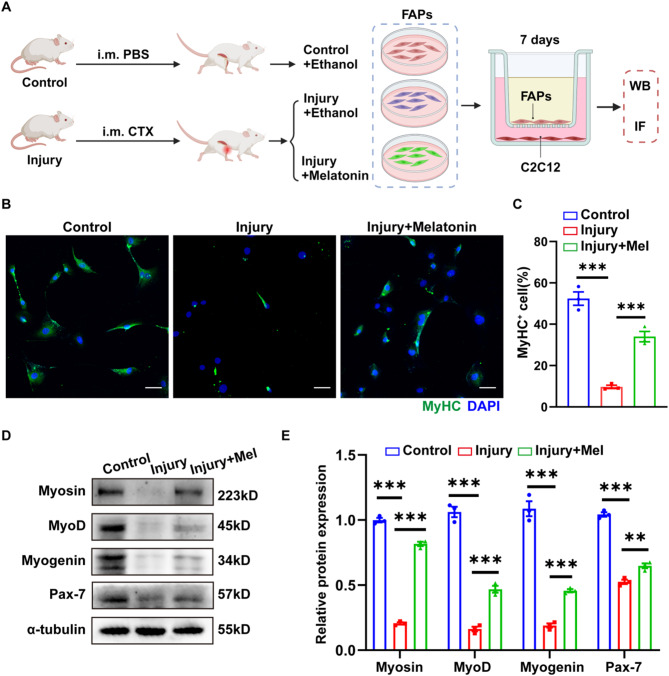
we employed the GEO database for bioinformatics analysis of skeletal muscle injury. A skeletal muscle injury model was established through cardiotoxin (CTX, 10µM, 50µL) injection into the tibialis anterior (TA) of C57BL/6 mice. Three days post-injury, we extracted the TA, isolated FAPs (CD31CD45PDGFRαSca-1), and assessed the senescence phenotype through SA-β-Gal staining and Western blot. Additionally, we established a co-culture system to evaluate the capacity of FAPs to facilitate MuSCs differentiation. Finally, we alleviated the senescent of FAPs through in vitro (100 µM melatonin, 5 days) and in vivo (20 mg/kg/day melatonin, 15 days) administration experiments, confirming melatonin's pivotal role in the regeneration and repair processes of skeletal muscle.
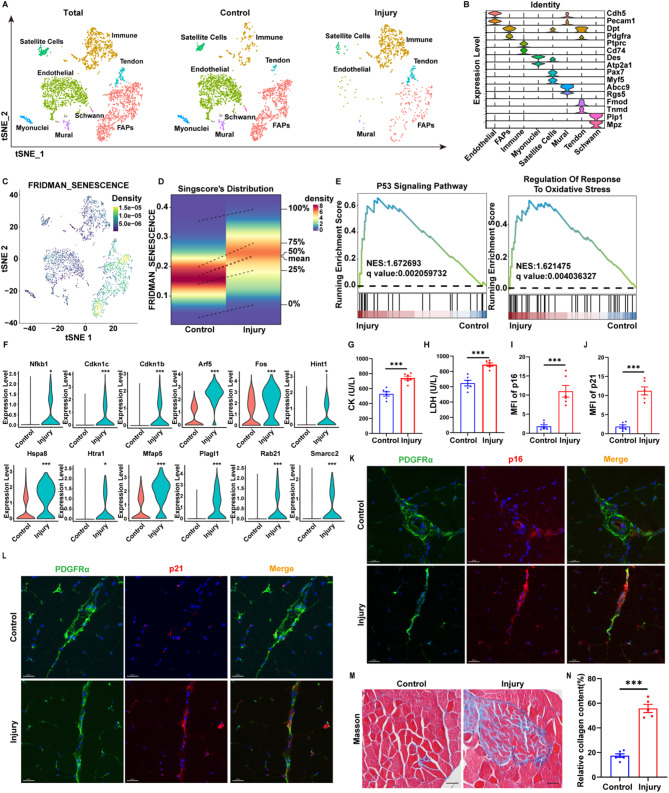
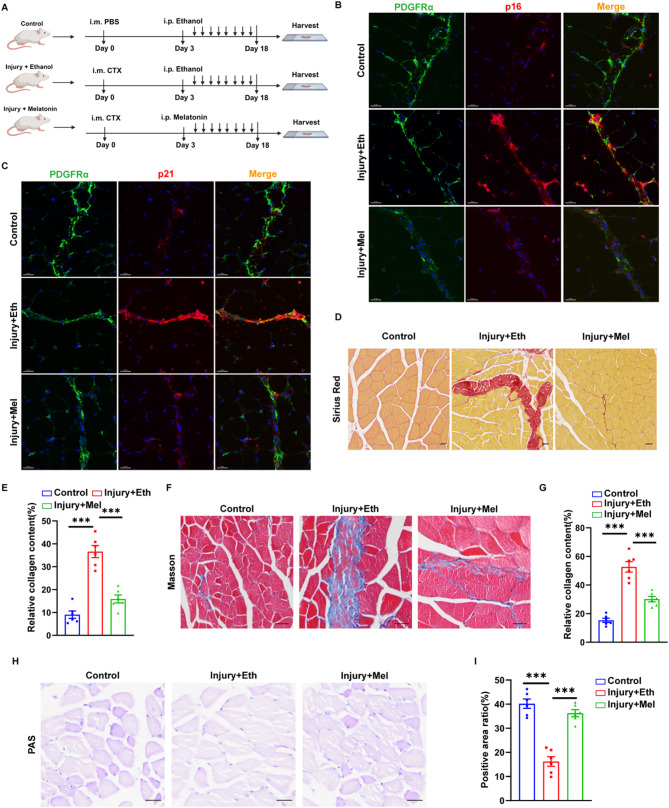
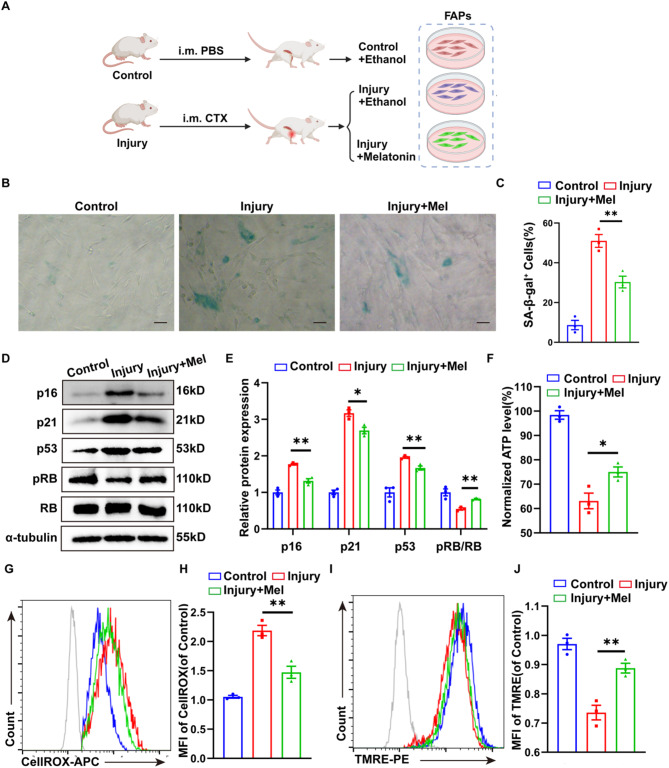
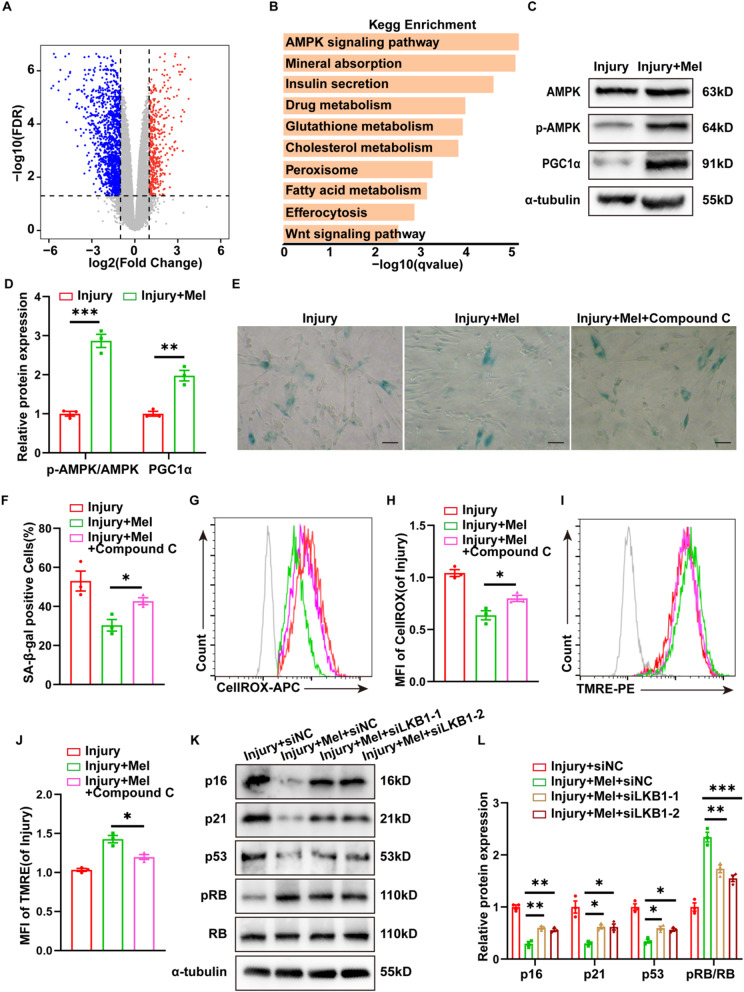
In single-cell RNA sequencing analysis, we discovered the upregulation of senescence-related pathways in FAPs following injury. Immunofluorescence staining revealed the co-localization of FAPs and senescent markers in injured muscles. We established the CTX injury model and observed a reduction in the number of FAPs post-injury, accompanied by the manifestation of a senescent phenotype. Melatonin treatment was found to attenuate the injury-induced senescence of FAPs. Further co-culture experiments revealed that melatonin facilitated the restoration of FAPs' capacity to promote myoblast differentiation. Through GO and KEGG analysis, we found that the administration of melatonin led to the upregulation of AMPK pathway in FAPs, a pathway associated with antioxidant stress response. Finally, drug administration experiments corroborated that melatonin enhances skeletal muscle regeneration and repair by alleviating FAP senescence in vivo.
In this study, we first found FAPs underwent senescence and redox homeostasis imbalance after injury. Next, we utilized melatonin to enhance FAPs regenerative and repair capabilities by activating AMPK signaling pathway. Taken together, this work provides a novel theoretical foundation for treating skeletal muscle injury.
干细胞在组织再生和修复中起关键作用。骨骼肌包含两种主要的干细胞:肌肉干细胞(MuSCs)和成纤维脂肪生成祖细胞(FAPs)。FAPs对于维持肌肉组织的再生微环境和调节肌肉卫星细胞的激活至关重要。然而,在急性骨骼肌损伤期间,FAPs的变化及作用机制仍不清楚。
我们利用GEO数据库对骨骼肌损伤进行生物信息学分析。通过向C57BL/6小鼠的胫前肌(TA)注射心肌毒素(CTX,10µM,50µL)建立骨骼肌损伤模型。损伤后三天,我们提取TA,分离FAPs(CD31CD45PDGFRαSca-1),并通过SA-β-Gal染色和蛋白质印迹评估衰老表型。此外,我们建立了共培养系统以评估FAPs促进MuSCs分化的能力。最后,我们通过体外(100µM褪黑素,5天)和体内(20mg/kg/天褪黑素,15天)给药实验减轻FAPs的衰老,证实褪黑素在骨骼肌再生和修复过程中的关键作用。
在单细胞RNA测序分析中,我们发现损伤后FAPs中衰老相关通路上调。免疫荧光染色显示损伤肌肉中FAPs与衰老标志物共定位。我们建立了CTX损伤模型,观察到损伤后FAPs数量减少,并伴有衰老表型的表现。发现褪黑素治疗可减轻损伤诱导的FAPs衰老。进一步的共培养实验表明,褪黑素促进了FAPs促进成肌细胞分化能力的恢复。通过GO和KEGG分析,我们发现给予褪黑素导致FAPs中AMPK通路上调,该通路与抗氧化应激反应相关。最后,给药实验证实褪黑素通过减轻体内FAPs衰老增强骨骼肌再生和修复。
在本研究中,我们首先发现FAPs在损伤后发生衰老和氧化还原稳态失衡。接下来,我们利用褪黑素通过激活AMPK信号通路增强FAPs的再生和修复能力。综上所述,这项工作为治疗骨骼肌损伤提供了新的理论基础。