Ben Ismail Imen, Mlika Mouna, Manai Ghazi, Rebii Saber, Karma Kamel, Zoghlami Ayoub
University of Tunis El Manar, Department of General Surgery, Trauma Center Ben Arous, Tunisia.
University of Tunis El Manar, Department of Pathology, Trauma Center Ben Arous, Tunisia.
Heliyon. 2025 Feb 3;11(4):e42449. doi: 10.1016/j.heliyon.2025.e42449. eCollection 2025 Feb 28.
Sister Mary Joseph's Nodule (SMJN) is a rare clinical sign of metastatic abdominal malignancies, particularly cholangiocarcinoma, with limited reported cases in the literature. SMJN is associated with poor prognosis, often indicating advanced disease with widespread metastasis.
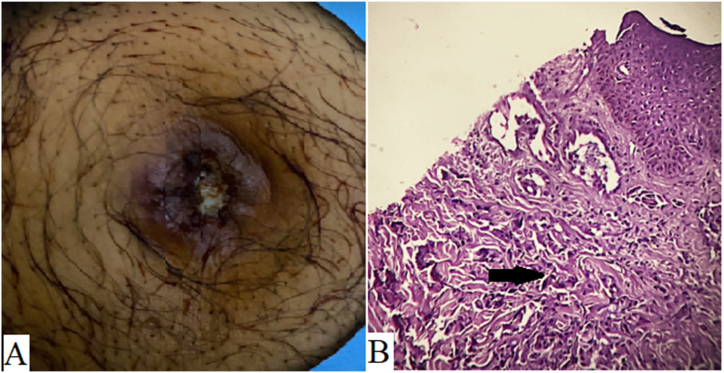
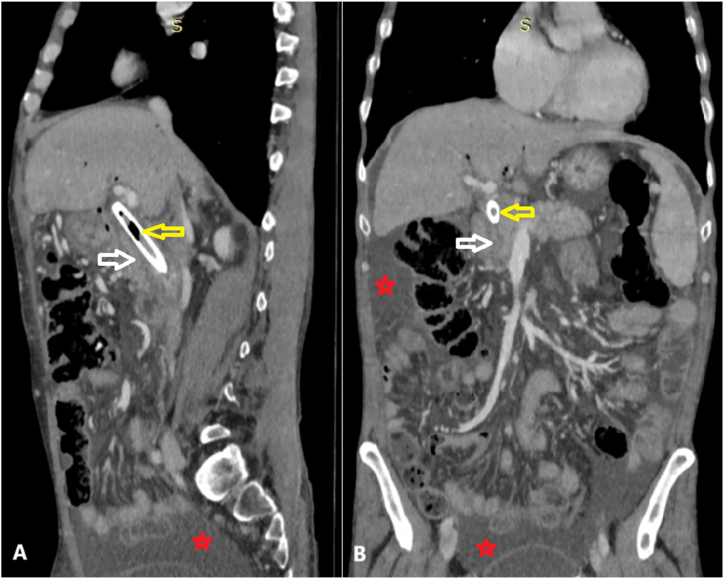
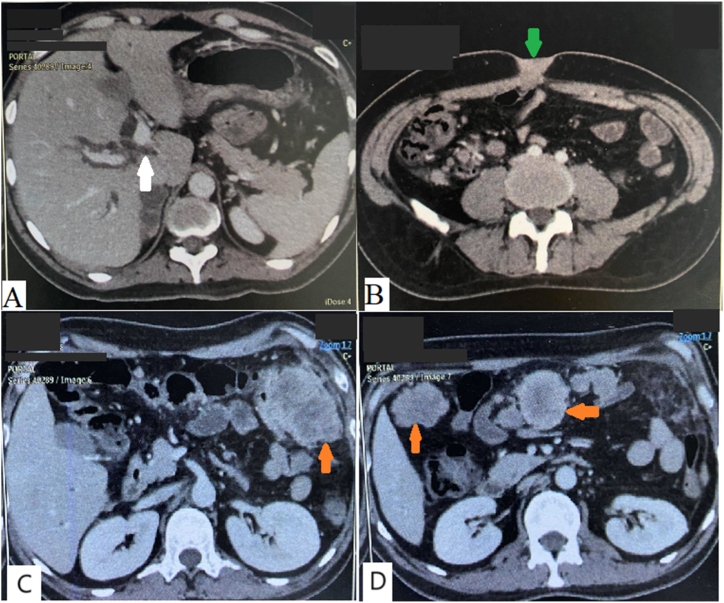
we present a new case report of SMJN in a 46-year-old patient who presented with ten days of right upper quadrant pain, obstructive jaundice, and fever. Physical examination revealed obstructive jaundice with scratchy lesions in the trunk and tenderness in the right upper quadrant, along with a two-centimeter protuberant, tender ulcerated umbilical nodule. Despite previous management with antibiotics and local care, the nodule had been progressively growing over a month. Imaging studies revealed a hilar cholangiocarcinoma with extensive local invasion and multiple distant metastases, including cutaneous involvement at the umbilicus. Biopsies of the umbilical lesion confirmed metastatic adenocarcinoma of the biliary tree. Palliative measures, including biliary stent placement and chemotherapy, were initiated.
SMJN is a rare but notable cutaneous manifestation associated with advanced intra-abdominal malignancies. Although often linked to gastric, pancreatic, and ovarian cancers, it is uncommonly reported with cholangiocarcinoma. SMJN typically signifies a late-stage, metastatic progression, with prognosis largely determined by the underlying primary cancer's aggressiveness and the extent of metastasis. In this case, SMJN presented alongside other symptoms of advanced disease, such as obstructive jaundice and extensive local invasion, underscoring its prognostic significance. Recognition of SMJN is essential for prompt diagnosis and initiation of palliative interventions in patients with suspected metastatic disease. This case adds to the limited literature on cholangiocarcinoma-associated SMJN and highlights the need for awareness among clinicians regarding atypical metastatic presentations, which may facilitate earlier diagnosis and tailored care strategies.
This case emphasizes the importance of recognizing SMJN as a rare but crucial indicator of advanced cholangiocarcinoma. It highlights the clinical challenges posed by metastatic cholangiocarcinoma and underscores the need for a comprehensive approach to palliative care in patients with SMJN.
玛丽·约瑟夫修女结节(SMJN)是腹部转移性恶性肿瘤,尤其是胆管癌的一种罕见临床体征,文献报道的病例有限。SMJN与预后不良相关,常提示疾病进展至晚期且伴有广泛转移。
我们报告一例46岁患者的SMJN新病例,该患者出现右上腹疼痛、梗阻性黄疸和发热10天。体格检查发现有梗阻性黄疸,躯干有抓痕样病变,右上腹压痛,同时有一个2厘米突出、压痛的脐部溃疡结节。尽管此前使用抗生素和局部护理进行了治疗,但该结节在一个多月里逐渐增大。影像学检查显示肝门部胆管癌伴广泛局部侵犯和多处远处转移,包括脐部皮肤受累。脐部病变活检证实为胆管树转移性腺癌。已开始采取包括放置胆管支架和化疗在内的姑息治疗措施。
SMJN是一种与晚期腹腔内恶性肿瘤相关的罕见但值得注意的皮肤表现。虽然它常与胃癌、胰腺癌和卵巢癌相关,但与胆管癌相关的报道并不常见。SMJN通常意味着疾病处于晚期、转移性进展,预后很大程度上取决于潜在原发癌的侵袭性和转移范围。在本病例中,SMJN与晚期疾病的其他症状如梗阻性黄疸和广泛局部侵犯同时出现,凸显了其预后意义。认识到SMJN对于疑似转移性疾病患者的及时诊断和启动姑息治疗干预至关重要。本病例补充了关于胆管癌相关SMJN的有限文献,并强调临床医生需要了解非典型转移性表现,这可能有助于早期诊断和制定针对性的护理策略。
本病例强调了认识到SMJN作为晚期胆管癌罕见但关键指标的重要性。它凸显了转移性胆管癌带来的临床挑战,并强调了对SMJN患者采取综合姑息治疗方法的必要性。