Borycka Katarzyna, Młyńczak Marcel, Rosoł Maciej, Korzeniewski Kacper, Iwanowski Piotr, Heřman Hynek, Janku Petr, Uchman-Musielak Małgorzata, Dosedla Erik, Diaz Enrique Gonzalez, Sudoł-Szopińska Iwona, Mik Michał, Ratto Carlo, Spinelli Antonino
OASIS Diagnostics, R&D of Medical Technology, Warsaw, Poland.
Department of General Surgery, Faculty of Medicine, Lazarski University, Warsaw, Poland.
Sci Rep. 2025 Mar 4;15(1):7522. doi: 10.1038/s41598-025-92392-z.
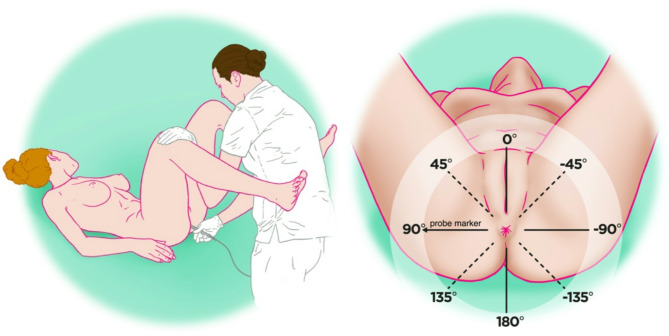
To evaluate the clinical performance and safety of the ONIRY system for obstetric anal sphincter injuries (OASI) detection versus three-dimensional endoanal ultrasound (EAUS). A prospective, comparative, multicentre, international study. Poland, Czechia, Slovakia, and Spain. 152 women between the first moments up to 8 weeks after vaginal delivery. Participants underwent EAUS and were allocated to groups based on OASIS classification: A (no perineal tear), B (1st or 2nd degree tear), or C (3rd or 4th degree, anal sphincters affected). Electric impedance was measured in the anal canal using the ONIRY system. The primary endpoint was the diagnostic outcome of impedance spectroscopy versus EAUS. Adverse events were collected. Part II involved in silico modelling and 10-time 10-fold cross-validation for automated analysis. Accuracy, sensitivity, and specificity. 30 women were allocated to group A, 61 to group B, and 61 to group C. The diagnostic outcome was determined for 147 participants. The accuracy, sensitivity, and specificity of the ML-assisted impedance spectroscopy were 87.0 ± 0.5%, 90.6 ± 2.0%, and 84.6 ± 1.9%, respectively, compared with EAUS. After data cleaning, the performance metrics of the proposed final ML model for ONIRY were: 90.0 ± 0.4%, 90.0 ± 1.2%, and 90.0 ± 0.7%, respectively. No adverse device effects or deficiencies were observed. By enabling early identification of sphincter injuries, ML-assisted impedance spectroscopy facilitates timely diagnosis and intervention, potentially reducing long-term complications such as faecal incontinence. Its rapid, bedside application in obstetric settings supports immediate postpartum care, complementing digital rectal examination and optimizing clinical decision-making.
评估用于检测产科肛门括约肌损伤(OASI)的ONIRY系统与三维经肛门超声(EAUS)相比的临床性能和安全性。一项前瞻性、比较性、多中心、国际研究。研究地点为波兰、捷克、斯洛伐克和西班牙。研究对象为152名在阴道分娩后至8周内的女性。参与者接受了EAUS检查,并根据OASIS分类被分配到不同组:A组(无会阴撕裂)、B组(1度或2度撕裂)或C组(3度或4度,肛门括约肌受累)。使用ONIRY系统测量肛管内的电阻抗。主要终点是阻抗光谱与EAUS的诊断结果。收集不良事件。第二部分涉及计算机模拟建模和10次10折交叉验证以进行自动分析。评估指标包括准确性、敏感性和特异性。30名女性被分配到A组,61名被分配到B组,61名被分配到C组。对147名参与者确定了诊断结果。与EAUS相比,机器学习辅助阻抗光谱的准确性、敏感性和特异性分别为87.0±0.5%、90.6±2.0%和84.6±1.9%。数据清理后,为ONIRY提出的最终机器学习模型的性能指标分别为90.0±0.4%、90.0±1.2%和90.0±0.7%。未观察到不良设备影响或缺陷。通过能够早期识别括约肌损伤,机器学习辅助阻抗光谱有助于及时诊断和干预,可能减少诸如大便失禁等长期并发症。其在产科环境中快速的床边应用支持产后即时护理,补充直肠指检并优化临床决策。