Valvano Marco, Giansante Chiara, Vinci Antonio, Maurici Massimo, Fabiani Stefano, Stefanelli Gianpiero, Cesaro Nicola, Viscido Angelo, Caloisi Claudia, Latella Giovanni
Division of Gastroenterology, Hepatology, and Nutrition, Department of Life, Health and Environmental Sciences, University of L'Aquila, Piazzale Salvatore Tommasi 1, 67100, L'Aquila, Italy.
Division of Gastroenterology, Galliera Hospital, 16128, Genoa, Italy.
BMC Gastroenterol. 2025 Mar 3;25(1):128. doi: 10.1186/s12876-025-03712-6.
The main treatment for Celiac Disease (CD) is the gluten-free diet (GFD). However, in some CD patients, iron deficiency anemia can be persistent despite a GFD.
In this study, we aim to evaluate the prevalence of anemia in both adults and children with CD at the diagnosis and during the GFD.
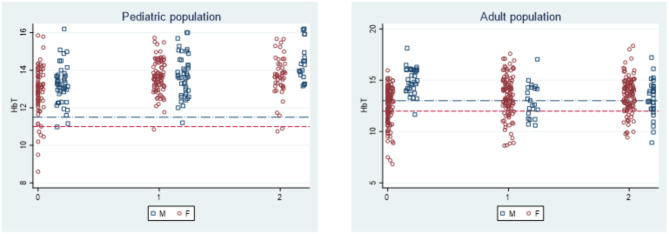
In this cross-sectional study including both adults and children with CD, the demographic characteristics and hemoglobin, iron, folate and vitamin B12 levels were retrospectively retrieved from patients' medical records at the time of diagnosis (T0); after 3-5 years (T1) and after 8-10 years (T2) of GFD.
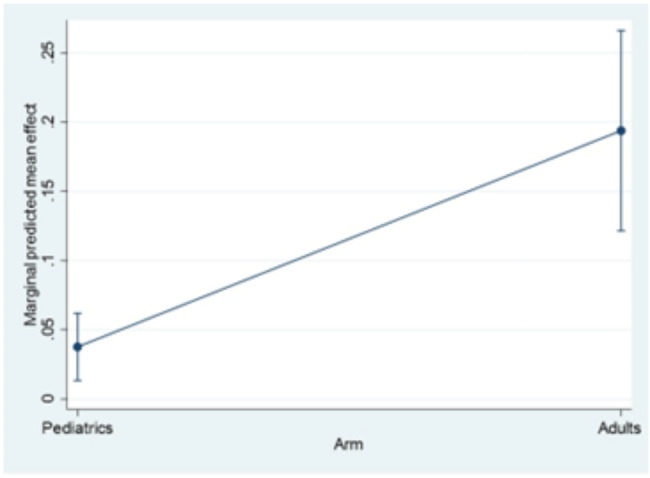
311 CD patients (184 adults and 127 pediatric patients) were included in the study. No difference was observed in the prevalence of anemia in the overall population after 3-5 years of GFD in both adult and pediatric patients compared to the diagnosis. At 8-10 years, in the adult patient's group, a significant reduction in the prevalence of anemia was observed (24% vs. 17.8% p = 0.043).
Despite the GFD and a very long observational period the diagnosis of anemia persists in 17.8% and 4.4% of adult and pediatric patients, respectively. The diagnostic delay (longer in adult patients) and a more pronounced ultrastructural mucosal injury could play a role in the persistence of anemia despite the GFD.
乳糜泻(CD)的主要治疗方法是无麸质饮食(GFD)。然而,在一些CD患者中,尽管采用了GFD,缺铁性贫血仍可能持续存在。
在本研究中,我们旨在评估CD成人和儿童患者在诊断时以及进行GFD期间贫血的患病率。
在这项包括CD成人和儿童患者的横断面研究中,回顾性检索患者诊断时(T0)、GFD 3 - 5年后(T1)和GFD 8 - 10年后(T2)的人口统计学特征以及血红蛋白、铁、叶酸和维生素B12水平。
311例CD患者(184例成人和127例儿科患者)纳入研究。与诊断时相比,成人和儿科患者在GFD 3 - 5年后总体人群中贫血患病率无差异。在8 - 10年时,在成人患者组中,观察到贫血患病率显著降低(24%对17.8%,p = 0.043)。
尽管采用了GFD且观察期很长,但成人和儿科患者中分别仍有17.8%和4.4%持续存在贫血诊断。诊断延迟(成人患者更长)和更明显的超微结构黏膜损伤可能在尽管采用GFD但贫血仍持续存在中起作用。