Luo Qinghua, An Mingwei, Wu Yunxiang, Wang Jiawen, Mao Yuanting, Zhang Leichang, Wang Chen
Department of Anorectal Surgery, Longhua Hospital, Shanghai University of Traditional Chinese Medicine, Shanghai, China.
Clinical Medical College, Jiangxi University of Chinese Medicine, Nanchang, China.
Ann Gen Psychiatry. 2025 Mar 3;24(1):11. doi: 10.1186/s12991-025-00551-3.
Patients with schizophrenia (SCZ) experience constipation at significantly higher rates compared with the general population. This relationship suggests a potential genetic overlap between these two conditions.
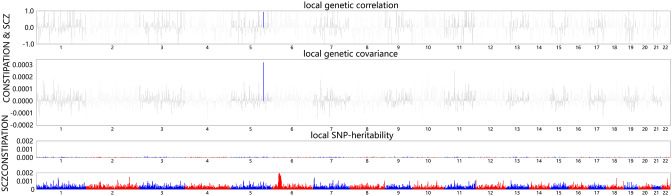
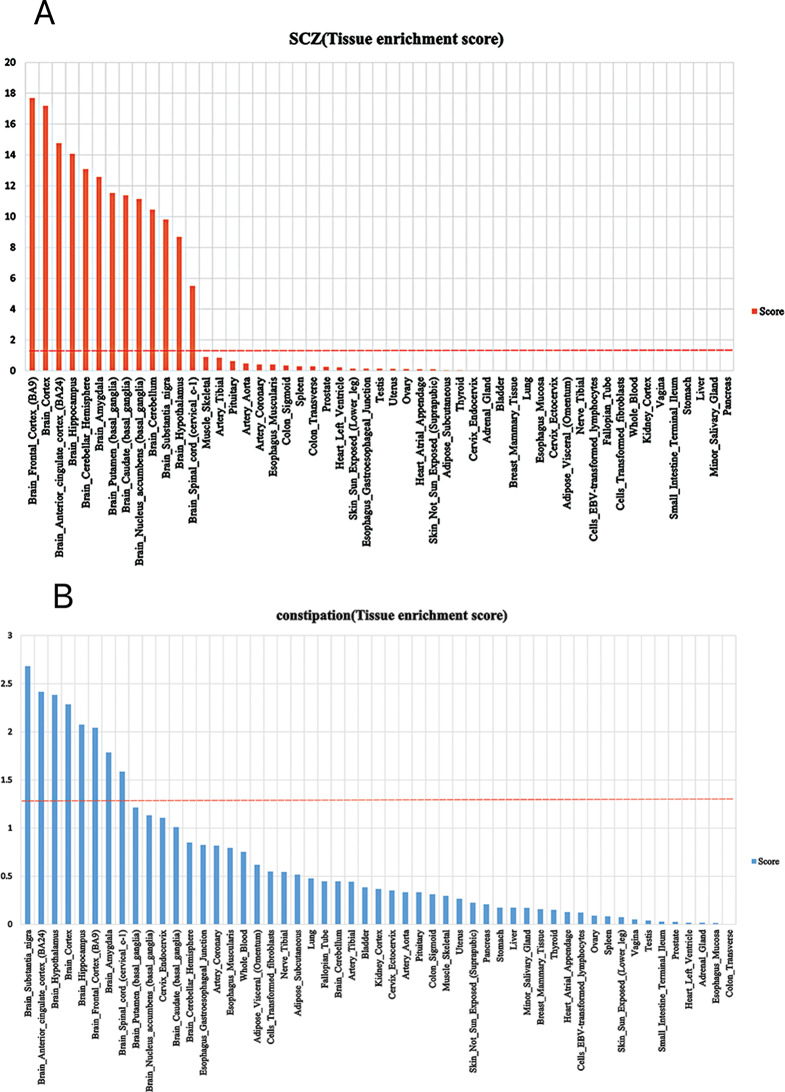
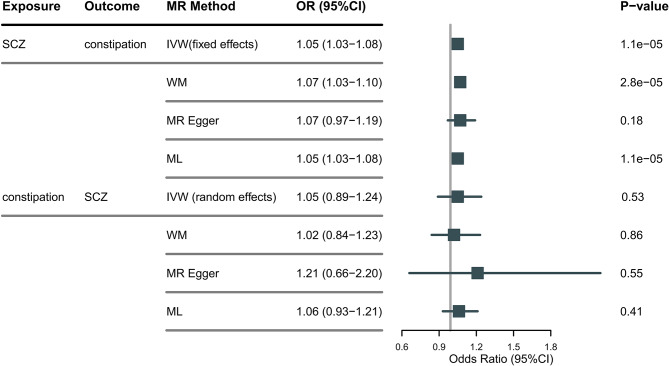
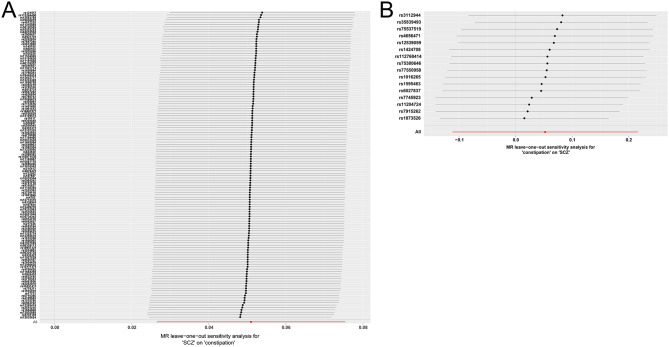
We analyzed genome-wide association study (GWAS) data for both SCZ and constipation using a five-part approach. The first and second parts assessed the overall and local genetic correlations using methods such as linkage disequilibrium score regression (LDSC) and heritability estimation from summary statistics (HESS). The third part investigated the causal association between the two traits using Mendelian randomization (MR). The fourth part employed conditional/conjunctional false discovery rate (cond/conjFDR) to analyze the genetic overlap with different traits based on the statistical theory. Finally, an LDSC-specifically expressed gene (LDSC-SEG) analysis was conducted to explore the tissue-level associations.
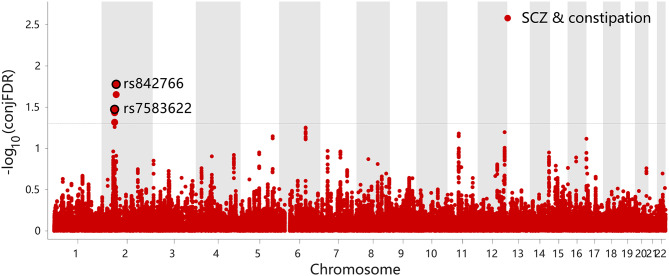
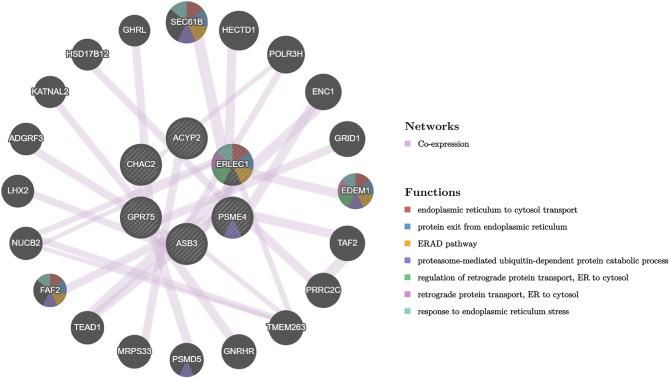
Our analyses revealed both overall and specific genetic correlations between SCZ and constipation at the genomic level. The MR analysis suggests a positive causal relationship between SCZ and constipation. The ConjFDR analysis confirms the genetic overlap between the two conditions and identifies two genetic risk loci (rs7583622 and rs842766) and seven mapped genes (GPR75-ASB3, ASB3, CHAC2, ERLEC1, GPR75, PSME4, and ACYP2). Further investigation into the functions of these genes could provide valuable insights. Interestingly, disease-related tissue analysis revealed associations between SCZ and constipation in eight brain regions (substantia nigra, anterior cingulate cortex, hypothalamus, cortex, hippocampus, cortex, amygdala, and spinal cord).
This study provides the first genetic evidence for the comorbidity of SCZ and constipation, enhancing our understanding of the pathophysiology of both conditions.
与普通人群相比,精神分裂症(SCZ)患者便秘发生率显著更高。这种关系表明这两种病症之间可能存在遗传重叠。
我们采用五部分方法分析了SCZ和便秘的全基因组关联研究(GWAS)数据。第一部分和第二部分使用连锁不平衡评分回归(LDSC)和汇总统计数据的遗传力估计(HESS)等方法评估整体和局部遗传相关性。第三部分使用孟德尔随机化(MR)研究这两个性状之间的因果关联。第四部分基于统计理论采用条件/联合错误发现率(cond/conjFDR)分析与不同性状的遗传重叠。最后,进行了LDSC特异性表达基因(LDSC-SEG)分析以探索组织水平的关联。
我们的分析揭示了SCZ和便秘在基因组水平上的整体和特定遗传相关性。MR分析表明SCZ和便秘之间存在正向因果关系。ConjFDR分析证实了这两种病症之间的遗传重叠,并确定了两个遗传风险位点(rs7583622和rs842766)和七个定位基因(GPR75-ASB3、ASB3、CHAC2、ERLEC1、GPR75、PSME4和ACYP2)。对这些基因功能的进一步研究可能会提供有价值的见解。有趣的是,疾病相关组织分析揭示了SCZ和便秘在八个脑区(黑质、前扣带回皮质、下丘脑、皮质、海马体、皮质、杏仁核和脊髓)之间的关联。
本研究为SCZ和便秘的共病提供了首个遗传证据,增进了我们对这两种病症病理生理学的理解。