Yao Xin, Chen Yao, Li Yang, Mo Jieyu, Liu Xia, Wang Peng, Jia Daqi, Li Huaqiang, Guo Chunfang
Affiliated Banan Hospital of Chongqing Medical University, Long Zhou Wan Street, Yunan District, Chongqing, 401320, China.
Xinqiao Hospital, Army Medical University, No.183 Xinqiao Road, Chongqing, 400037, China.
Int J Colorectal Dis. 2025 Mar 4;40(1):57. doi: 10.1007/s00384-025-04843-8.
Inflammatory bowel disease (IBD) encompasses chronic inflammation of the colon and rectum, posing significant health challenges. Previous studies have shown potential therapeutic effects of natural compounds on IBD. Chrysin, a naturally occurring flavonoid, has been suggested to modulate inflammatory pathways and gut microbiota, but its comprehensive impact on ulcerative colitis remains inadequately explored.
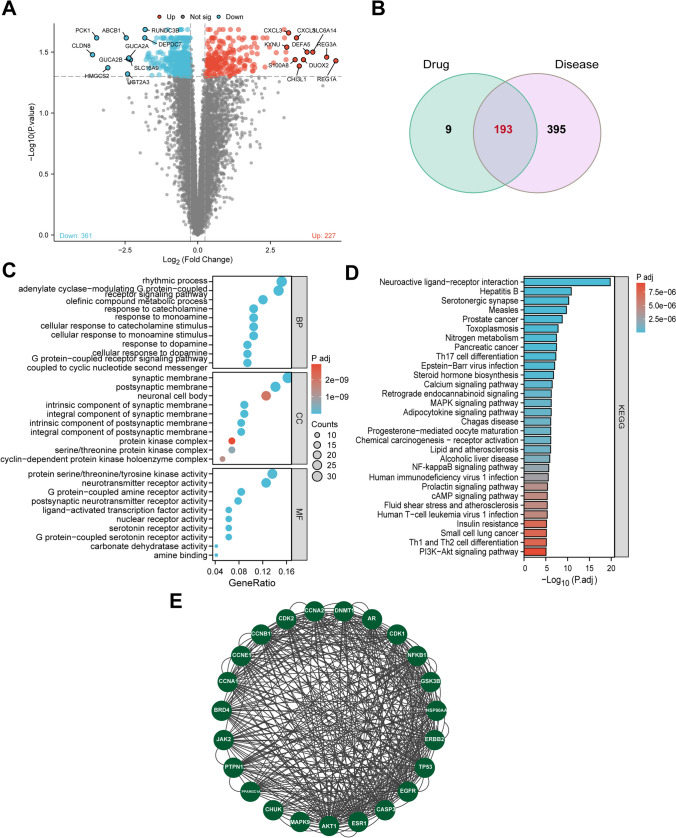
This study employed a dextran sulfate sodium (DSS)-induced ulcerative colitis model in mice to investigate the effects of Chrysin. Using network pharmacology, we identified key signaling pathways potentially influenced by Chrysin. Experimental approaches included measuring disease activity index scores, serum levels of TNF-α, and assessing colon damage histologically. Transcriptomic and microbiome analyses were conducted to examine changes in gene expression and gut bacterial populations, respectively. Additionally, metabolomic profiling was used to identify alterations in colon metabolites.
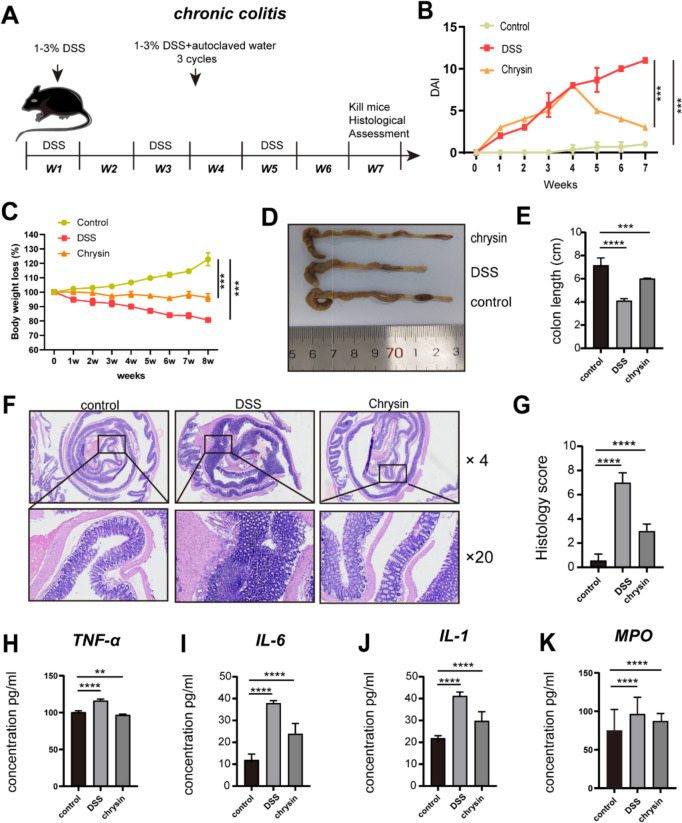
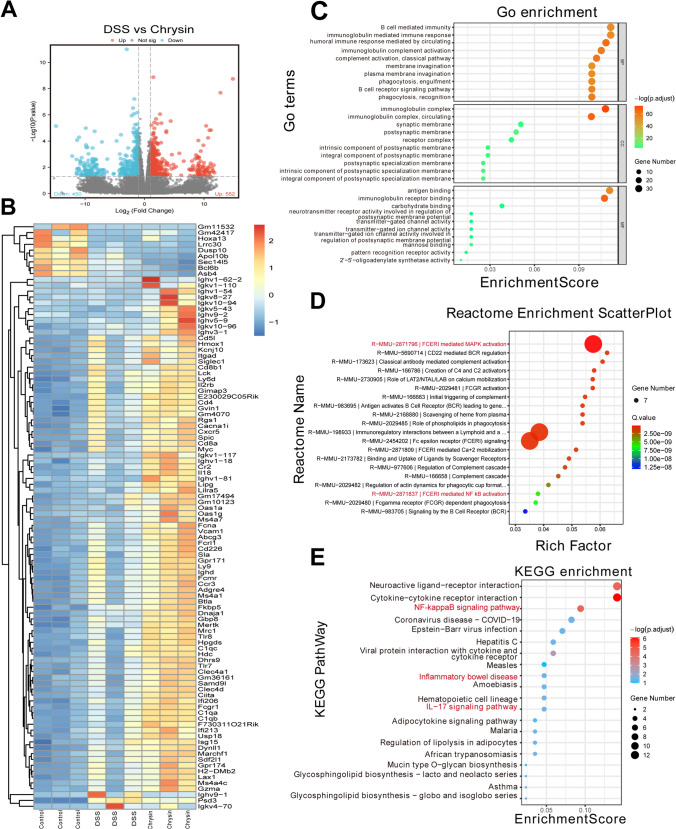
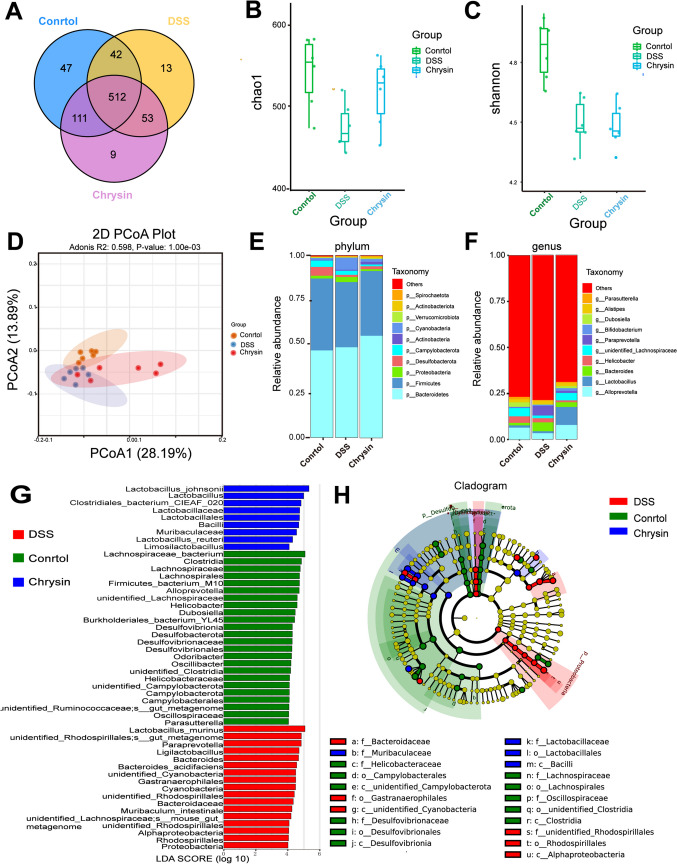
Chrysin treatment significantly mitigated weight loss and reduced disease activity index scores in DSS-induced mice. There was a notable decrease in serum TNF-α levels and less histological damage in the colon. Transcriptomic analysis revealed significant alterations in gene expression within the NF-κB and IL-17 signaling pathways. Microbiome analysis showed significant shifts in the populations of Bacteroidetes and Firmicutes. Metabolomics analysis identified changes in 298 colon metabolites, implicating several essential metabolic pathways.
The findings suggest that Chrysin exerts a dual-action therapeutic effect on ulcerative colitis by reducing inflammation and modulating the gut microbiota. These multifaceted impacts highlight Chrysin's potential utility as a novel therapeutic agent in the clinical management of IBD, offering valuable insights into its mechanisms of action and paving the way for future clinical trials.
炎症性肠病(IBD)包括结肠和直肠的慢性炎症,对健康构成重大挑战。先前的研究表明天然化合物对IBD具有潜在的治疗作用。白杨素是一种天然存在的黄酮类化合物,已被认为可调节炎症途径和肠道微生物群,但其对溃疡性结肠炎的全面影响仍未得到充分研究。
本研究采用葡聚糖硫酸钠(DSS)诱导的小鼠溃疡性结肠炎模型来研究白杨素的作用。使用网络药理学,我们确定了可能受白杨素影响的关键信号通路。实验方法包括测量疾病活动指数评分、血清肿瘤坏死因子-α(TNF-α)水平以及组织学评估结肠损伤。分别进行转录组学和微生物组分析以检查基因表达和肠道细菌种群的变化。此外,代谢组学分析用于鉴定结肠代谢物的变化。
白杨素治疗显著减轻了DSS诱导小鼠的体重减轻并降低了疾病活动指数评分。血清TNF-α水平显著降低,结肠组织学损伤减轻。转录组学分析显示核因子-κB(NF-κB)和白细胞介素-17(IL-17)信号通路中的基因表达发生了显著变化。微生物组分析显示拟杆菌门和厚壁菌门的种群发生了显著变化。代谢组学分析确定了298种结肠代谢物的变化,涉及几个重要的代谢途径。
研究结果表明,白杨素通过减轻炎症和调节肠道微生物群对溃疡性结肠炎发挥双重治疗作用。这些多方面的影响突出了白杨素作为IBD临床管理中一种新型治疗药物的潜在效用,为其作用机制提供了有价值的见解,并为未来的临床试验铺平了道路。