Pearson Andrew C, Miller Jessica S, Jensen Hannah J, Shrestha Ketan, Curry Thomas E, Duffy Diane M
Department of Basic and Translational Sciences, Eastern Virginia Medical School, Old Dominion University, Norfolk, VA 23501, USA.
Department of Obstetrics and Gynecology, University of Kentucky, Lexington, KY 40506, USA.
Endocrinology. 2025 Mar 24;166(5). doi: 10.1210/endocr/bqaf041.
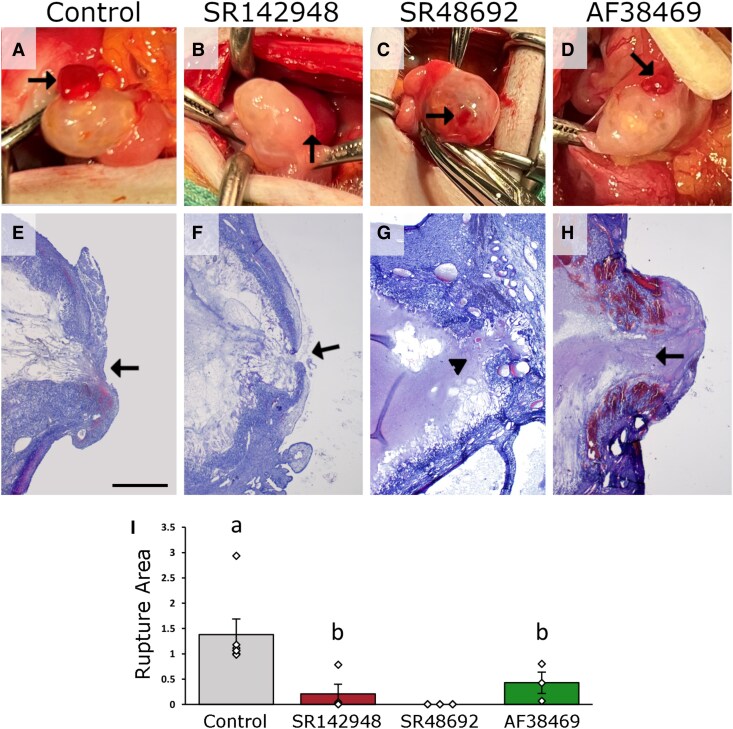
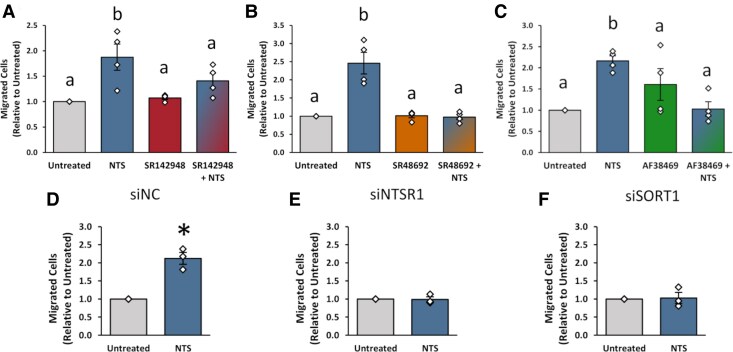
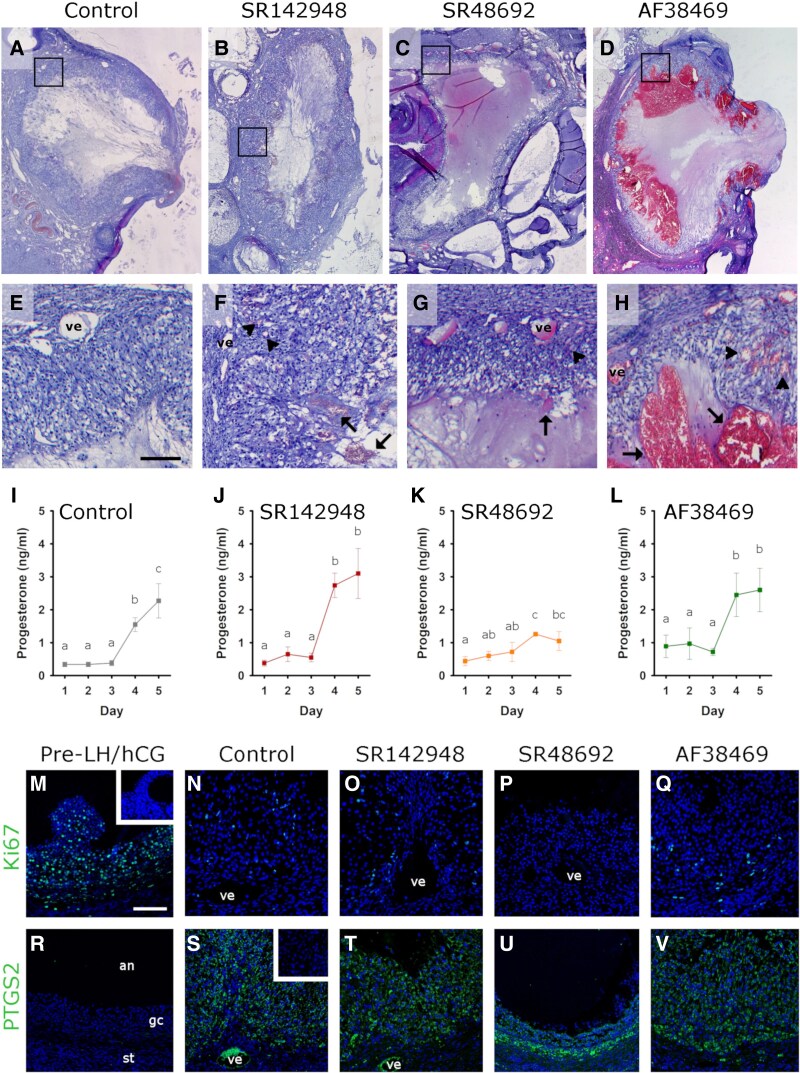
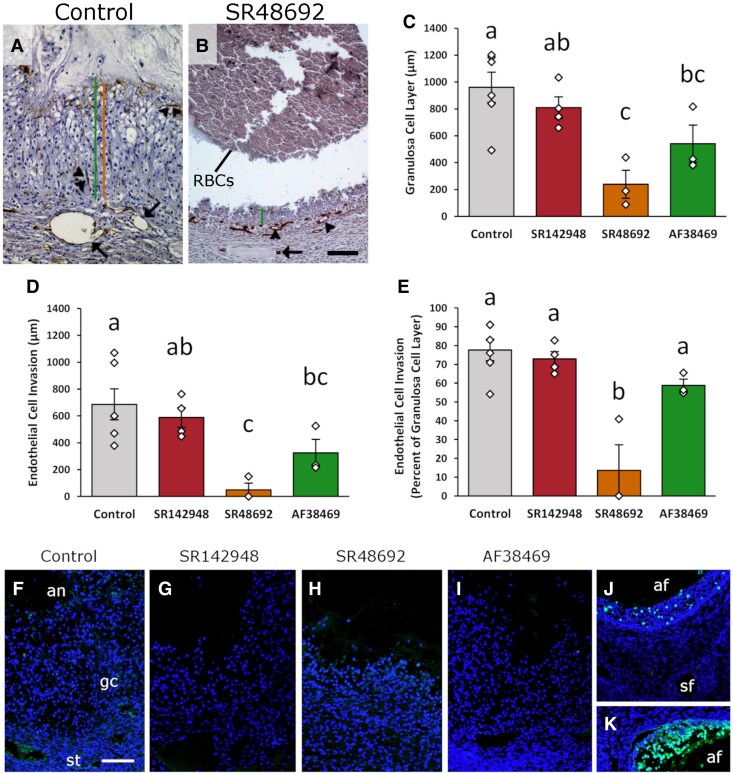
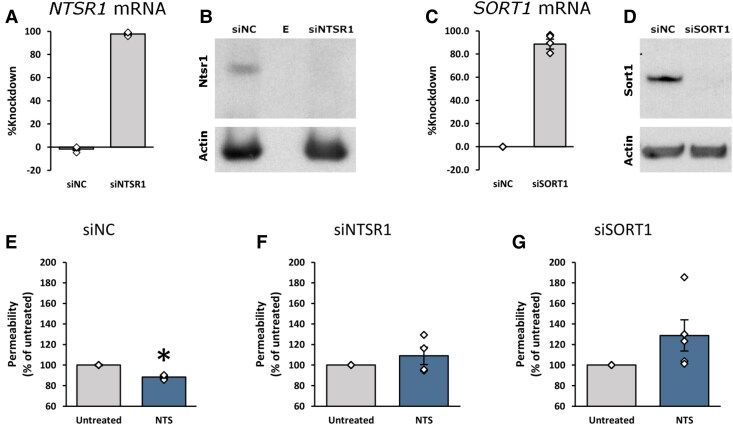
Neurotensin (NTS), a small neuropeptide, was recently established as a key paracrine mediator of ovulation. NTS mRNA is highly expressed by granulosa cells in response to the luteinizing hormone surge, and multiple NTS receptors are expressed by cells of the ovulatory follicle. To identify the role of NTS receptors NTSR1 and SORT1 in ovulation in vivo, the dominant follicle of cynomolgus macaques (Macaca fascicularis) was injected with either vehicle control, the general NTS receptor antagonist SR142948, the NTSR1-selective antagonist SR48692, or the SORT1-selective antagonist AF38469. hCG was then administered to initiate ovulatory events. Ovulation was successful in all control-injected follicles. Rupture sites were smaller or absent after injection with NTS receptor antagonists. Histological analysis of follicles injected with SR142948, SR48692, or AF38469 revealed increased red blood cell extravasation and pooling in the follicle antrum when compared to controls. NTS receptor antagonist-injected follicles also showed dysregulated capillary formation and reduced luteinization of the granulosa cell layer. Prior in vitro studies showed that NTS significantly increased monkey ovarian microvascular endothelial cell (mOMEC) migration, while decreasing monolayer permeability. The NSTR1 antagonist SR48692 or siRNA knockdown of NTSR1 abrogated the ability of NTS to stimulate mOMEC migration and to decrease monolayer permeability. Similar experiments performed with the SORT1 antagonist AF38469 or siRNA knockdown of SORT1 also resulted in ablation of NTS-mediated changes in migration and permeability after SORT1 signaling was impaired. Together, these data implicate both NTSR1 and SORT1 to be critical mediators of NTS-stimulated ovulation, luteinization, and angiogenesis of the ovulatory follicle.
神经降压素(NTS)是一种小神经肽,最近被确立为排卵的关键旁分泌介质。促黄体生成素激增时,颗粒细胞会高表达NTS mRNA,排卵卵泡的细胞会表达多种NTS受体。为了确定NTS受体NTSR1和SORT1在体内排卵中的作用,向食蟹猴(猕猴)的优势卵泡注射溶剂对照、一般NTS受体拮抗剂SR142948、NTSR1选择性拮抗剂SR48692或SORT1选择性拮抗剂AF38469。然后给予hCG启动排卵事件。所有注射对照的卵泡排卵均成功。注射NTS受体拮抗剂后,破裂部位变小或不存在。与对照组相比,注射SR142948、SR48692或AF38469的卵泡的组织学分析显示,卵泡腔中红细胞外渗和聚集增加。注射NTS受体拮抗剂的卵泡还显示出毛细血管形成失调以及颗粒细胞层的黄体化减少。先前的体外研究表明,NTS可显著增加猴卵巢微血管内皮细胞(mOMEC)迁移,同时降低单层通透性。NSTR1拮抗剂SR48692或NTSR1的siRNA敲低消除了NTS刺激mOMEC迁移和降低单层通透性的能力。用SORT1拮抗剂AF38469或SORT1的siRNA敲低进行的类似实验也导致SORT1信号受损后NTS介导的迁移和通透性变化被消除。总之,这些数据表明NTSR1和SORT1都是NTS刺激排卵、黄体化和排卵卵泡血管生成的关键介质。