Liang Xiaojie, Guo Jia, Wang Xiaofang, Luo Baiwei, Fu Ruiying, Chen Haiying, Yang Yunong, Jin Zhihao, Lin Chaoran, Zang Aimin, Jia Youchao, Feng Lin, Wang Liang
Department of Hematology, Beijing Tongren Hospital, Capital Medical University, Beijing, China.
Department of Medical Oncology, Affiliated Hospital of Hebei University, Hebei Key Laboratory of Cancer Radiotherapy and Chemotherapy, Baoding, China.
J Natl Cancer Cent. 2024 Oct 28;5(1):57-74. doi: 10.1016/j.jncc.2024.10.001. eCollection 2025 Feb.
Previous researches mainly focused on whether cancer stem cells exist in diffuse large B-cell lymphoma (DLBCL). However, subgroups with dismal prognosis and stem cell-like characteristics have been overlooked.
Using large scale data ( = 2133), we conducted machine learning algorithms to identify a high risk DLBCL subgroup with stem cell-like features, and then investigated the potential mechanisms in shaping this subgroup using transcriptome, genome and single-cell RNA-seq data, and experiments.
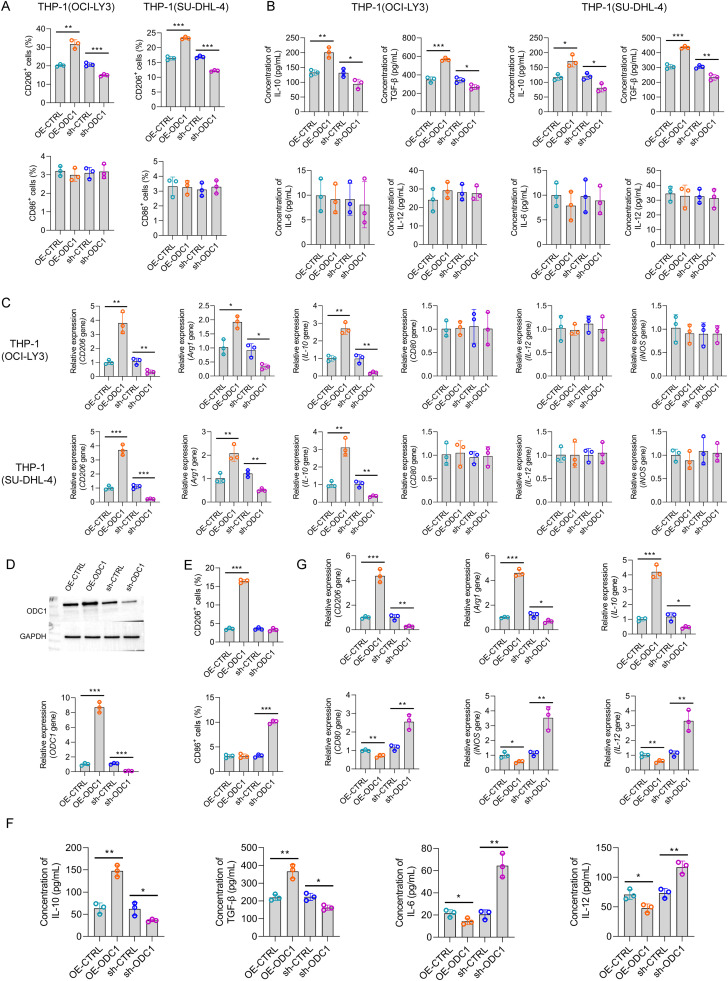
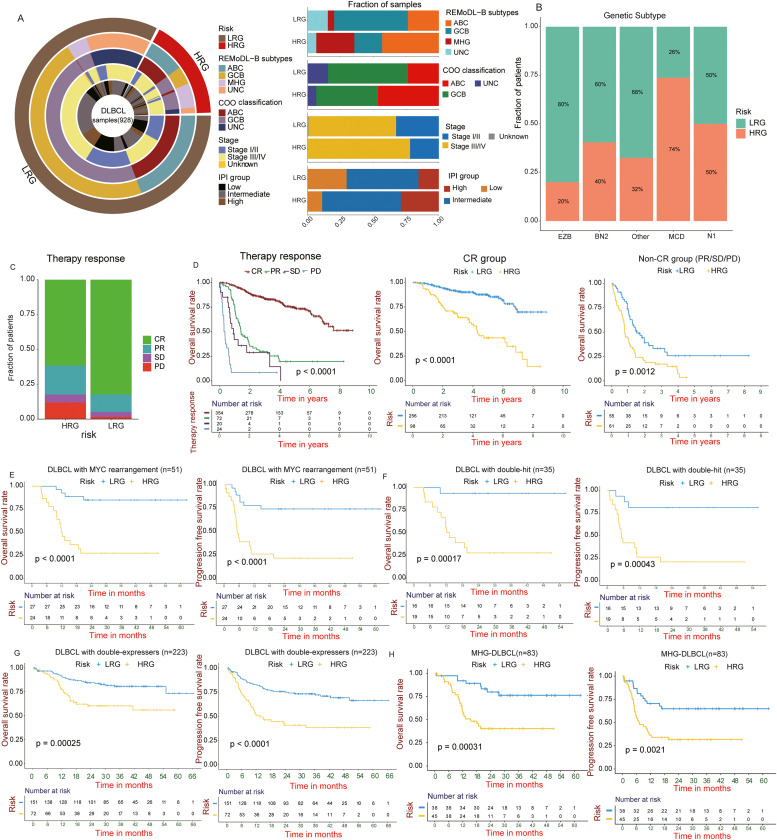
We identified a high-risk subgroup (25.6 % of DLBCL) with stem cell-like characteristics and dismal prognosis. This high-risk group (HRG) was featured by upregulation of key enzyme (ODC1) in polyamine metabolism and cold tumor microenvironment (TME), and had a poor prognosis with lower 3-year overall survival (OS) (54.3 % vs. 83.6 %, < 0.0001) and progression-free survival (PFS) (42.8 % vs. 74.7 %, < 0.0001) rates compared to the low-risk group. HRG also exhibited malignant proliferative phenotypes similar to Burkitt lymphoma. Patients with rearrangement, double-hit, double-expressors, or complete remission might have either favorable or poor prognosis, which could be further distinguished by our risk stratification model. Genomic analysis revealed widespread copy number losses in the chemokine and interferon coding regions 8p23.1 and 9p21.3 in HRG. We identified ODC1 as a therapeutic vulnerability for HRG-DLBCL. Single-cell analysis and experiments demonstrated that ODC1 overexpression enhanced DLBCL cell proliferation and drove macrophage polarization towards the M2 phenotype. Conversely, ODC1 inhibition reduced DLBCL cell proliferation, induced cell cycle arrest and apoptosis, and promoted macrophage polarization towards the M1 phenotype. Finally, we developed a comprehensive database of DLBCL for clinical application.
Our study effectively advances the precise risk stratification of DLBCL and reveals that ODC1 and immune-deserted microenvironment jointly shape a group of DLBCL patients with stem cell-like features. Targeting ODC1 regulates immunotherapies in DLBCL, offering new insights for DLBCL treatment.
以往研究主要聚焦于弥漫性大B细胞淋巴瘤(DLBCL)中是否存在癌症干细胞。然而,具有不良预后和干细胞样特征的亚组一直被忽视。
利用大规模数据(n = 2133),我们运用机器学习算法识别出具有干细胞样特征的高危DLBCL亚组,然后使用转录组、基因组和单细胞RNA测序数据以及实验研究形成该亚组的潜在机制。
我们识别出一个具有干细胞样特征且预后不良的高危亚组(占DLBCL的25.6%)。这个高危组(HRG)的特征是多胺代谢中的关键酶(ODC1)上调以及冷肿瘤微环境(TME),其预后较差,3年总生存率(OS)较低(54.3%对83.6%,P < 0.0001),无进展生存率(PFS)也较低(42.8%对74.7%,P < 0.0001),与低危组相比。HRG还表现出类似于伯基特淋巴瘤的恶性增殖表型。伴有MYC重排、双打击、双表达或完全缓解的患者预后可能良好或不良,这可以通过我们的风险分层模型进一步区分。基因组分析显示HRG中趋化因子和干扰素编码区域8p23.1和9p21.3存在广泛的拷贝数缺失。我们确定ODC1是HRG-DLBCL的一个治疗靶点。单细胞分析和实验表明,ODC1过表达增强了DLBCL细胞增殖,并促使巨噬细胞向M2表型极化。相反,ODC1抑制降低了DLBCL细胞增殖,诱导细胞周期停滞和凋亡,并促进巨噬细胞向M1表型极化。最后,我们开发了一个用于临床应用的DLBCL综合数据库。
我们的研究有效地推进了DLBCL的精确风险分层,并揭示ODC1和免疫缺失微环境共同塑造了一组具有干细胞样特征的DLBCL患者。靶向ODC1可调节DLBCL中的免疫治疗,为DLBCL治疗提供了新的见解。