Yi Kyu-Ho, Wan Jovian, Yoon Song Eun
From the Division in Anatomy and Developmental Biology, Department of Oral Biology, Human Identification Research Institute, BK21 FOUR Project, Yonsei University College of Dentistry, Seoul, Korea.
You & I Clinic (Mokdong), Seoul, Korea.
Plast Reconstr Surg Glob Open. 2025 Mar 3;13(3):e6566. doi: 10.1097/GOX.0000000000006566. eCollection 2025 Mar.
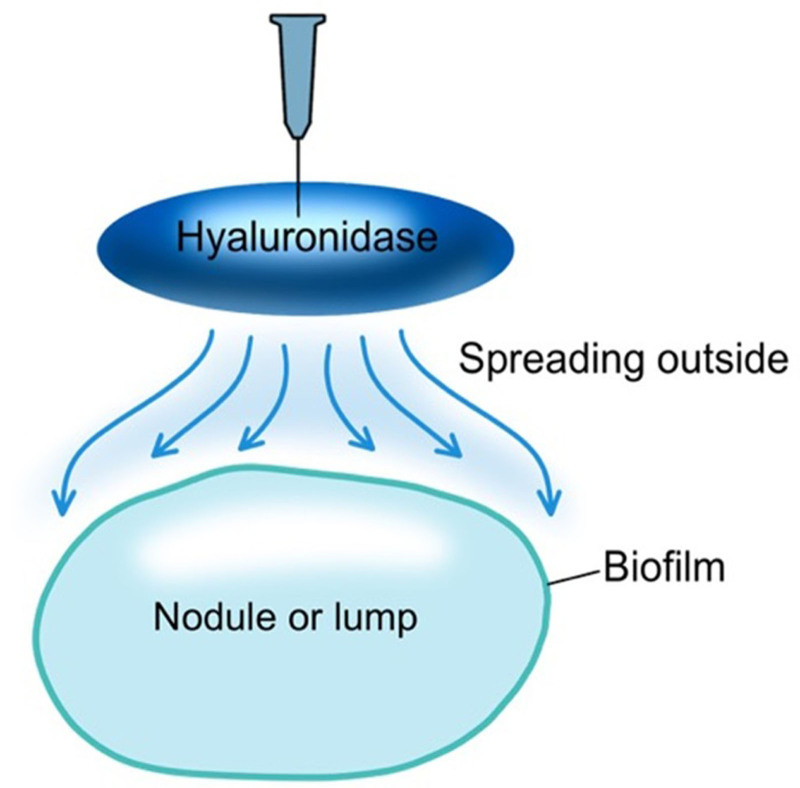
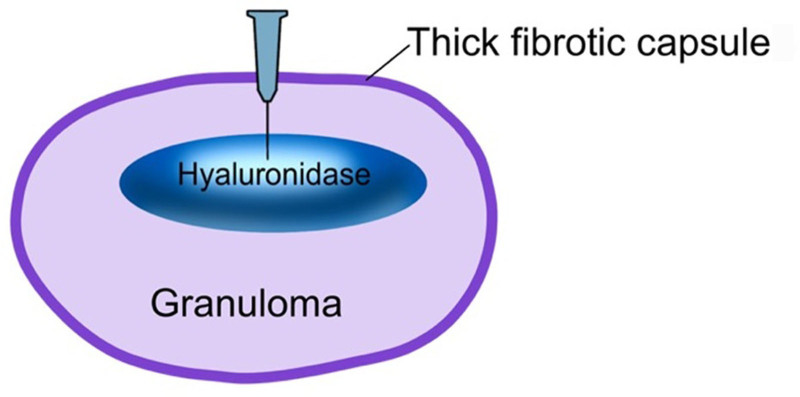
Effective management of complications from hyaluronic acid (HA) fillers is crucial in aesthetic medicine. This article examined the role of hyaluronidase in addressing adverse effects associated with HA fillers, such as nodules, vascular occlusions, and excessive volume. It highlights the enzyme's ability to degrade HA, thereby resolving issues that may arise from filler treatments. The discussion includes practical aspects of using hyaluronidase, such as recommended dosing, injection techniques, and potential risks. The benefits of hyaluronidase, including its rapid action in dissolving problematic fillers and its role in improving patient outcomes, are explored. The article also addresses limitations and safety considerations to provide a comprehensive understanding of hyaluronidase in the context of filler complications. By offering insights into the application and effectiveness of hyaluronidase, this article aimed to enhance practitioners' ability to manage HA filler-related issues effectively and ensure optimal results in aesthetic procedures.
透明质酸(HA)填充剂并发症的有效管理在美容医学中至关重要。本文探讨了透明质酸酶在处理与HA填充剂相关的不良反应(如结节、血管阻塞和过量填充)中的作用。它强调了该酶降解HA的能力,从而解决填充剂治疗可能出现的问题。讨论内容包括使用透明质酸酶的实际方面,如推荐剂量、注射技术和潜在风险。探讨了透明质酸酶的益处,包括其在溶解有问题的填充剂中的快速作用及其在改善患者治疗效果中的作用。本文还讨论了局限性和安全注意事项,以便在填充剂并发症的背景下全面了解透明质酸酶。通过深入了解透明质酸酶的应用和有效性,本文旨在提高从业者有效管理与HA填充剂相关问题的能力,并确保美容手术取得最佳效果。