Sahu Dinesh, Sinha Priyanshu, Prakash Shiv, Yang Tiansheng, Rathore Rajkumar Singh, Wang Lu
SCSET, Bennett University, Plot Nos 8, 11, TechZone 2, Greater Noida, Uttar Pradesh, 201310, India.
Department of Electronics and Communication, University of Allahabad, Prayag Raj, Uttar Pradesh, India.
Sci Rep. 2025 Mar 5;15(1):7783. doi: 10.1038/s41598-025-91565-0.
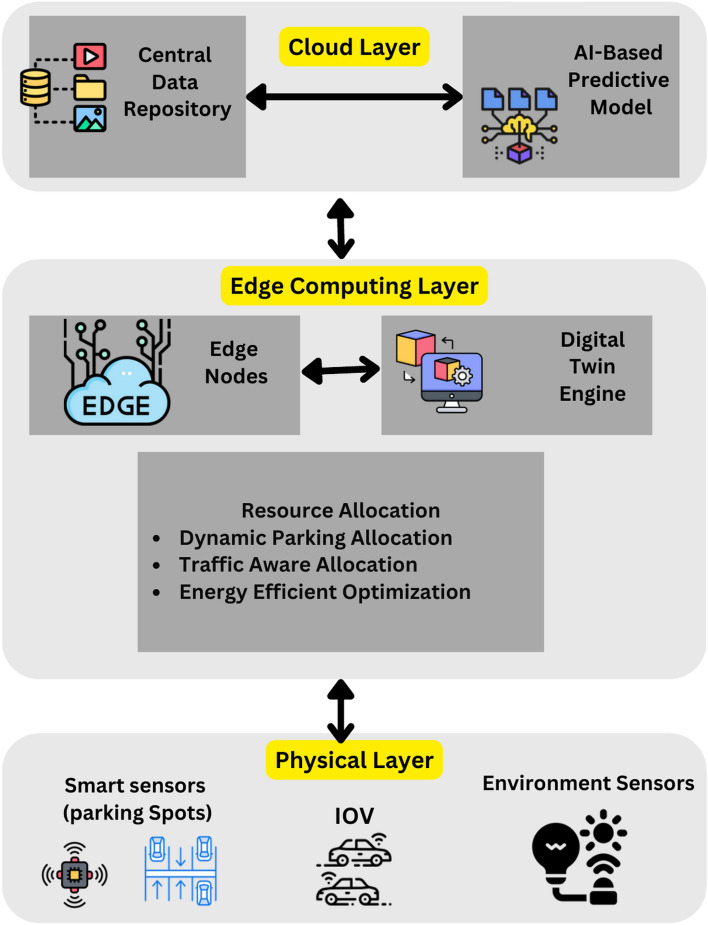
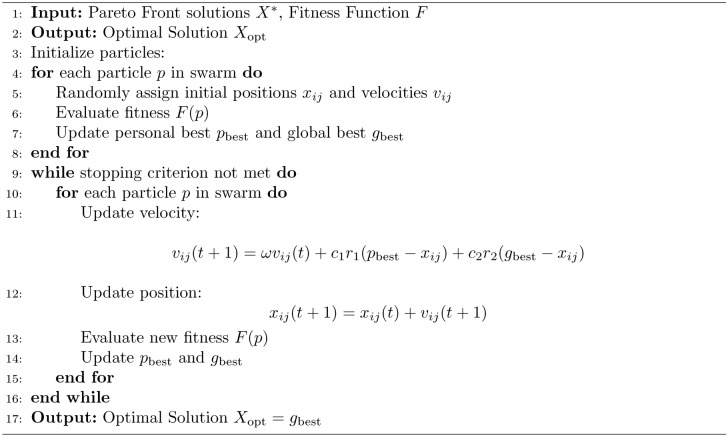
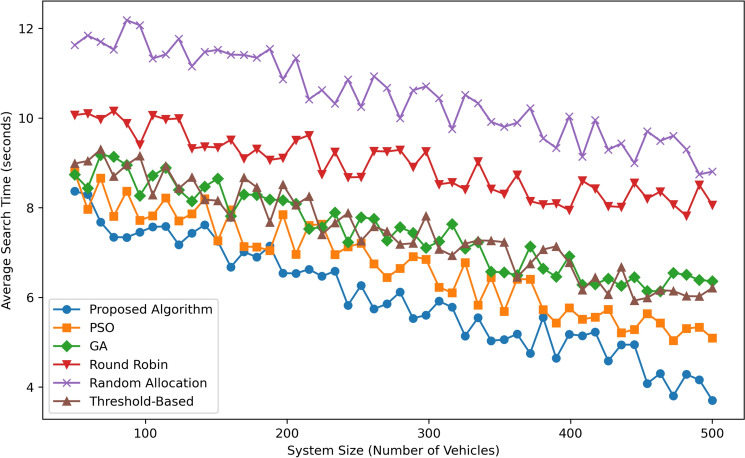
Smart cities are designed to improve the quality of life by efficiently using resources and smart parking is an important part of this puzzle to help alleviate traffic congestion and efficiently address energy consumption and search time for parking spaces. However, existing parking management systems have issues with resource management, system scalability, and real-time dynamic changes. In response to these challenges, this paper proposes a Multi-Objective Optimization Framework for Smart Parking incorporating Digital Twin Technology, Pareto Front Optimization, Markov Decision Process (MDP), and Particle Swarm Optimization (PSO). Hence, the proposed framework utilizes Digital Twin whereby there is a generation of a virtual model of the existing parking infrastructure that can give a real-time prospective estimation of the entire system. The Pareto Front is then used for multi-objective optimization of the search domain, where the goal is to minimize the search time, use of energy, and traffic disruption, and maximize the availability of parking spaces. The MDP splits the resource allocation problem into a value function which can then model the real-time parking requests. Further, PSO refines the solutions found from the Pareto front for a globally superior distribution. The framework is evaluated using extensive simulations across multiple metrics: search time, energy, congestion level, scalability, and utilization. Evaluation outcomes also show that the proposed algorithm is better than Round Robin, Random Allocation, and Threshold Based algorithms in terms of 25% improvement in the search time, 18% better energy usage, and 30% less traffic congestion. This work has shown the prospects of combining hybrid optimization and real-time decision-making in the enhancement of parking management in smart cities for better efficiency in urban mobility.
智慧城市旨在通过高效利用资源来提高生活质量,而智能停车是这一难题的重要组成部分,有助于缓解交通拥堵,并有效解决能源消耗和停车位搜索时间问题。然而,现有的停车管理系统在资源管理、系统可扩展性和实时动态变化方面存在问题。针对这些挑战,本文提出了一种用于智能停车的多目标优化框架,该框架结合了数字孪生技术、帕累托前沿优化、马尔可夫决策过程(MDP)和粒子群优化(PSO)。因此,所提出的框架利用数字孪生技术生成现有停车基础设施的虚拟模型,该模型可以对整个系统进行实时前瞻性估计。然后,帕累托前沿用于搜索域的多目标优化,目标是最小化搜索时间、能源使用和交通干扰,并最大化停车位的可用性。MDP将资源分配问题分解为一个价值函数,然后可以对实时停车请求进行建模。此外,PSO对从帕累托前沿找到的解决方案进行优化,以实现全局最优分布。该框架通过对搜索时间、能源、拥堵水平、可扩展性和利用率等多个指标进行广泛模拟来评估。评估结果还表明,所提出的算法在搜索时间上提高了25%,能源使用方面提高了18%,交通拥堵减少了30%,优于轮询、随机分配和基于阈值的算法。这项工作展示了在智慧城市中结合混合优化和实时决策以增强停车管理,从而提高城市交通效率的前景。