Sabit Hussein, Attia Manar G, Mohamed Nouran, Taha Pancé S, Ahmed Nehal, Osama Salma, Abdel-Ghany Shaimaa
Department of Medical Biotechnology, College of Biotechnology, Misr University for Science and Technology, P. O. Box 77, Giza, Egypt.
Department of Pharmaceutical Biotechnology, College of Biotechnology, Misr University for Science and Technology, P. O. Box 77, Giza, Egypt.
Discov Oncol. 2025 Mar 6;16(1):271. doi: 10.1007/s12672-025-01940-6.
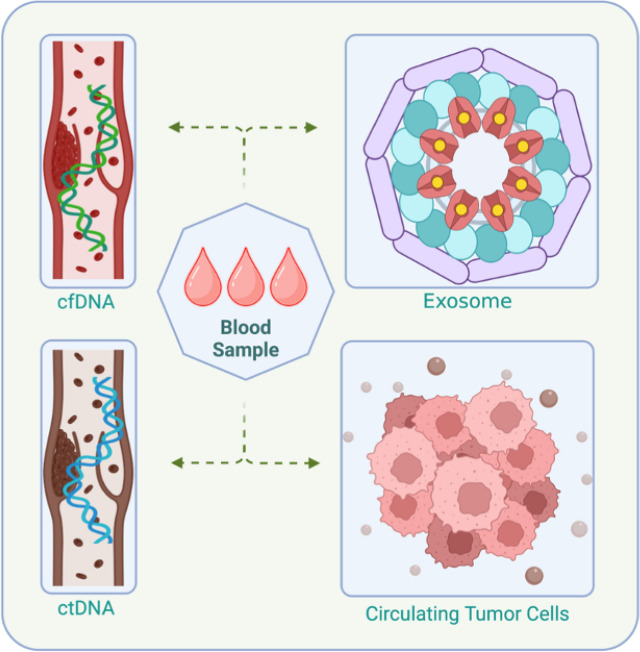
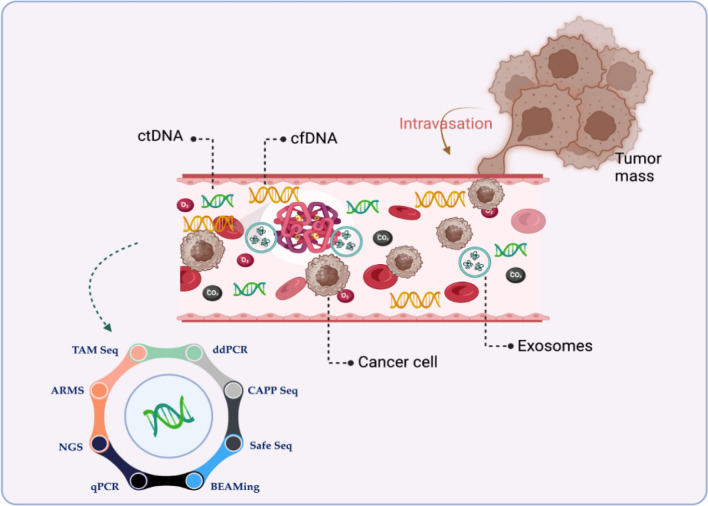
Breast cancer management has traditionally relied on tissue biopsies and imaging, which offer limited insights into the disease. However, the discovery of circulating tumor DNA (ctDNA) and minimal residual disease (MRD) detection has revolutionized our approach to breast cancer. ctDNA, which is fragmented tumor DNA found in the bloodstream, provides a minimally invasive way to understand the tumor's genomic landscape, revealing heterogeneity and critical mutations that biopsies may miss. MRD, which indicates cancer cells that remain after treatment, can now be detected using ctDNA and other advanced methods, improving our ability to predict disease recurrence. This allows for personalized adjuvant therapies based on individual MRD levels, avoiding unnecessary treatments for patients with low MRD. This review discusses how ctDNA and MRD represent a paradigm shift towards personalized, genomically guided cancer care, which has the potential to significantly improve patient outcomes in breast cancer.
传统上,乳腺癌的治疗依赖于组织活检和影像学检查,而这些方法对该疾病的了解有限。然而,循环肿瘤DNA(ctDNA)的发现和微小残留病(MRD)检测彻底改变了我们对乳腺癌的治疗方法。ctDNA是在血液中发现的碎片化肿瘤DNA,它提供了一种微创方式来了解肿瘤的基因组格局,揭示活检可能遗漏的异质性和关键突变。MRD指治疗后残留的癌细胞,现在可以使用ctDNA和其他先进方法进行检测,提高了我们预测疾病复发的能力。这使得基于个体MRD水平的个性化辅助治疗成为可能,避免了对低MRD患者进行不必要的治疗。本综述讨论了ctDNA和MRD如何代表了向个性化、基因组学指导的癌症治疗的范式转变,这有可能显著改善乳腺癌患者的治疗结果。