Karunarathne Manohara, Buddhika Pasindu, Priyamantha Avishka, Mayogya Pubudunie, Jayathilaka Ruwan, Dayapathirana Nirmani
Department of Information Management, SLIIT Business School, Sri Lanka Institute of Information Technology, New Kandy Road, Malabe, Sri Lanka.
Department of Business Management, SLIIT Business School, Sri Lanka Institute of Information Technology, New Kandy Road, Malabe, Sri Lanka.
BMC Public Health. 2025 Mar 6;25(1):894. doi: 10.1186/s12889-025-22109-4.
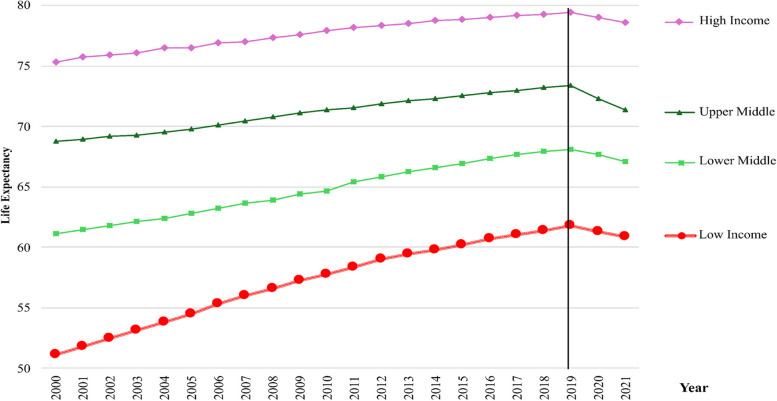
Life expectancy is a vital indicator of a country's health and progress. Low-income countries face uncertainty regarding the long-term impact of the COVID-19 pandemic, driven by health expenditure levels, concerns over rising child mortality rates, and decreasing per capita income. These factors challenge life expectancy and demand urgent attention. This study aims to identify patterns, challenges, and opportunities to improve life expectancy in these countries through better health policies and resource allocation.
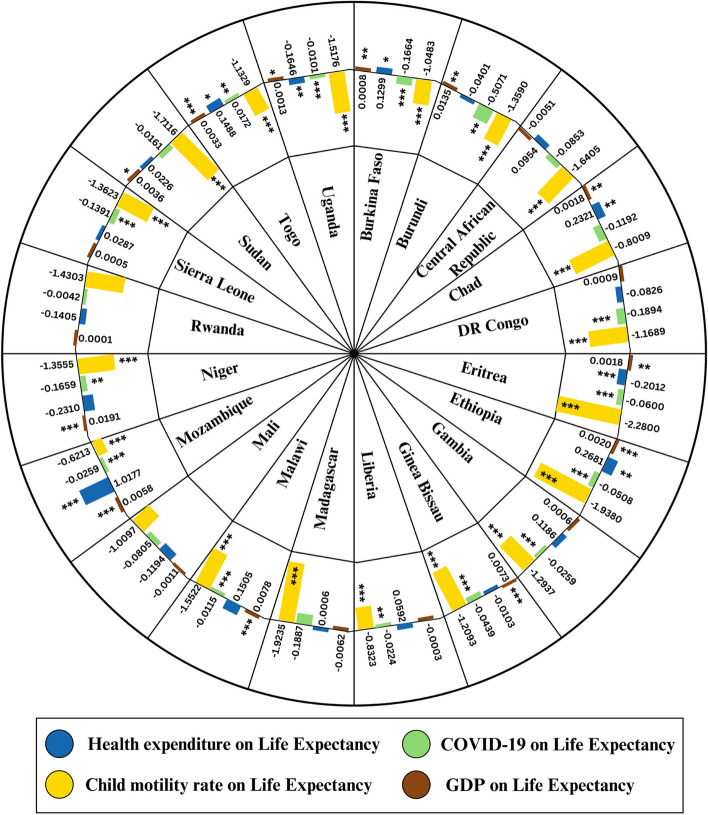
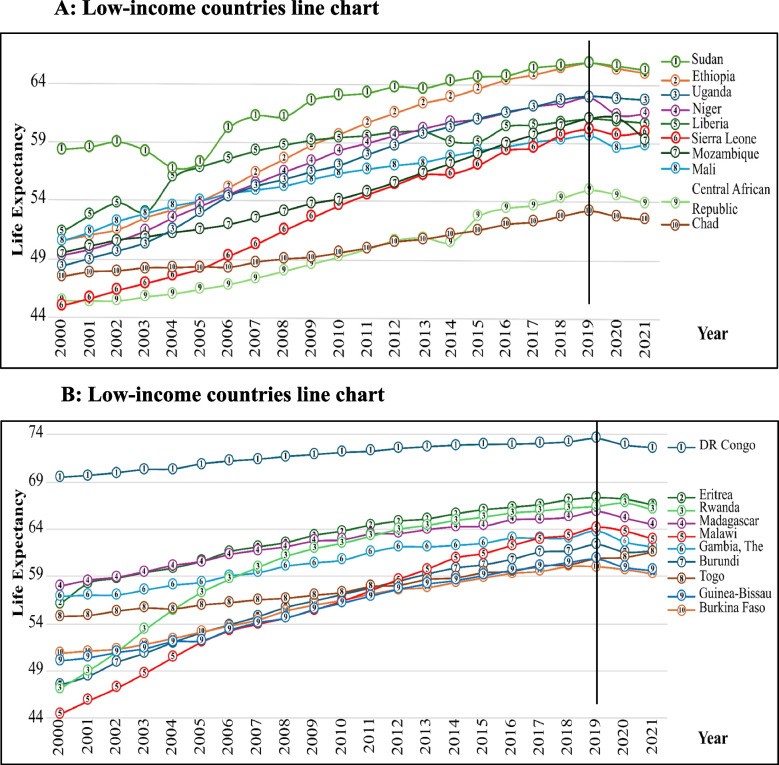
The research investigates the impact of the COVID-19 pandemic, health expenditure, per capita income, and child mortality rates on life expectancy in low-income countries. By examining 22 years of data from 20 countries, using a comprehensive dataset from the Our World in Data database, this study employs panel regression and time series analysis to explore how these factors influence life expectancy.
The findings indicate a significant negative effect of COVID-19 on life expectancy, while health expenditure and per capita income show a positive impact. Conversely, child mortality rates exert a negative effect on life expectancy in low-income countries.
This research contributes to the existing body of knowledge by analysing how COVID-19, health expenditure, per capita income, and child mortality collectively affect life expectancy in low-income countries. The insights gained may inform policymakers and health consultants about the need for targeted interventions, prioritising healthcare investment and child health. By addressing these critical areas, it may be possible to improve life expectancy and overall health outcomes, thus contributing to global health equity.
预期寿命是一个国家健康与发展的重要指标。低收入国家面临着新冠疫情长期影响的不确定性,这受到卫生支出水平、对儿童死亡率上升的担忧以及人均收入下降的驱动。这些因素对预期寿命构成挑战,需要紧急关注。本研究旨在通过更好的卫生政策和资源分配,找出这些国家提高预期寿命的模式、挑战和机遇。
该研究调查了新冠疫情、卫生支出、人均收入和儿童死亡率对低收入国家预期寿命的影响。通过使用来自“Our World in Data”数据库的综合数据集,研究20个国家22年的数据,本研究采用面板回归和时间序列分析来探讨这些因素如何影响预期寿命。
研究结果表明,新冠疫情对预期寿命有显著的负面影响,而卫生支出和人均收入则显示出积极影响。相反,儿童死亡率对低收入国家的预期寿命产生负面影响。
本研究通过分析新冠疫情、卫生支出、人均收入和儿童死亡率如何共同影响低收入国家的预期寿命,为现有知识体系做出了贡献。所获得的见解可能会让政策制定者和健康顾问了解有针对性干预措施的必要性,优先考虑医疗保健投资和儿童健康。通过解决这些关键领域的问题,有可能提高预期寿命和整体健康结果,从而促进全球健康公平。