Kowala Anna, Boot James, Meng Jinhong, Mein Charles A, Pourquié Olivier, Connelly John T, Morgan Jennifer E, Lin Yung-Yao
Centre for Genomics and Child Health, Blizard Institute, Faculty of Medicine and Dentistry, Queen Mary University of London, 4 Newark Street, London E1 2AT, UK; Stem Cell Laboratory, National Bowel Research Centre, Blizard Institute, Faculty of Medicine and Dentistry, Queen Mary University of London, 2 Newark Street, London E1 2AT, UK; Centre for Predictive in vitro Models, Queen Mary University of London, Mile End Road, London E1 4NS, UK; UCL Great Ormond Street Institute of Child Health, 30 Guilford Street, London WC1N 1EH, UK.
Barts and the London Genome Centre, Faculty of Medicine and Dentistry, Blizard Institute, London, UK.
Cell Rep Med. 2025 Mar 18;6(3):102019. doi: 10.1016/j.xcrm.2025.102019. Epub 2025 Mar 7.
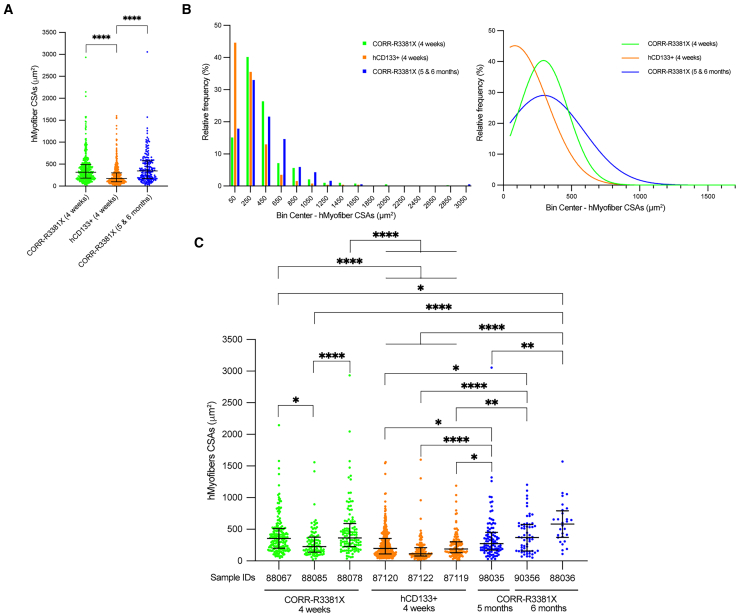
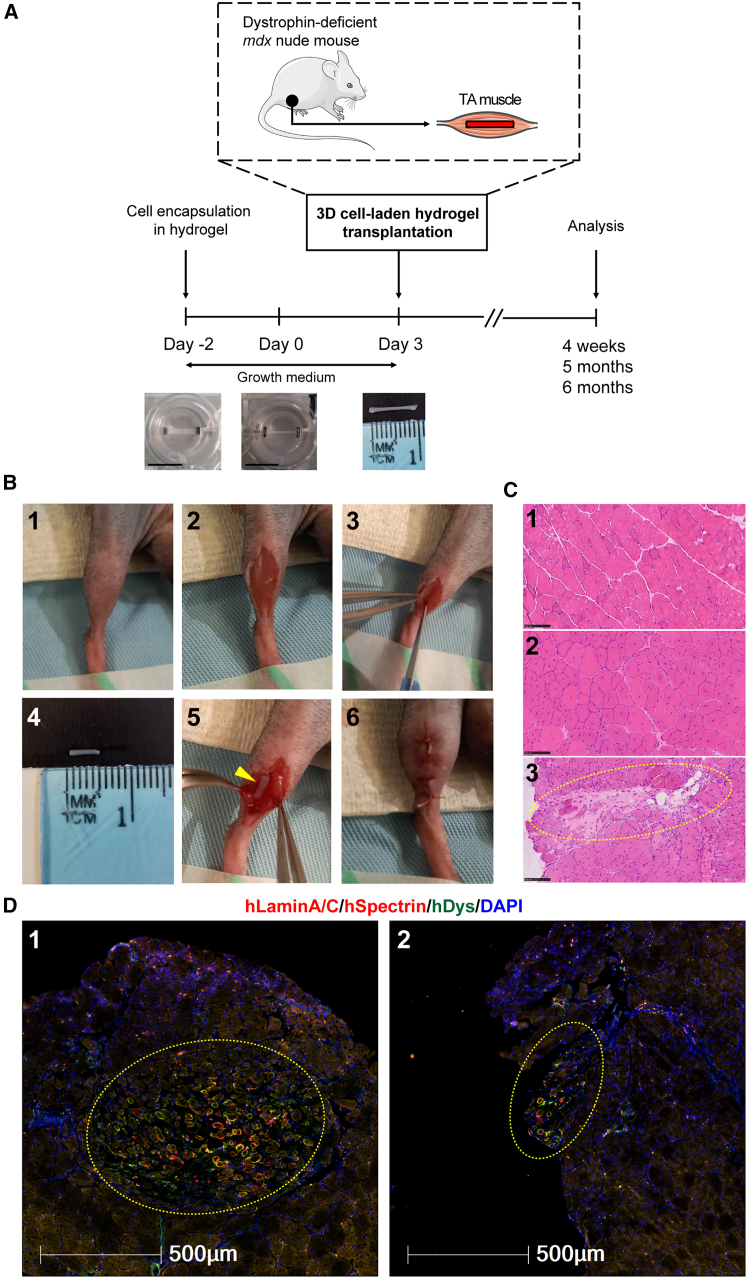
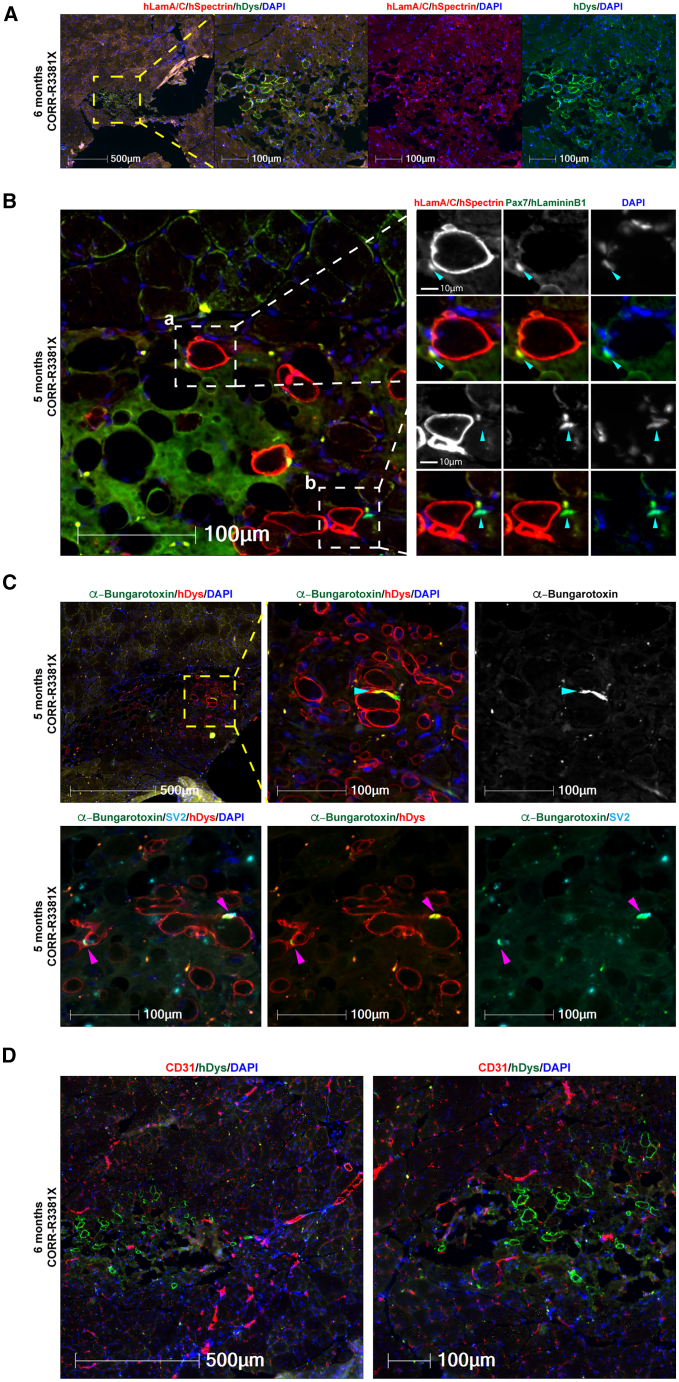
Transplantation of human myogenic progenitor cells (MPCs) is a promising therapeutic strategy for treating muscle-wasting diseases, e.g., Duchenne muscular dystrophy (DMD). To increase engraftment efficiency of donor stem cells, modulation of host muscles is required, significantly limiting their clinical translation. Here, we develop a clinically relevant transplantation strategy synergizing hydrogel-mediated delivery and engineered human MPCs generated from CRISPR-corrected DMD patient-derived pluripotent stem cells. We demonstrate that donor-derived human myofibers produce full-length dystrophin at 4 weeks and 5-6 months (long-term) after transplantation in the unmodulated muscles of the dystrophin-deficient mouse model of DMD. Remarkably, human myofibers are innervated by mouse motor neurons forming neuromuscular junctions and supported by vascularization after long-term engraftment in dystrophic mice. PAX7+ cells of human origin populate the satellite cell niche. There was no evidence of tumorigenesis in mice engrafted with hydrogel-encapsulated human MPCs. Our results provide a proof of concept in developing hydrogel-based cell therapy for muscle-wasting diseases.
人类肌源性祖细胞(MPCs)移植是治疗肌肉萎缩性疾病(如杜氏肌营养不良症,DMD)的一种有前景的治疗策略。为了提高供体干细胞的植入效率,需要对宿主肌肉进行调节,这显著限制了它们的临床应用。在此,我们开发了一种与临床相关的移植策略,将水凝胶介导的递送与由CRISPR校正的DMD患者来源的多能干细胞产生的工程化人类MPCs相结合。我们证明,在DMD的肌营养不良蛋白缺陷小鼠模型的未调节肌肉中,移植后4周和5 - 6个月(长期),供体来源的人类肌纤维产生全长肌营养不良蛋白。值得注意的是,人类肌纤维由形成神经肌肉接头的小鼠运动神经元支配,并在长期植入营养不良小鼠后得到血管化支持。人类来源的PAX7 +细胞占据卫星细胞龛。在植入水凝胶包裹的人类MPCs的小鼠中没有肿瘤发生的证据。我们的结果为开发用于肌肉萎缩性疾病的基于水凝胶的细胞疗法提供了概念验证。