Cao Jiasong, Wang Yixin, Lin Qimei, Wang Shuqi, Shen Yongmei, Zhang Lei, Li Wen, Chen Ling, Liu Chunliu, Yao Shihan, Shuai Ling, Chen Xu, Li Zongjin, Chang Ying
Tianjin Key Laboratory of Human Development and Reproductive Regulation, Tianjin Central Hospital of Gynecology Obstetrics, Tianjin, 300100, China.
Nankai University Affiliated Hospital of Obstetrics and Gynecology, Tianjin, 300100, China.
Cell Commun Signal. 2025 Mar 8;23(1):127. doi: 10.1186/s12964-025-02120-3.
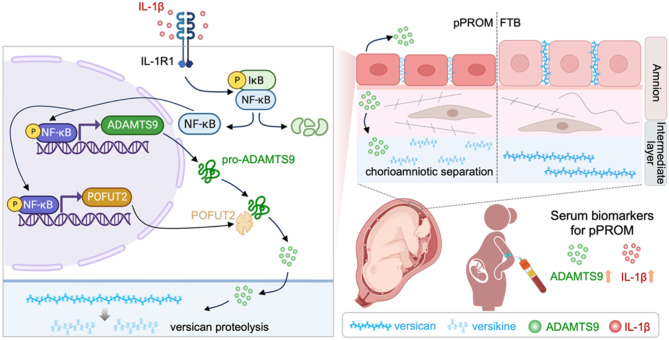
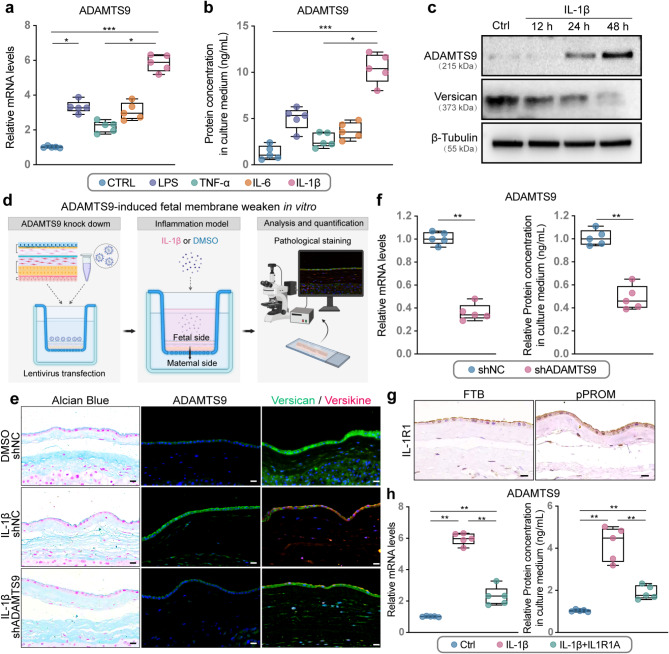
Preterm prelabor rupture of membranes (pPROM) is a leading cause of neonatal morbidity and mortality. While intra-amniotic infection is a well-established driver of pPROM, the role of sterile intra-amniotic inflammation remains unclear. Recent evidence suggests that interleukin-1 beta (IL-1β) promotes extracellular matrix (ECM) remodeling via downstream effectors, a disintegrin-like and metalloproteinase domain with thrombospondin type 1 motif 9 (ADAMTS9), while protein O-fucosyltransferase 2 (POFUT2) facilitates its O-fucosylation and secretion, amplifying ECM degradation. This study investigates how IL-1β-triggered nuclear factor kappa-B (NF-κB) activation promotes ADAMTS9 and POFUT2 expression, ultimately driving fetal membrane ECM remodeling and weakening in pPROM without signs of intra-amniotic infection.
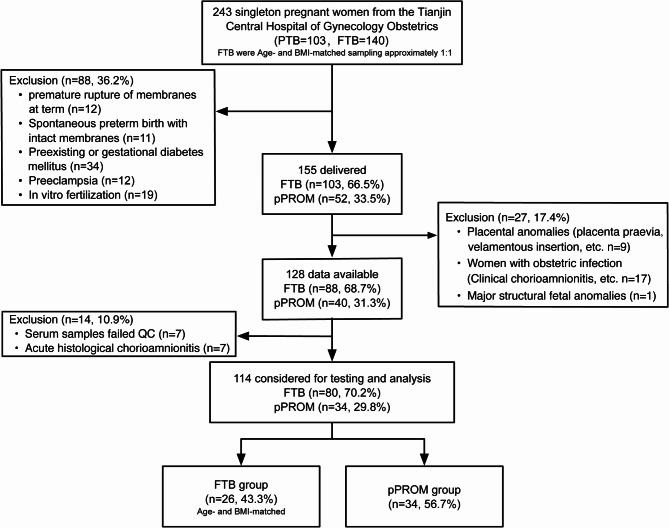
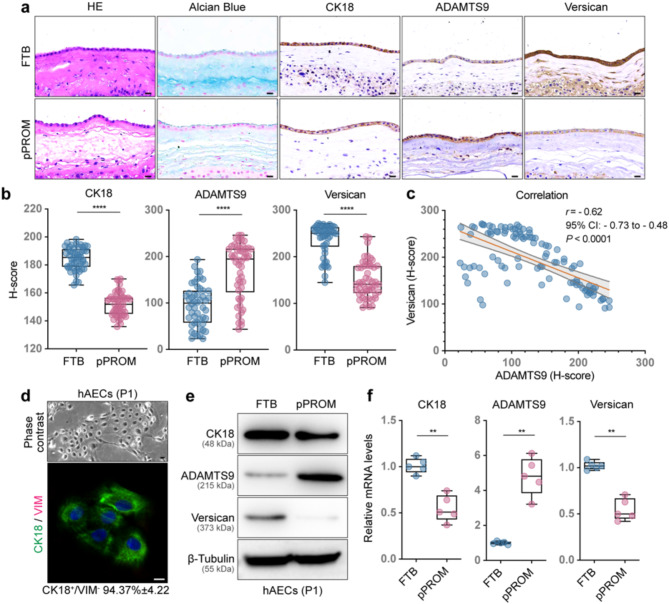
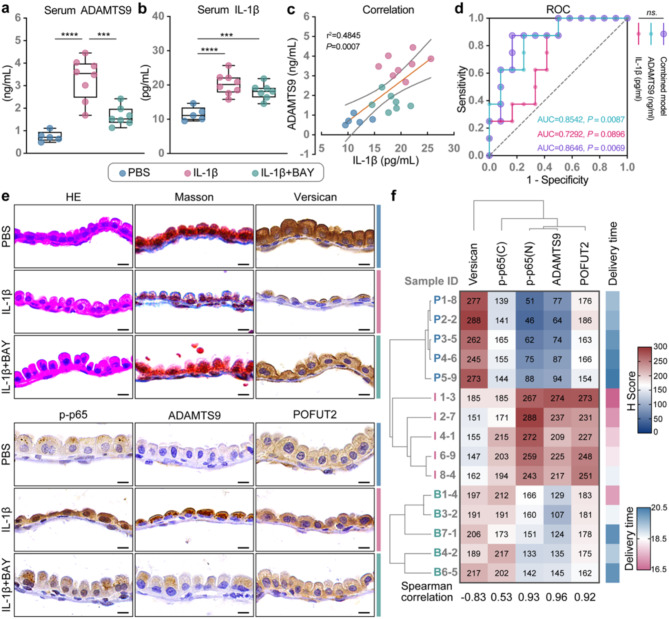
A nested case-control study included maternal serum and fetal membrane samples from 60 pregnant women (34 pPROM, 26 full-term births [FTB]). ELISA measured serum levels of IL-1β and ADAMTS9, and their correlations were analyzed. Mechanistic studies utilized primary human amniotic epithelial cells (hAECs) and fetal membrane-decidua explants with IL-1β treatment. The role of NF-κB was explored using chromatin immunoprecipitation (ChIP) and luciferase assays to assess NF-κB binding to the promoters of ADAMTS9 and POFUT2. A murine model of sterile intra-amniotic inflammation under ultrasound-guided IL-1β injection was used to validate in vitro findings and assess pregnancy outcomes.
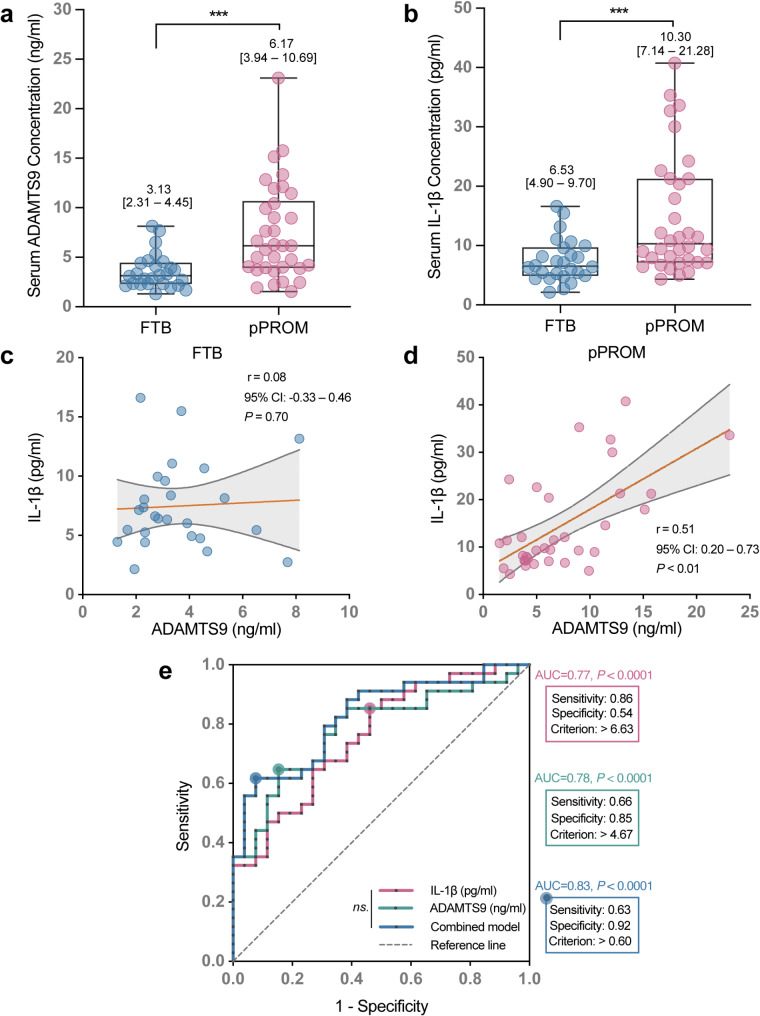
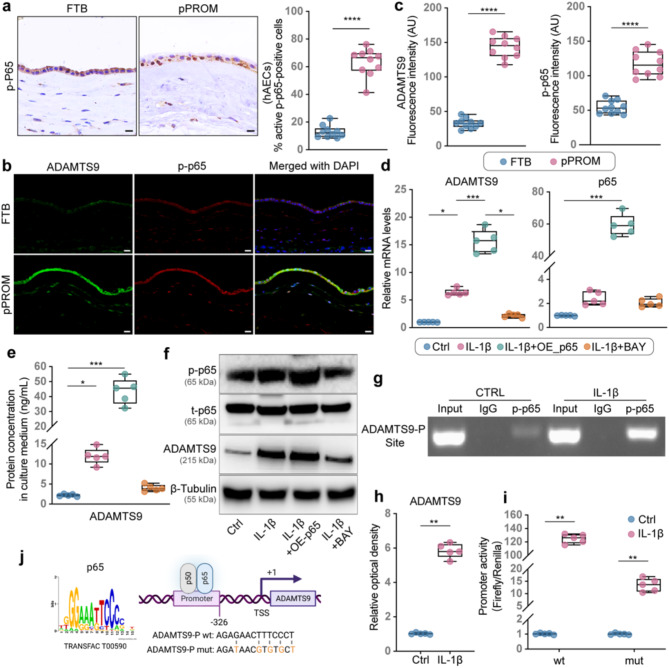
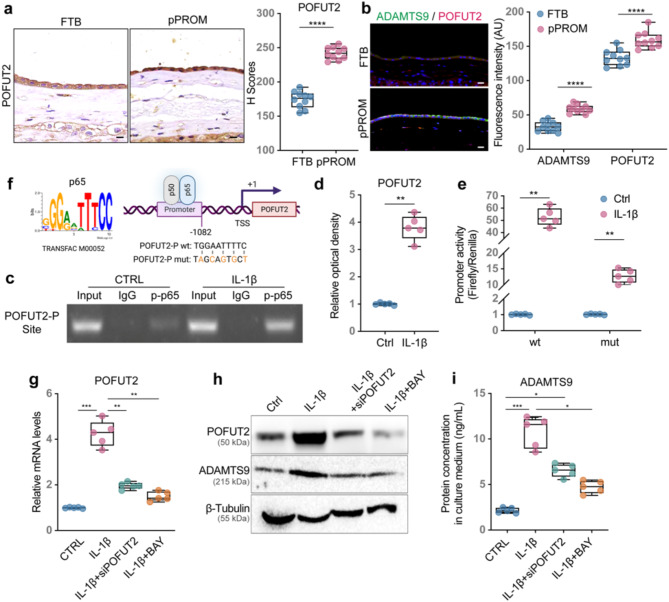
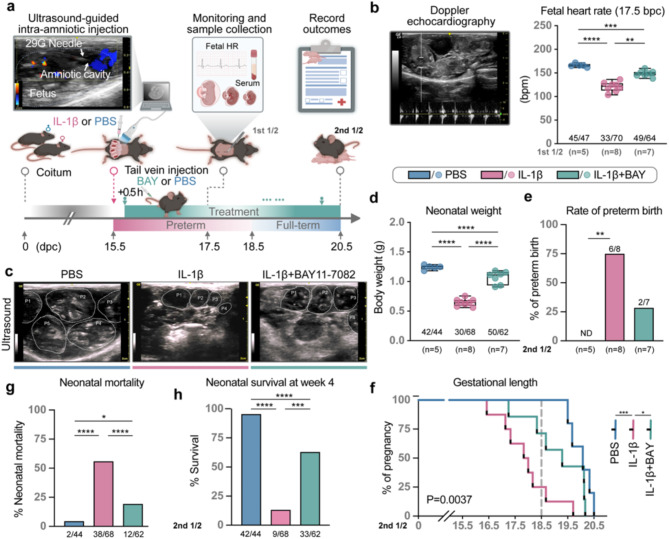
Serum IL-1β and ADAMTS9 levels at 16 weeks of gestation were significantly higher in pPROM cases compared to FTB controls (P < 0.001). A combined model of these biomarkers demonstrated high predictive accuracy for pPROM (AUC = 0.83). Mechanistically, IL-1β activated NF-κB, leading to its binding to the promoters of ADAMTS9 and POFUT2. NF-κB activation promoted ADAMTS9 expression, while POFUT2 enhanced its secretion. Together, these processes drove versican degradation and ECM weakening. Intra-amniotic administration of IL-1β in mice induced fetal membrane weakening, preterm birth, and adverse neonatal outcomes, which were mitigated by the NF-κB inhibitor BAY 11-7082 treatment.
Maternal serum ADAMTS9 levels at mid-gestation are promising non-invasive biomarkers for pPROM risk stratification. Mechanistically, IL-1β-induced NF-κB activation promotes ADAMTS9 expression and POFUT2-dependent secretion, contributing to fetal membrane weakening. These findings provide new insights into the role and potential therapeutic target for sterile intra-amniotic inflammation in pPROM.
胎膜早破(pPROM)是新生儿发病和死亡的主要原因。虽然羊膜腔内感染是pPROM的一个公认驱动因素,但无菌性羊膜腔内炎症的作用仍不清楚。最近的证据表明,白细胞介素-1β(IL-1β)通过下游效应物,即具有血小板反应蛋白1型基序9的去整合素样金属蛋白酶结构域(ADAMTS9)促进细胞外基质(ECM)重塑,而蛋白O-岩藻糖基转移酶2(POFUT2)促进其O-岩藻糖基化和分泌,放大ECM降解。本研究探讨IL-1β触发的核因子κB(NF-κB)激活如何促进ADAMTS9和POFUT2表达,最终驱动胎膜ECM重塑和pPROM中胎膜的弱化,而无羊膜腔内感染迹象。
一项巢式病例对照研究纳入了60名孕妇(34例pPROM,26例足月分娩[FTB])的母血清和胎膜样本。ELISA法检测血清IL-1β和ADAMTS9水平,并分析它们的相关性。机制研究利用原代人羊膜上皮细胞(hAECs)和经IL-1β处理的胎膜-蜕膜外植体。使用染色质免疫沉淀(ChIP)和荧光素酶测定法评估NF-κB与ADAMTS9和POFUT2启动子的结合,以探讨NF-κB的作用。在超声引导下注射IL-1β建立无菌性羊膜腔内炎症小鼠模型,以验证体外研究结果并评估妊娠结局。
与FTB对照组相比,pPROM病例在妊娠16周时血清IL-1β和ADAMTS9水平显著更高(P < 0.001)。这些生物标志物的联合模型对pPROM具有较高的预测准确性(AUC = 0.83)。机制上,IL-1β激活NF-κB,导致其与ADAMTS9和POFUT2启动子结合。NF-κB激活促进ADAMTS9表达,而POFUT2增强其分泌。这些过程共同导致多功能蛋白聚糖降解和ECM弱化。在小鼠羊膜腔内给予IL-1β可诱导胎膜弱化、早产和不良新生儿结局,而NF-κB抑制剂BAY 11-7082治疗可减轻这些情况。
妊娠中期母血清ADAMTS9水平是pPROM风险分层有前景的非侵入性生物标志物。机制上,IL-1β诱导的NF-κB激活促进ADAMTS9表达和POFUT2依赖性分泌,导致胎膜弱化。这些发现为无菌性羊膜腔内炎症在pPROM中的作用和潜在治疗靶点提供了新见解。