Qin Qian, Fan Linlin, Zeng Xin, Zheng Danyang, Wang Han, Li Mengyue, Jiang Yutong, Wang Hui, Liu Hao, Liang Shengjun, Wu Lijie, Liang Shuang
Department of Children's and Adolescent Health, Public Health College, Harbin Medical University, Harbin, 150081, China.
J Nanobiotechnology. 2025 Mar 11;23(1):201. doi: 10.1186/s12951-025-03250-z.
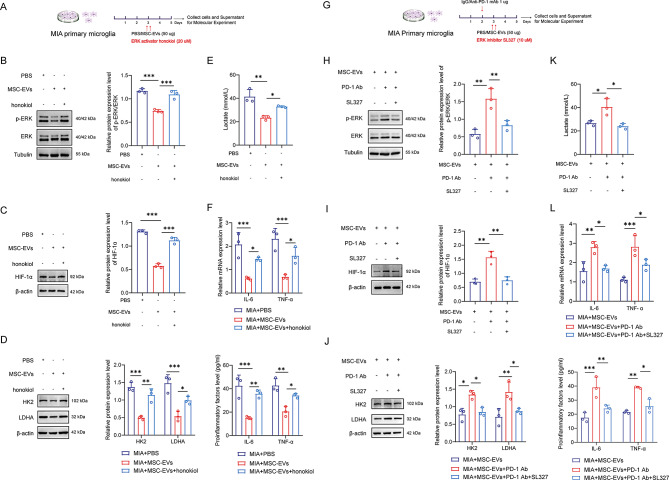
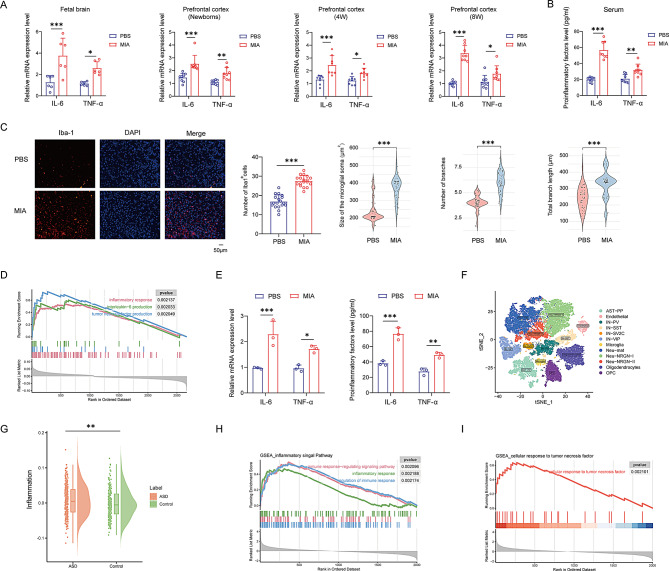
Neuroinflammation triggered by microglia activation is hallmark of autism spectrum disorder (ASD), and this process includes crucial metabolic reprogramming from oxidative phosphorylation to glycolysis, which may cause neuron loss and functional impairment. The inhibitory immune checkpoint programmed cell death protein 1 (PD-1) on immune cells is an important target for tumor immunotherapy. However, the immunomodulatory effects of PD-1 in ASD remains to be elusive. Mesenchymal stem cell-derived extracellular vesicles (MSC-EVs) exhibit immunomodulatory capabilities in a range of neurological diseases. Our findings indicated the expression of PD-L1 on MSC-EVs, potentially facilitating signaling to PD-1-expressing microglia. Here, we showed how MSC-EVs activated of PD-L1/PD-1 axis and ameliorated glycolysis, neuroinflammation and autism-like behaviors. After first detecting elevated glycolysis and neuroinflammation in prefrontal cortex (PFC) tissue from the maternal immune activation (MIA) mice, we also demonstrated that PD-1 expression level was upregulated in microglia. Following given MSC-EVs carried PD-L1 into adult MIA offspring mice via intranasal administration, which bound with PD-1 on microglia and then the autism-like behaviors were alleviated as well. Further experiments verified that MSC-EVs could decreased the level of glycolysis and neuroinflammation by PD-1/ERK/HIF-1α pathway in the primary microglia in PFC of MIA offspring mice. Pharmacological blockade and genetic inhibition of PD-1 could weaken the effect of MSC-EVs and aggravate microglial dysfunction, glycolysis and autism-like behaviors in MIA offspring mice. Futhermore, PD-L1 deficient weakened the effect of MSC-EVs on neuroinflammation, glycolysis and autism-like behaviors in MIA offspring mice. Our research indicated the significant immunomodulatory capabilities of MSC-EVs, which play an important role in reprogramming microglial glucose metabolism and suppressing neuroinflammation in ASD. By activating the PD-L1/PD-1 axis and inhibiting the downstream ERK/HIF-1α pathway, MSC-EVs were found to alleviate autism-like behaviors, which revealing a novel pathological mechanism and offering promising therapeutic insights into ASD.
小胶质细胞激活引发的神经炎症是自闭症谱系障碍(ASD)的标志,这一过程包括从氧化磷酸化到糖酵解的关键代谢重编程,这可能导致神经元丢失和功能损害。免疫细胞上的抑制性免疫检查点程序性细胞死亡蛋白1(PD-1)是肿瘤免疫治疗的重要靶点。然而,PD-1在ASD中的免疫调节作用仍不清楚。间充质干细胞衍生的细胞外囊泡(MSC-EVs)在一系列神经疾病中表现出免疫调节能力。我们的研究结果表明PD-L1在MSC-EVs上的表达,可能促进向表达PD-1的小胶质细胞的信号传导。在此,我们展示了MSC-EVs如何激活PD-L1/PD-1轴并改善糖酵解、神经炎症和自闭症样行为。在首次检测到母体免疫激活(MIA)小鼠前额叶皮质(PFC)组织中糖酵解和神经炎症升高后,我们还证明小胶质细胞中PD-1表达水平上调。通过鼻内给药将携带PD-L1的MSC-EVs给予成年MIA后代小鼠后,其与小胶质细胞上的PD-1结合,随后自闭症样行为也得到缓解。进一步的实验证实,MSC-EVs可通过PD-1/ERK/HIF-1α途径降低MIA后代小鼠PFC原代小胶质细胞中的糖酵解水平和神经炎症。PD-1的药理学阻断和基因抑制可削弱MSC-EVs的作用,并加重MIA后代小鼠的小胶质细胞功能障碍、糖酵解和自闭症样行为。此外,PD-L1缺陷削弱了MSC-EVs对MIA后代小鼠神经炎症、糖酵解和自闭症样行为的影响。我们的研究表明MSC-EVs具有显著的免疫调节能力,其在重编程小胶质细胞葡萄糖代谢和抑制ASD中的神经炎症方面发挥重要作用。通过激活PD-L1/PD-1轴并抑制下游ERK/HIF-1α途径,发现MSC-EVs可缓解自闭症样行为,这揭示了一种新的病理机制,并为ASD提供了有前景的治疗思路。