Guio Oros Juan Francisco, Arias Cobos Estefanía, Villalba Reyes Juanita, Leal Jaime Andrés
Orthopedics and Traumatology Resident, Hospital Universitario de la Samaritana and Pontificia Universidad Javeriana, Bogotá, Colombia.
Orthopedics and Traumatology Department, Hospital Universitario de la Samaritana, Bogotá, Colombia.
Trauma Case Rep. 2025 Feb 19;56:101143. doi: 10.1016/j.tcr.2025.101143. eCollection 2025 Apr.
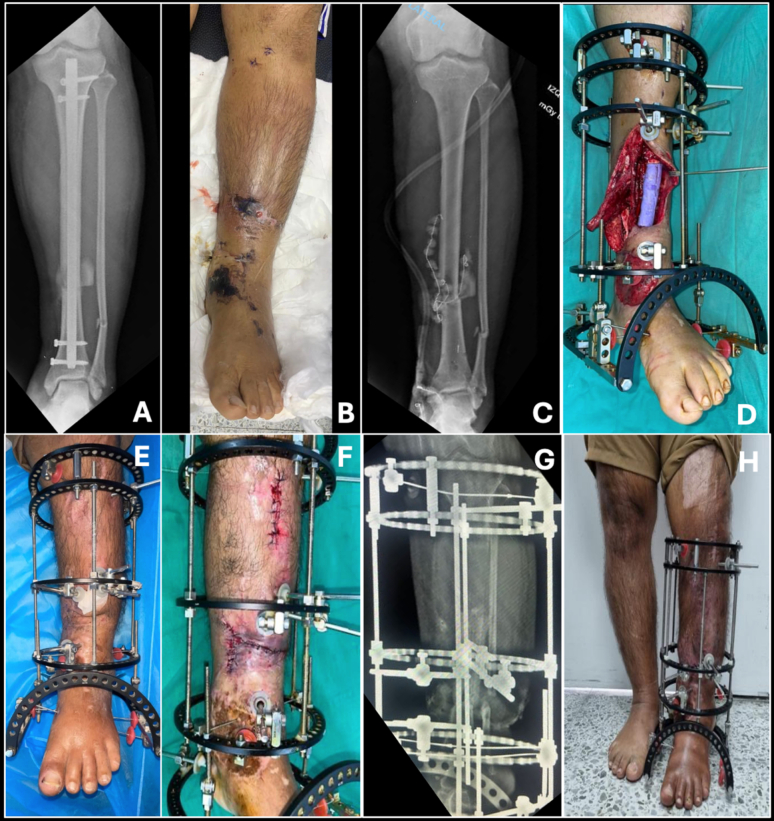
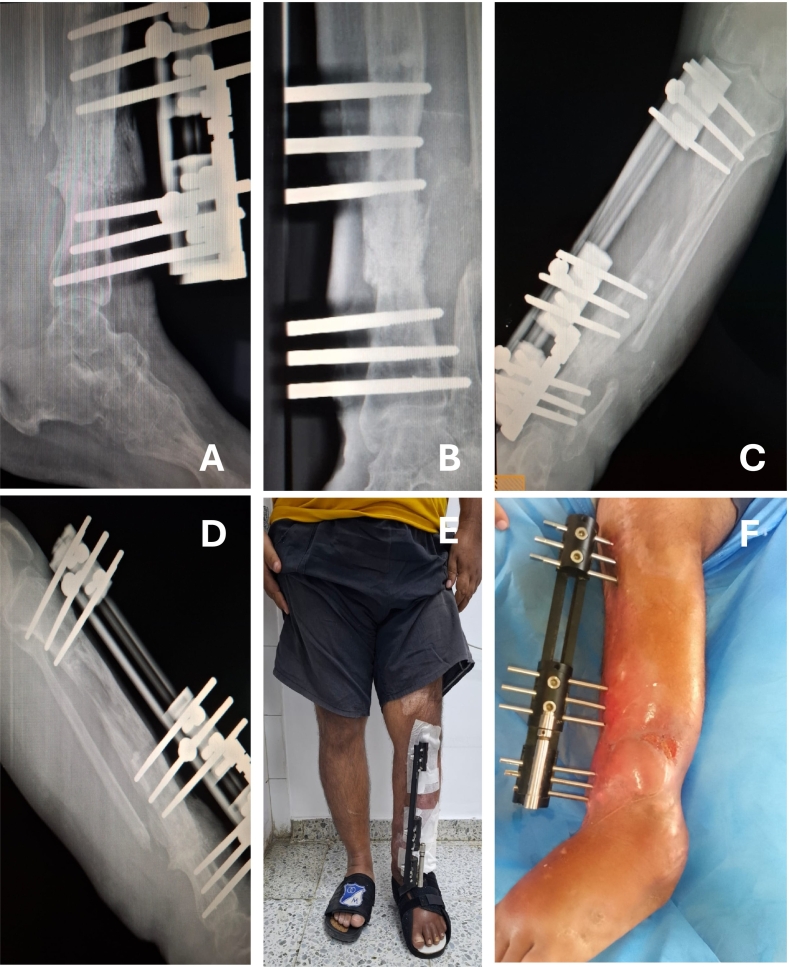
This paper reports on two cases of post-traumatic osteomyelitis (OM) caused by in immunocompetent patients, a rare but severe condition. , a gram-negative bacterium typically found in aquatic environments, is seldom reported as a cause of OM. The first case involved a 42-year-old male with a Gustilo-Anderson grade II open tibial fracture exposed to sewer water, leading to persistent infection despite initial treatment. The second case described a 38-year-old male inmate with a gunshot-induced tibial fracture managed externally, later presenting with purulent discharge and bone exposure. Both cases required extensive surgical interventions, including multiple debridements, antibiotic therapy, and bone reconstruction using distraction osteogenesis techniques. This report emphasizes the importance of early suspicion of infection in patients with open fractures and water exposure, noting that standard laboratory procedures may not routinely identify this pathogen. Effective management involves a combination of surgical and medical approaches, including targeted antibiotics and aggressive surgical debridement, with some cases necessitating amputation. The rarity of this infection and its challenging treatment underscore the need for further research to develop standardized protocols and improve clinical outcomes.
本文报道了两例免疫功能正常患者因[具体细菌名称未给出]导致的创伤后骨髓炎(OM)病例,这是一种罕见但严重的病症。[具体细菌名称未给出]是一种革兰氏阴性菌,通常存在于水生环境中,很少被报道为OM的病因。第一例病例是一名42岁男性,患有Gustilo-Anderson II级开放性胫骨骨折,伤口暴露于污水中,尽管进行了初始治疗仍导致持续感染。第二例病例描述了一名38岁男性囚犯,因枪伤导致胫骨骨折,采用外固定治疗,后来出现脓性分泌物和骨质外露。两例病例均需要广泛的手术干预,包括多次清创、抗生素治疗以及使用骨延长技术进行骨重建。本报告强调了对于开放性骨折且接触水的患者早期怀疑[具体细菌名称未给出]感染的重要性,指出标准实验室程序可能无法常规识别这种病原体。有效的治疗需要手术和药物治疗相结合,包括使用针对性抗生素和积极的手术清创,部分病例需要截肢。这种感染的罕见性及其具有挑战性的治疗突出了进一步研究以制定标准化方案并改善临床结果的必要性。