Quirici Verónica, Kilgour Denyelle, Cuevas Elfego, Fletcher Susan, Sarmiento Carlos, González-Lagos César, Romero L Michael
Centro de Investigación para la Sustentabilidad, Facultad de Ciencias de la Vida, Universidad Andrés Bello, Santiago, Chile.
Department of Biology, Tufts University, Medford, MA, United States.
Front Physiol. 2025 Feb 28;16:1523983. doi: 10.3389/fphys.2025.1523983. eCollection 2025.
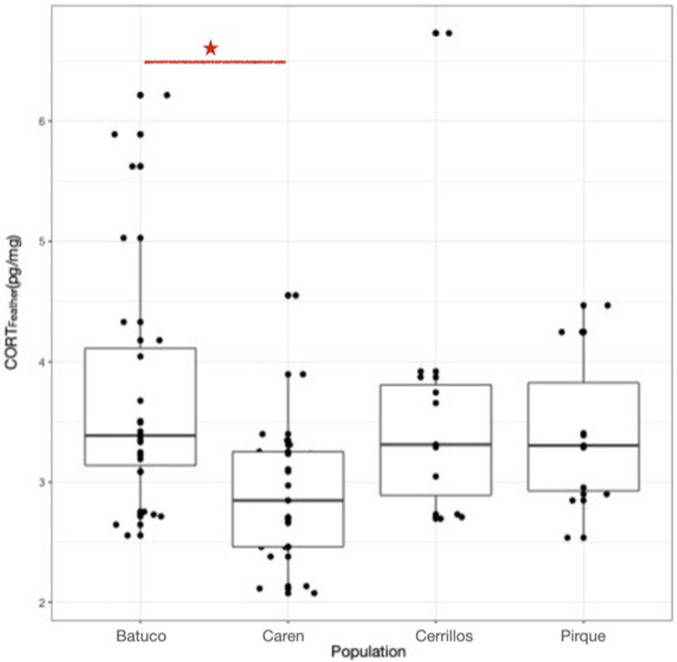
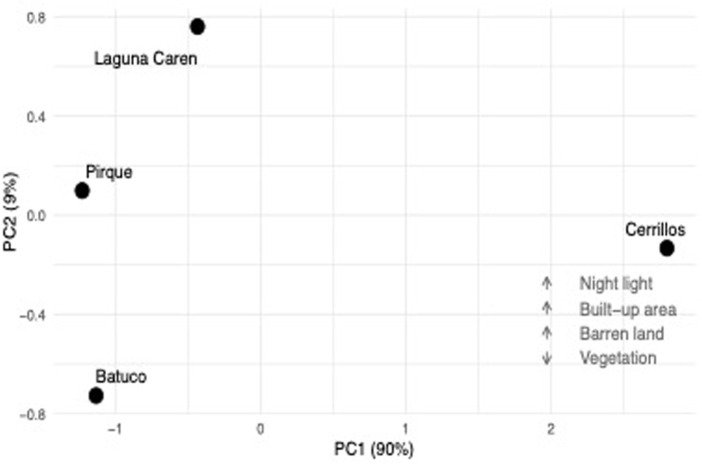
The urbanization process modifies the environment in which wildlife lives. On the one hand, it modifies the biotic and abiotic elements and introduces new stress factors like light pollution, noise pollution, and chemical pollution. These modifications to natural elements and the introduction of new ones could induce stress in organisms and lead to the release of glucocorticoids. One taxonomic group that lives in cities and is highly sensitive to changes in habitat and human population density is birds. Most of the studies about stress and urbanization have measured glucocorticoids (GCs) circulating in the blood, which offer only a "snapshot" of an animal's current state, and it is affected by the capture procedure. An alternative is to measure GCs in samples that are not altered by the capture procedure, like feathers. In this study we compared levels of corticosterone in feather (Cort) of the southern lapwing () in four locations in the Metropolitan Region (RM) of Santiago de Chile. To accurately measure urbanization, we employed four distinct land cover typologies to illustrate the variations in structural characteristics. A 500-m buffer zone was created around each of the four collection sites where feathers were gathered, creating an "Urbanization score". We observed a statistically significant variation in the median Cort values across the four studied localities. Contrary to our expectation, the observed differences in Cort concentrations were identified not among the highly urbanized populations but rather between two populations characterized by lower urbanization scores. In the same line, we observed the absence of correlation between the "Urbanization score" and Cort levels. Our findings indicate that factors beyond those captured in the satellite images may contribute to the elevated levels of this hormone in a low urbanized wetland in the Santiago Metropolitan region of Chile. For instance, the prevalence of feral dogs in the vicinity, including within the wetland, could be a significant contributing factor.
城市化进程改变了野生动物的生存环境。一方面,它改变了生物和非生物元素,并引入了新的压力因素,如光污染、噪音污染和化学污染。对自然元素的这些改变以及新元素的引入可能会给生物体带来压力,并导致糖皮质激素的释放。鸟类是生活在城市中且对栖息地变化和人口密度高度敏感的一个分类群体。大多数关于压力与城市化的研究都测量了血液中循环的糖皮质激素(GCs),这只能提供动物当前状态的“快照”,而且它会受到捕获过程的影响。另一种方法是测量不受捕获过程影响的样本中的糖皮质激素,比如羽毛。在本研究中,我们比较了智利圣地亚哥大都会区(RM)四个地点的南方凤头麦鸡()羽毛中的皮质酮水平。为了准确衡量城市化程度,我们采用了四种不同的土地覆盖类型来阐明结构特征的变化。在收集羽毛的四个采集地点周围都创建了一个500米的缓冲区,从而得出一个“城市化得分”。我们观察到四个研究地点的皮质酮中位数存在统计学上的显著差异。与我们的预期相反,观察到的皮质酮浓度差异并非存在于高度城市化的种群之间,而是存在于两个城市化得分较低的种群之间。同样,我们观察到“城市化得分”与皮质酮水平之间不存在相关性。我们的研究结果表明,除了卫星图像所捕捉到的因素之外,其他因素可能导致了智利圣地亚哥大都会区一个低城市化湿地中这种激素水平的升高。例如,湿地附近包括湿地内流浪狗的存在可能是一个重要的促成因素。