Beaugeard Erika, Brischoux François, Henry Pierre-Yves, Parenteau Charline, Trouvé Colette, Angelier Frédéric
Centre d'Études Biologiques de Chizé (CEBC) UMR 7372 CNRS-Université de La Rochelle Villiers-en-Bois France.
Centre de Recherches sur la Biologie des Populations d'Oiseaux (CRBPO) CESCO UMR 7204 Sorbonne Universités-MNHN-CNRS-UPMC Paris France.
Ecol Evol. 2018 Dec 21;9(1):640-652. doi: 10.1002/ece3.4788. eCollection 2019 Jan.
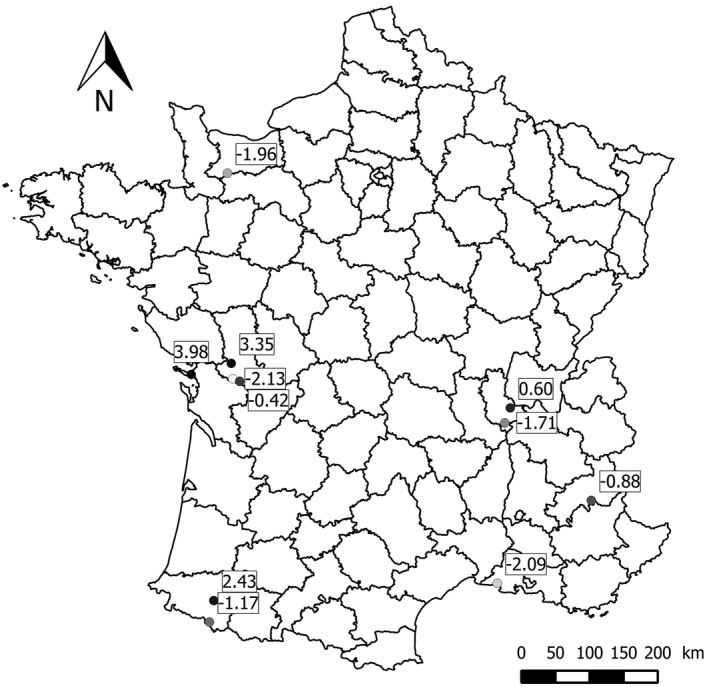
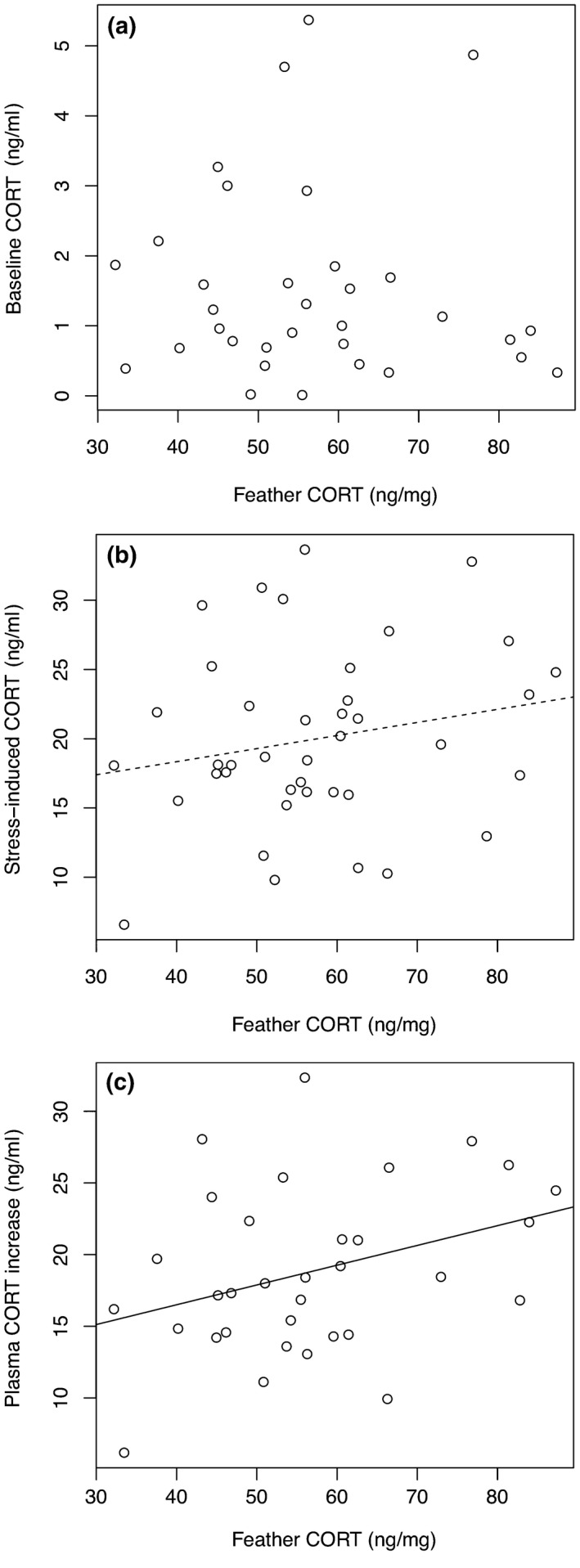
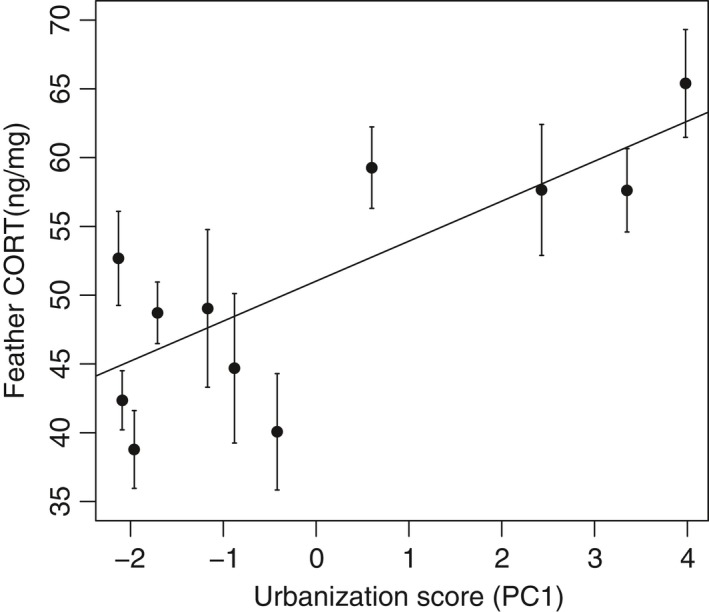
Urban landscapes are associated with abiotic and biotic environmental changes that may result in potential stressors for wild vertebrates. Urban exploiters have physiological, morphological, and behavioral adaptations to live in cities. However, there is increasing evidence that urban exploiters themselves can suffer from urban conditions, especially during specific life-history stages. We looked for a link between the degree of urbanization and the level of developmental stress in an urban exploiter (the house sparrow, ), which has recently been declining in multiple European cities (e.g., London, UK). Specifically, we conducted a large-scale study and sampled juvenile sparrows in 11 urban and rural sites to evaluate their feather corticosterone (CORT) levels. We found that juvenile feather CORT levels were positively correlated with the degree of urbanization, supporting the idea that developing house sparrows may suffer from urban environmental conditions. However, we did not find any correlation between juvenile feather CORT levels and body size, mass, or body condition. This suggests either that the growth and condition of urban sparrows are not impacted by elevated developmental CORT levels, or that urban sparrows may compensate for developmental constraints once they have left the nest. Although feather CORT levels were not correlated with baseline CORT levels, we found that feather CORT levels were slightly and positively correlated with the CORT stress response in juveniles. This suggests that urban developmental conditions may potentially have long-lasting effects on stress physiology and stress sensitivity in this urban exploiter.
城市景观与非生物和生物环境变化相关联,这些变化可能会给野生脊椎动物带来潜在压力源。城市适应者在生理、形态和行为方面具有适应城市生活的特征。然而,越来越多的证据表明,城市适应者自身也可能受到城市环境的影响,尤其是在特定的生命史阶段。我们在一种城市适应者(家麻雀)中寻找城市化程度与发育应激水平之间的联系,这种鸟最近在多个欧洲城市(如英国伦敦)数量正在减少。具体而言,我们开展了一项大规模研究,在11个城市和农村地点对幼年麻雀进行采样,以评估它们羽毛中的皮质酮(CORT)水平。我们发现幼年麻雀羽毛中的CORT水平与城市化程度呈正相关,这支持了发育中的家麻雀可能受到城市环境条件影响的观点。然而,我们没有发现幼年麻雀羽毛中的CORT水平与体型、体重或身体状况之间存在任何相关性。这表明要么城市麻雀的生长和状况不受发育中升高的CORT水平影响,要么城市麻雀在离巢后可能会弥补发育限制。虽然羽毛中的CORT水平与基础CORT水平无关,但我们发现羽毛中的CORT水平与幼年麻雀的CORT应激反应呈微弱正相关。这表明城市发育条件可能会对这种城市适应者的应激生理和应激敏感性产生潜在的长期影响。