
补充益生菌与冠心病患者心血管风险状况的关联——对1999年至2019年美国国家健康与营养检查调查(NHANES)数据库的横断面分析
Association of probiotic supplementation and cardiovascular risk profiles of patients with coronary artery disease-a cross-sectional analysis of the NHANES database between 1999-2019.
作者信息
Palathinkara Murali, Aljadah Michael, Thorgerson Abigail, Dawson Aprill Z, Widlansky Michael E
机构信息
Division of Cardiovascular Medicine, Department of Medicine, Medical College of Wisconsin, Milwaukee, WI, United States.
Center for Advancing Population Science, Medical College of Wisconsin, Milwaukee, WI, United States.
出版信息
Front Nutr. 2025 Feb 28;12:1495633. doi: 10.3389/fnut.2025.1495633. eCollection 2025.
BACKGROUND
Atherosclerotic cardiovascular disease (ASCVD) is a chronic inflammatory disease that leads to adverse events such as myocardial infarctions and stroke. Gut microbiome modulation is a promising target to reduce chronic inflammation and improve outcomes for patients with coronary artery disease (CAD). Risk profile patterns of CAD patients who target gut health with probiotics could provide insight into how gut modulation improves CAD clinical biomarkers. This study aims to evaluate the association between probiotic use and clinical markers of known atherosclerotic risk factors, in patients with CAD.
METHODS
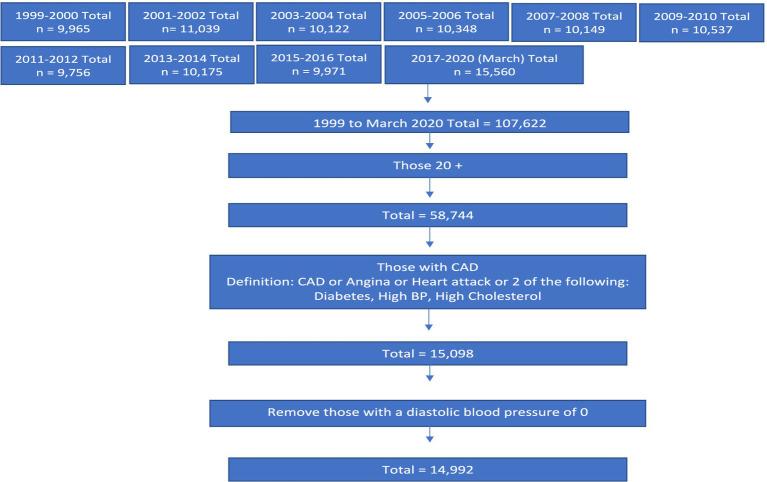
We conducted a cross-sectional large-database study using National Health and Nutrition Examination Survey (NHANES) data from years 1999-2020. The cohort included adults with at least a diagnosis of coronary heart disease, angina, and heart attack or two of the following: diabetes, high blood pressure, and high cholesterol. Analyses of clinical biomarkers compared probiotic to non-probiotic groups, between probiotic type groups, and between probiotic supplement strains.
RESULTS
Our cohort included 14,992 survey responders. After weighting, this sample represented 46,217,980 US adults. There were 4,062,022 adults exposed to probiotics, 763,288 to probiotic supplements and 3,179,008 to probiotic foods. Probiotic exposure was associated with lower A1c ( < 0.001), lower triglycerides ( < 0.001), lower ASCVD risk score ( = 0.01) and higher HDL-C ( < 0.001). Probiotic supplement exposure was associated with lower LDL-C ( = 0.003) and total cholesterol ( = 0.047).
CONCLUSION
Our study reinforces the beneficial association between probiotic ingestion and cardiovascular health in patients with existing atherosclerotic disease. Further studies to better determine potential mechanistic connections between the gut microbiota on cardiovascular risk factors is warranted.
背景
动脉粥样硬化性心血管疾病(ASCVD)是一种慢性炎症性疾病,可导致心肌梗死和中风等不良事件。调节肠道微生物群是减少慢性炎症和改善冠心病(CAD)患者预后的一个有前景的靶点。使用益生菌针对肠道健康的CAD患者的风险特征模式,可为了解肠道调节如何改善CAD临床生物标志物提供线索。本研究旨在评估CAD患者中益生菌使用与已知动脉粥样硬化危险因素临床标志物之间的关联。
方法
我们使用1999年至2020年的美国国家健康和营养检查调查(NHANES)数据进行了一项横断面大数据库研究。该队列包括至少诊断为冠心病、心绞痛和心脏病发作的成年人,或以下两项:糖尿病、高血压和高胆固醇。临床生物标志物分析比较了益生菌组与非益生菌组、益生菌类型组之间以及益生菌补充菌株之间的情况。
结果
我们的队列包括14992名调查受访者。加权后,该样本代表了46217980名美国成年人。有4062022名成年人接触过益生菌,763288名接触过益生菌补充剂,3179008名接触过益生菌食品。接触益生菌与较低的糖化血红蛋白(<0.001)、较低的甘油三酯(<0.001)、较低的ASCVD风险评分(=0.01)和较高的高密度脂蛋白胆固醇(<0.001)相关。接触益生菌补充剂与较低的低密度脂蛋白胆固醇(=0.003)和总胆固醇(=0.047)相关。
结论
我们的研究强化了现有动脉粥样硬化疾病患者摄入益生菌与心血管健康之间的有益关联。有必要进行进一步研究,以更好地确定肠道微生物群与心血管危险因素之间潜在的机制联系。


 Zotero 插件