Department of Cardiology, Weihai Municipal Hospital, Cheeloo College of Medicine, Shandong University, Weihai, Shandong, China.
Inner Mongolia Key Laboratory of Dairy Biotechnology and Engineering, Inner Mongolia Agricultural Universitygrid.411638.9, Hohhot, Inner Mongolia, China.
mSystems. 2022 Apr 26;7(2):e0010022. doi: 10.1128/msystems.00100-22. Epub 2022 Mar 28.
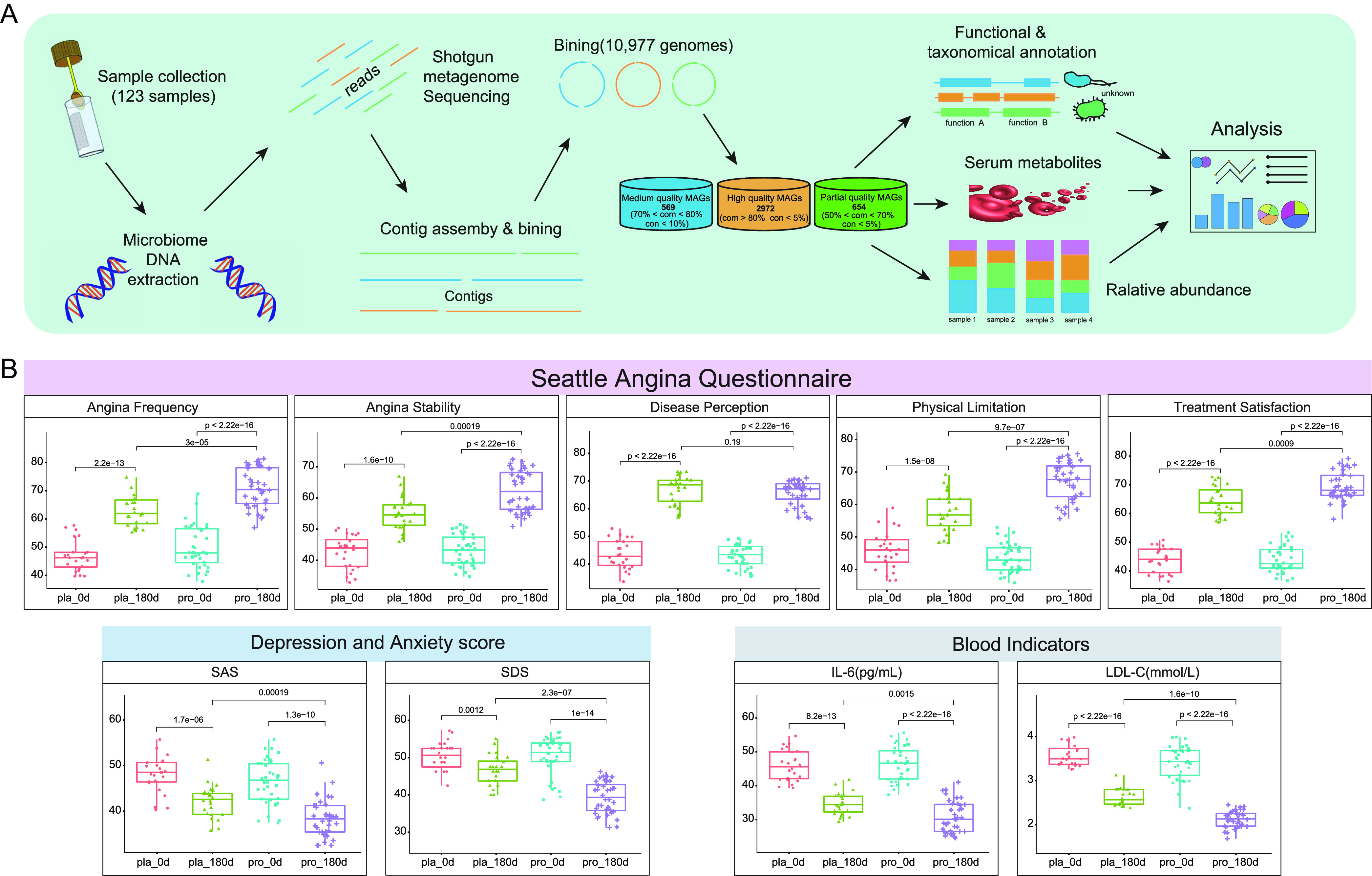
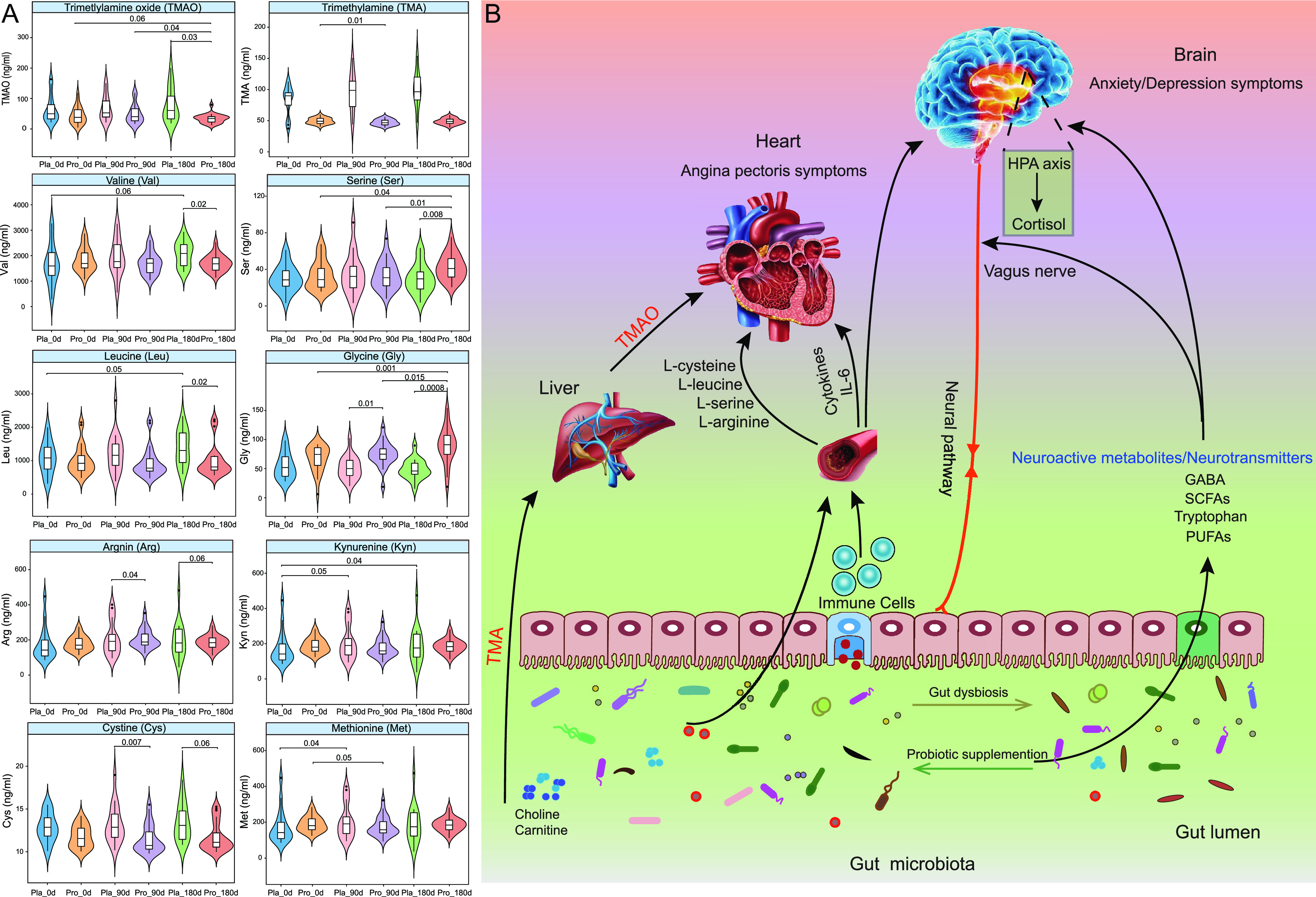
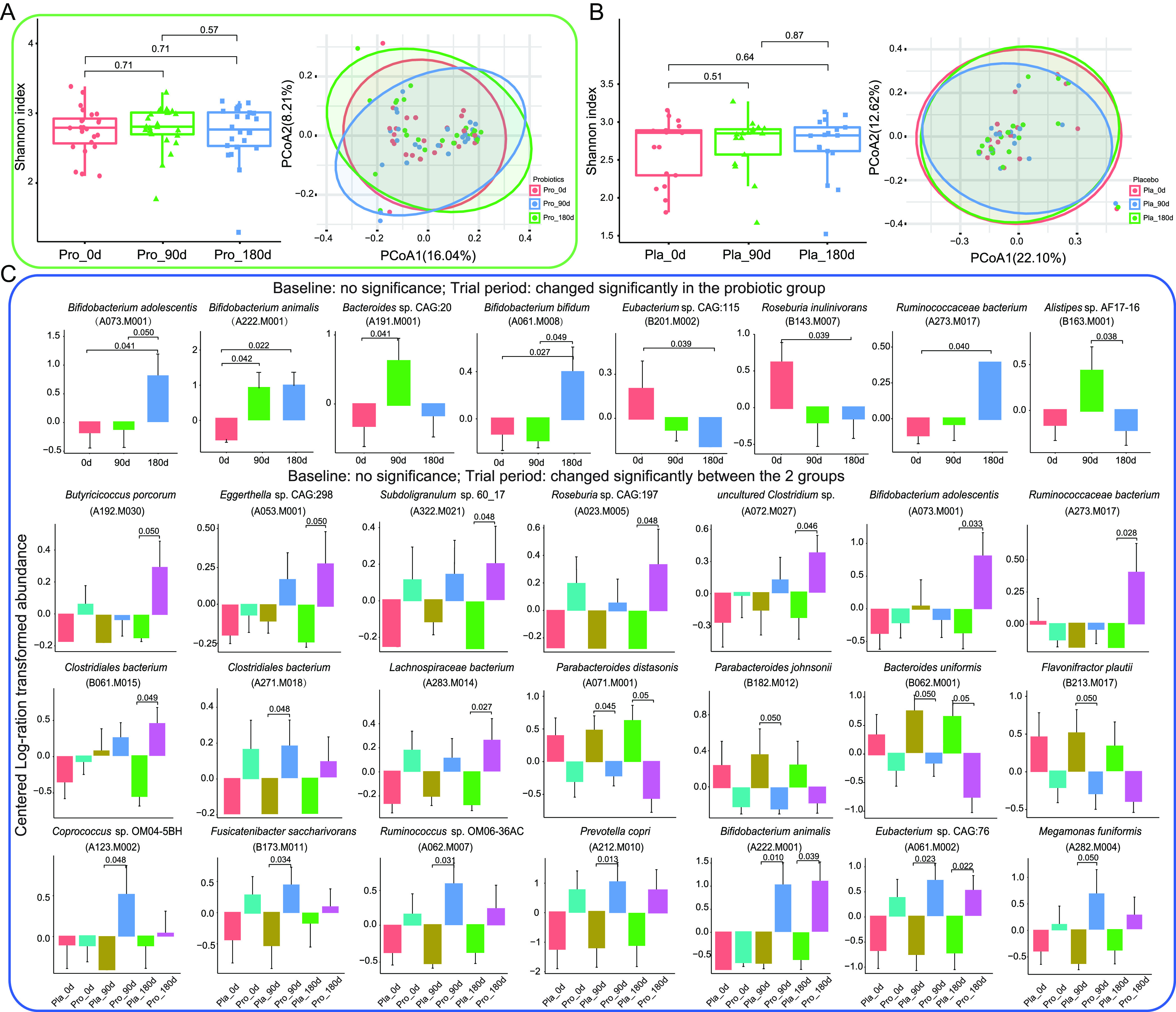
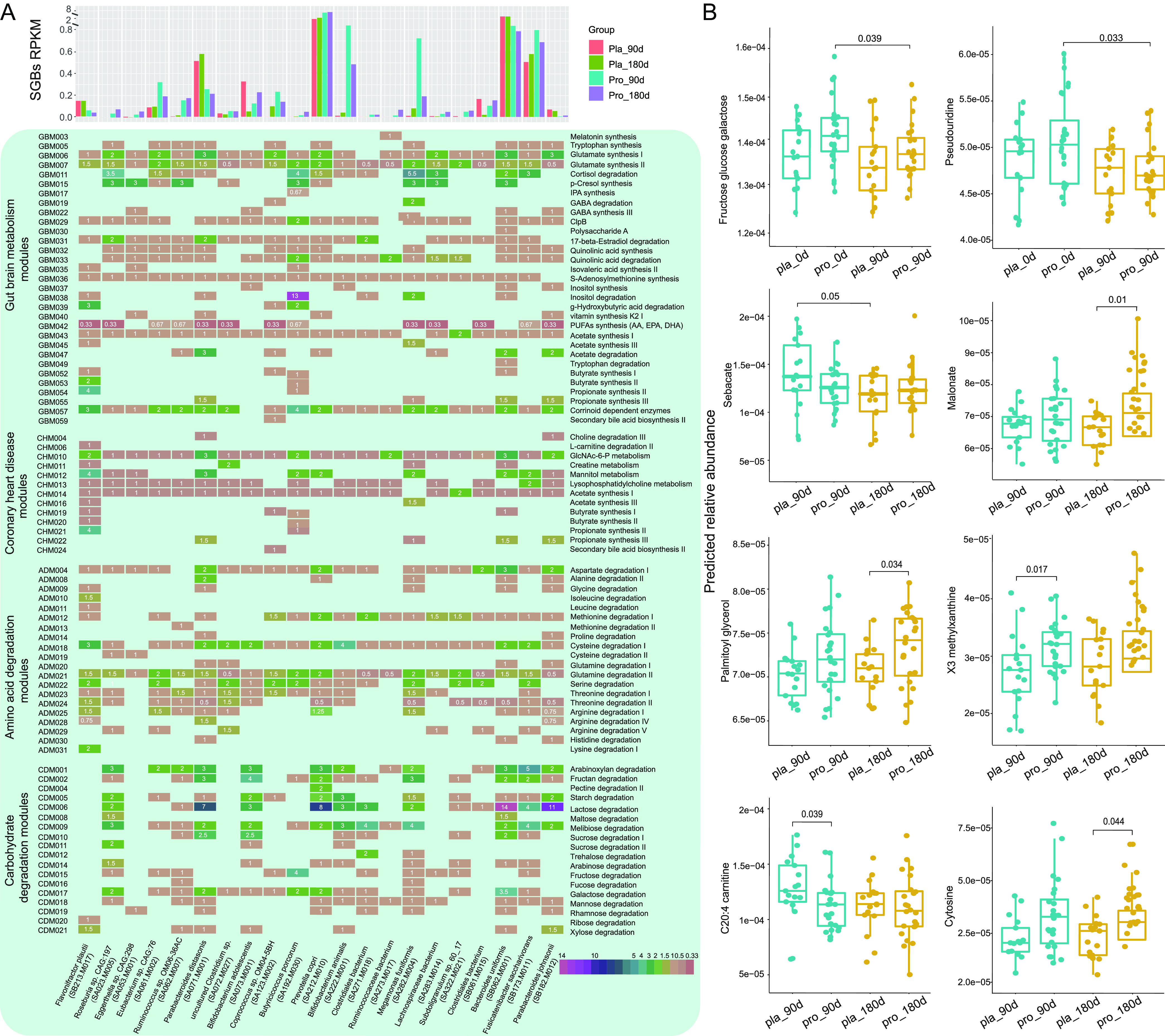
Accumulating evidence suggests that gut dysbiosis may play a role in cardiovascular problems like coronary artery disease (CAD). Thus, target steering the gut microbiota/metabolome via probiotic administration could be a promising way to protect against CAD. A 6-month randomized, double-blind, placebo-controlled clinical trial was conducted to investigate the added benefits and mechanism of the probiotic strain, Bifidobacterium lactis Probio-M8, in alleviating CAD when given together with a conventional regimen. Sixty patients with CAD were randomly divided into a probiotic group ( = 36; received Probio-M8, atorvastatin, and metoprolol) and placebo group ( = 24; placebo, atorvastatin, and metoprolol). Conventional treatment significantly improved the Seattle Angina Questionnaire (SAQ) scores of the placebo group after the intervention. However, the probiotic group achieved even better SAQ scores at day 180 compared with the placebo group ( < 0.0001). Moreover, Probio-M8 treatment was more conducive to alleviating depression and anxiety in patients ( < 0.0001 versus the placebo group, day 180), with significantly lower serum levels of interleukin-6 and low-density lipoprotein cholesterol ( < 0.005 and < 0.001, respectively). In-depth metagenomic analysis showed that, at day 180, significantly more species-level genome bins (SGBs) of Bifidobacterium adolescentis, Bifidobacterium animalis, Bifidobacterium bifidum, and Butyricicoccus porcorum were detected in the probiotic group compared with the placebo group, while the abundances of SGBs representing Flavonifractor plautii and Parabacteroides johnsonii decreased significantly among the Probio-M8 receivers ( < 0.05). Furthermore, significantly more microbial bioactive metabolites (e.g., methylxanthine and malonate) but less trimethylamine-N-oxide and proatherogenic amino acids were detected in the probiotic group than placebo group during/after intervention ( < 0.05). Collectively, we showed that coadministering Probio-M8 synergized with a conventional regimen to improve the clinical efficacy in CAD management. The mechanism of the added benefits was likely achieved via probiotic-driven modulation of the host's gut microbiota and metabolome, consequently improving the microbial metabolic potential and serum metabolite profile. This study highlighted the significance of regulating the gut-heart/-brain axes in CAD treatment. Despite recent advances in therapeutic strategies and drug treatments (e.g., statins) for coronary artery disease (CAD), CAD-related mortality and morbidity remain high. Active bidirectional interactions between the gut microbiota and the heart implicate that probiotic application could be a novel therapeutic strategy for CAD. This study hypothesized that coadministration of atorvastatin and probiotics could synergistically protect against CAD. Our results demonstrated that coadministering Probio-M8 with a conventional regimen offered added benefits to patients with CAD compared with conventional treatment alone. Our findings have provided a wide and integrative view of the pathogenesis and novel management options for CAD and CAD-related diseases.
越来越多的证据表明,肠道菌群失调可能在冠心病(CAD)等心血管问题中起作用。因此,通过益生菌给药靶向肠道微生物群/代谢组可能是预防 CAD 的一种有前途的方法。一项为期 6 个月的随机、双盲、安慰剂对照临床试验旨在研究益生菌菌株双歧杆菌 lactis Probio-M8 与常规治疗联合使用时缓解 CAD 的额外益处和机制。60 名 CAD 患者被随机分为益生菌组( = 36;接受 Probio-M8、阿托伐他汀和美托洛尔)和安慰剂组( = 24;安慰剂、阿托伐他汀和美托洛尔)。常规治疗后,安慰剂组的西雅图心绞痛问卷(SAQ)评分明显改善。然而,益生菌组在第 180 天的 SAQ 评分甚至比安慰剂组更好( < 0.0001)。此外,Probio-M8 治疗更有利于缓解患者的抑郁和焦虑( < 0.0001 与安慰剂组,第 180 天),且血清白细胞介素-6 和低密度脂蛋白胆固醇水平显著降低( < 0.005 和 < 0.001)。深入的宏基因组分析表明,在第 180 天,与安慰剂组相比,益生菌组中双歧杆菌 adolescentis、双歧杆菌 animalis、双歧杆菌 bifidum 和 Butyricicoccus porcorum 的种水平基因组盒(SGB)明显更多,而 Flavonifractor plautii 和 Parabacteroides johnsonii 的 SGB 丰度则显著降低( < 0.05)。此外,与安慰剂组相比,益生菌组在干预期间/之后检测到更多的微生物生物活性代谢物(如甲基黄嘌呤和丙二酸),但氧化三甲胺和促动脉粥样硬化氨基酸较少( < 0.05)。总的来说,我们表明,Probio-M8 与常规疗法联合使用可协同提高 CAD 管理的临床疗效。这种附加益处的机制可能是通过益生菌驱动的宿主肠道微生物群和代谢组的调节来实现的,从而改善微生物代谢潜能和血清代谢谱。这项研究强调了调节肠道-心脏/大脑轴在 CAD 治疗中的重要性。尽管在治疗策略和药物治疗(如他汀类药物)方面取得了最近的进展,但冠心病(CAD)的死亡率和发病率仍然很高。肠道微生物群和心脏之间的积极双向相互作用表明,益生菌的应用可能是 CAD 的一种新的治疗策略。本研究假设阿托伐他汀和益生菌联合使用可以协同预防 CAD。我们的结果表明,与单独使用常规治疗相比,Probio-M8 与常规治疗联合使用可为 CAD 患者带来额外益处。我们的发现为 CAD 及其相关疾病的发病机制和新的治疗选择提供了广泛而综合的观点。