
炎症性肠病管理的范式转变:精准医学、人工智能及新兴疗法
Paradigm Shift in Inflammatory Bowel Disease Management: Precision Medicine, Artificial Intelligence, and Emerging Therapies.
作者信息
Caballero Mateos Antonio M, Cañadas de la Fuente Guillermo A, Gros Beatriz
机构信息
Department of Internal Medicine, Gastroenterology Unit, Hospital Santa Ana, 18600 Motril, Spain.
Institute of Biosanitary Research (IBS) Precision Medicine, 18012 Granada, Spain.
出版信息
J Clin Med. 2025 Feb 25;14(5):1536. doi: 10.3390/jcm14051536.
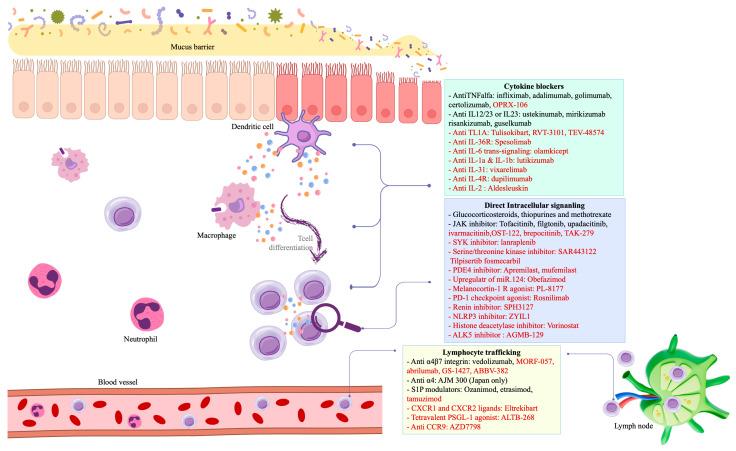
Inflammatory bowel disease (IBD) management stands at the cusp of a transformative era, with recent breakthroughs heralding a paradigm shift in treatment strategies. Traditionally, IBD therapeutics revolved around immunosuppressants, but the landscape has evolved significantly. Recent approvals of etrasimod, upadacitinib, mirikizumab, and risankizumab have introduced novel mechanisms of action, offering renewed hope for IBD patients. These medications represent a departure from the status quo, breaking years of therapeutic stagnation. Precision medicine, involving Artificial Intelligence, is a pivotal aspect of this evolution, tailoring treatments based on genetic profiles, disease characteristics, and individual responses. This approach optimizes treatment efficacy, and paves the way for personalized care. Yet, the rising cost of IBD therapies, notably biologics, poses challenges, impacting healthcare budgets and patient access. Ongoing research strives to assess cost-effectiveness, guiding policy decisions to ensure equitable access to advanced treatments. Looking ahead, the future of IBD management holds great promise. Emerging therapies, precision medicine, and ongoing research into novel targets promise to reshape the IBD treatment landscape. As these advances continue to unfold, IBD patients can anticipate a brighter future, one marked by more effective, personalized, and accessible treatments.
炎症性肠病(IBD)的管理正处于一个变革时代的开端,近期的突破预示着治疗策略的范式转变。传统上,IBD治疗主要围绕免疫抑制剂展开,但现在情况已发生了显著变化。最近,etrasimod、upadacitinib、mirikizumab和risankizumab的获批引入了新的作用机制,为IBD患者带来了新的希望。这些药物代表着与现状的背离,打破了多年的治疗停滞局面。涉及人工智能的精准医学是这一演变的关键方面,它根据基因图谱、疾病特征和个体反应来定制治疗方案。这种方法优化了治疗效果,为个性化医疗铺平了道路。然而,IBD治疗费用的不断上涨,尤其是生物制剂,带来了挑战,影响了医疗保健预算和患者获得治疗的机会。正在进行的研究致力于评估成本效益,为政策决策提供指导,以确保公平获得先进治疗。展望未来,IBD管理的前景充满希望。新兴疗法、精准医学以及对新靶点的持续研究有望重塑IBD治疗格局。随着这些进展不断展现,IBD患者可以期待一个更光明的未来,一个以更有效、个性化且可及的治疗为特征的未来。
 Zotero 插件