Suresh Kumar Meena Kumari Madhusoodhanan, Liu Pengyu, Nitchman Megan S, Chaudhary Santoshi, Jump Kaile, Morales Yoelkys, Miller Emily A, Shecter Ilana, Stadecker Miguel J, Kalantari Parisa
Department of Veterinary and Biomedical Sciences, Center for Molecular Immunology and Infectious Disease, Pennsylvania State University, University Park, Pennsylvania, United States of America.
Department of Immunology, Tufts University School of Medicine, Boston, Massachusetts, United States of America.
PLoS Pathog. 2025 Mar 18;21(3):e1012108. doi: 10.1371/journal.ppat.1012108. eCollection 2025 Mar.
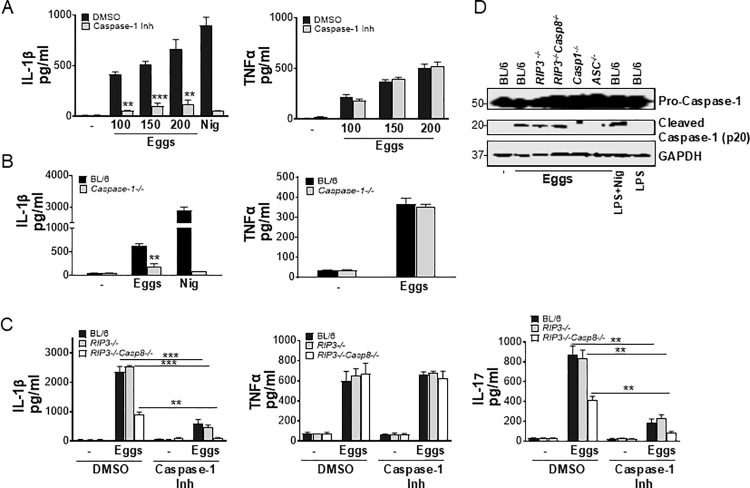
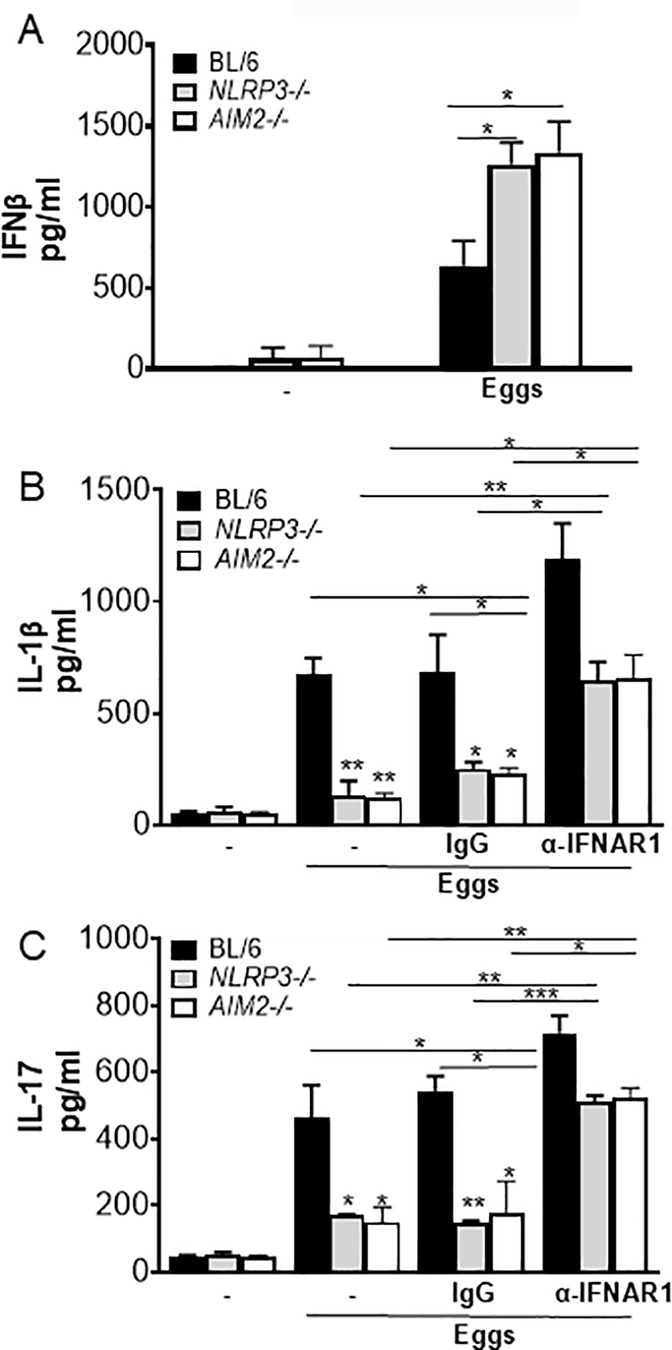
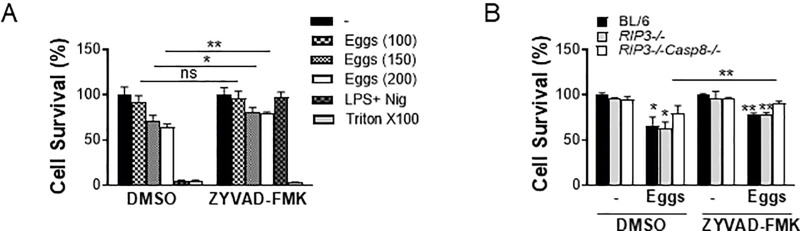
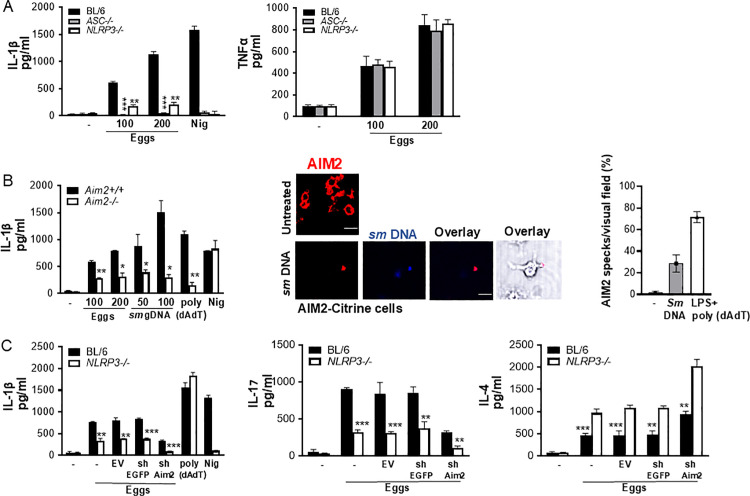
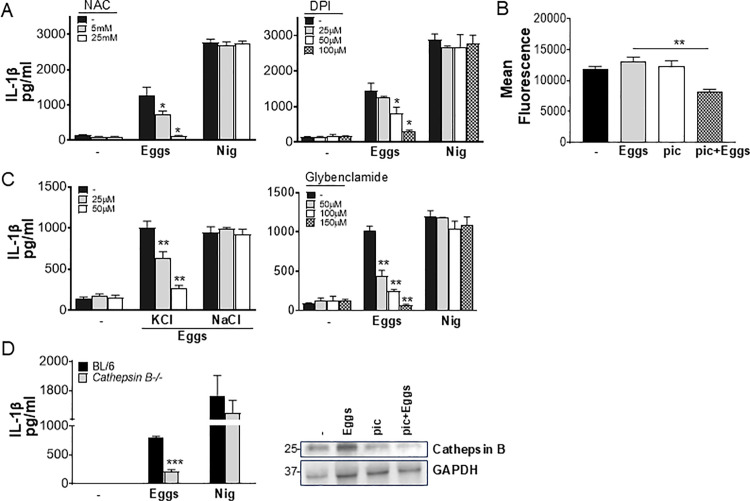
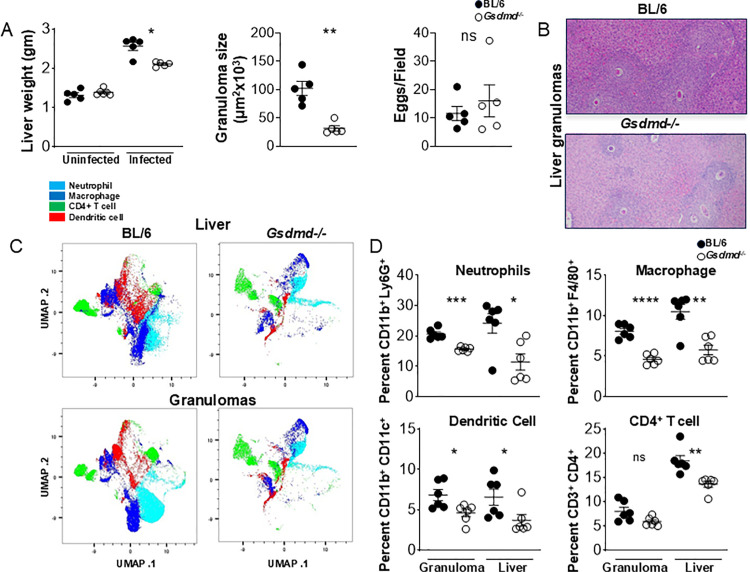
Infection with the helminth Schistosoma mansoni can cause exacerbated morbidity and mortality via a pathogenic host CD4 T cell-mediated immune response directed against parasite egg antigens, with T helper (Th) 17 cells playing a major role in the development of severe granulomatous hepatic immunopathology. The role of inflammasomes in intensifying disease has been reported; however, neither the types of caspases and inflammasomes involved, nor their impact on the Th17 response are known. Here we show that enhanced egg-induced IL-1β secretion and pyroptotic cell death required both caspase-1 and caspase-8 as well as NLRP3 and AIM2 inflammasome activation. Schistosome genomic DNA activated AIM2, whereas reactive oxygen species, potassium efflux and cathepsin B, were the major activators of NLRP3. NLRP3 and AIM2 deficiency led to a significant reduction in pathogenic Th17 responses, suggesting their crucial and non-redundant role in promoting inflammation. Additionally, we show that NLRP3- and AIM2-induced IL-1β suppressed IL-4 and protective Type I IFN (IFN-I) production, which further enhanced inflammation. IFN-I signaling also curbed inflammasome- mediated IL-1β production suggesting that these two antagonistic pathways shape the severity of disease. Lastly, Gasdermin D (Gsdmd) deficiency resulted in a marked decrease in egg-induced granulomatous inflammation. Our findings establish NLRP3/AIM2-Gsdmd axis as a central inducer of pathogenic Th17 responses which is counteracted by IFN-I pathway in schistosomiasis.
感染曼氏血吸虫这种蠕虫可通过针对寄生虫卵抗原的致病性宿主CD4 T细胞介导的免疫反应导致发病率和死亡率加剧,其中辅助性T(Th)17细胞在严重肉芽肿性肝脏免疫病理学的发展中起主要作用。炎症小体在加重疾病中的作用已有报道;然而,所涉及的半胱天冬酶和炎症小体的类型及其对Th17反应的影响尚不清楚。在这里,我们表明,卵诱导的白细胞介素-1β分泌增强和细胞焦亡需要半胱天冬酶-1和半胱天冬酶-8以及NLRP3和AIM2炎症小体的激活。血吸虫基因组DNA激活AIM2,而活性氧、钾外流和组织蛋白酶B是NLRP3的主要激活剂。NLRP3和AIM2缺陷导致致病性Th17反应显著减少,表明它们在促进炎症中起关键且不可替代的作用。此外,我们表明,NLRP3和AIM2诱导的白细胞介素-1β抑制白细胞介素-4和保护性I型干扰素(IFN-I)的产生,这进一步加剧了炎症。IFN-I信号传导也抑制了炎症小体介导的白细胞介素-1β产生,表明这两条拮抗途径决定了疾病的严重程度。最后,Gasdermin D(Gsdmd)缺陷导致卵诱导的肉芽肿性炎症显著减少。我们的研究结果确立了NLRP3/AIM2-Gsdmd轴是致病性Th17反应的核心诱导因子,在血吸虫病中被IFN-I途径抵消。