Department of Cellular Biology, University of Georgia, Athens, GA 30605.
Center for Tropical and Emerging Global Diseases, University of Georgia, Athens, GA 30605.
Proc Natl Acad Sci U S A. 2023 Jan 10;120(2):e2210181120. doi: 10.1073/pnas.2210181120. Epub 2023 Jan 3.
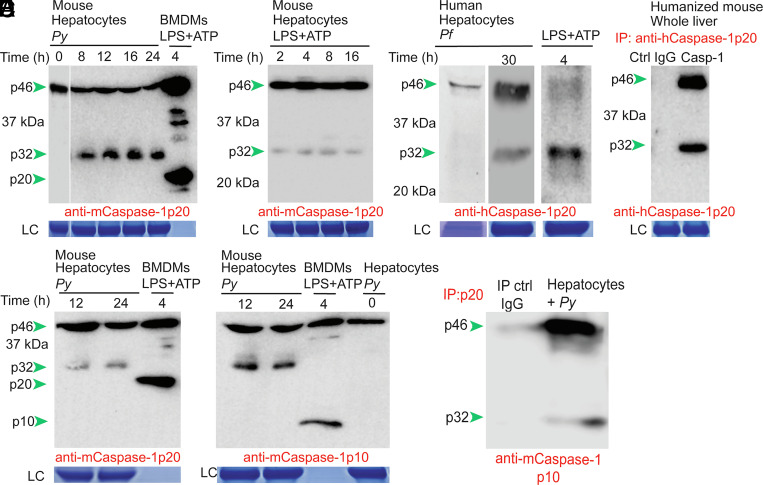
Malaria, caused by parasites is a severe disease affecting millions of people around the world. undergoes obligatory development and replication in the hepatocytes, before initiating the life-threatening blood-stage of malaria. Although the natural immune responses impeding infection and development in the liver are key to controlling clinical malaria and transmission, those remain relatively unknown. Here we demonstrate that the DNA of parasites is sensed by cytosolic AIM2 (absent in melanoma 2) receptors in the infected hepatocytes, resulting in Caspase-1 activation. Remarkably, Caspase-1 was observed to undergo unconventional proteolytic processing in hepatocytes, resulting in the activation of the membrane pore-forming protein, Gasdermin D, but not inflammasome-associated proinflammatory cytokines. Nevertheless, this resulted in the elimination of -infected hepatocytes and the control of malaria infection in the liver. Our study uncovers a pathway of natural immunity critical for the control of malaria in the liver.
疟原虫引起的疟疾是一种严重的疾病,影响着全球数百万人。疟原虫在肝细胞中经历必需的发育和复制,然后开始危及生命的血液阶段疟疾。尽管天然免疫反应阻碍了肝脏中的感染和发育,是控制临床疟疾和传播的关键,但这些反应仍然相对未知。在这里,我们证明疟原虫的 DNA 被感染肝细胞中的细胞质 AIM2(黑色素瘤 2 中缺失)受体感知,导致 Caspase-1 激活。值得注意的是,在肝细胞中观察到 Caspase-1 经历非传统的蛋白水解加工,导致膜孔形成蛋白 Gasdermin D 的激活,但不激活炎症小体相关的促炎细胞因子。尽管如此,这导致了受感染的肝细胞的清除,并控制了肝脏中的疟疾感染。我们的研究揭示了一条对肝脏中疟疾控制至关重要的天然免疫途径。