Yan Chunxiao, Jin Lin, Zhang Qiaosi, Liu Xiaoyu, Yu Taorui, Zhao Fangkun, Mu Yanan, Xu Jun, Zhang Lijun
Department of Ophthalmology, The Third People's Hospital of Dalian, Dalian Municipal Eye Hospital, Dalian Municipal Cancer Hospital, Liaoning Provincial Key Laboratory of Cornea and Ocular Surface Diseases, Liaoning Provincial Optometry Technology Engineering Research Center, National Clinical Research Center for Eye Diseases, Dalian, Liaoning, China.
Dalian Medical University, Dalian, Liaoning, China.
Front Med (Lausanne). 2025 Mar 4;12:1517403. doi: 10.3389/fmed.2025.1517403. eCollection 2025.
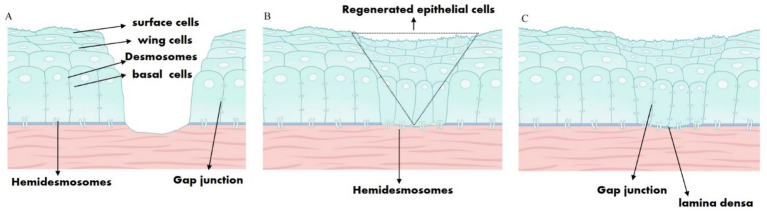
Transepithelial photorefractive keratectomy using Smart Pulse Technology (SPT-TransPRK) is currently the leading method for superficial refractive surgery, offering advantages such as a non-contact procedure, shorter operation times, and excellent patient cooperation. Laser ablation of the corneal epithelium, Bowman's membrane, and the stroma can effectively correct refractive errors. Thus, the complete healing of the corneal epithelium post-surgery is essential for ensuring good vision. Refractive surgeons should enhance their understanding of corneal wound healing mechanisms and focus on the repair of the corneal epithelium following refractive surgery to ensure the quality of visual health of patients.
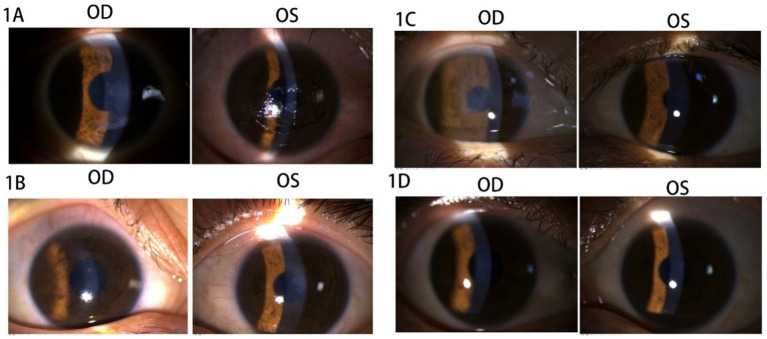
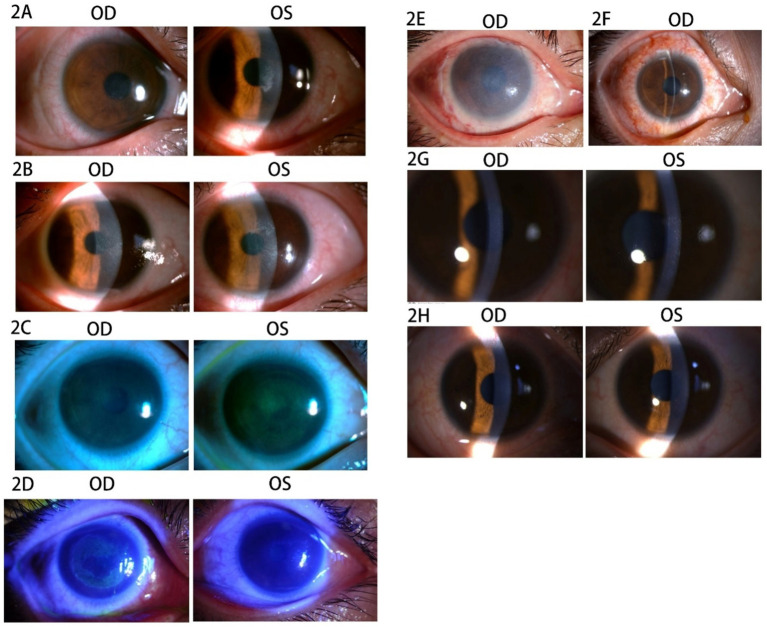
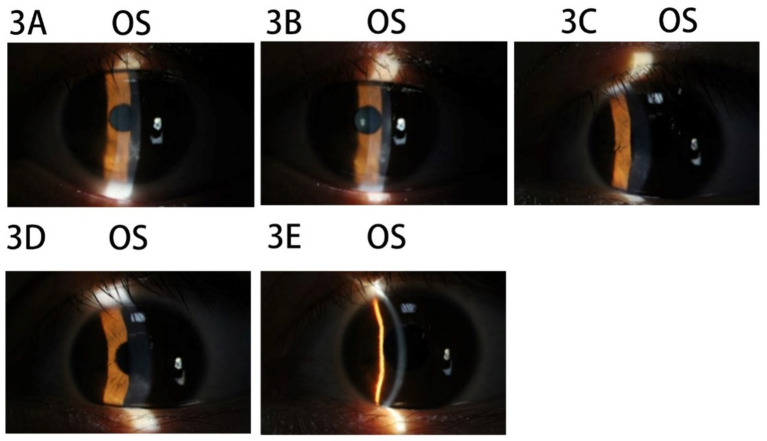
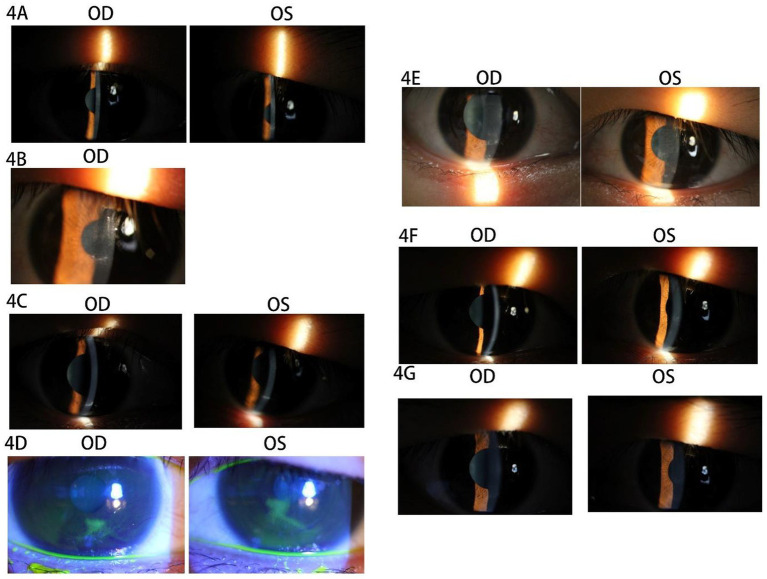
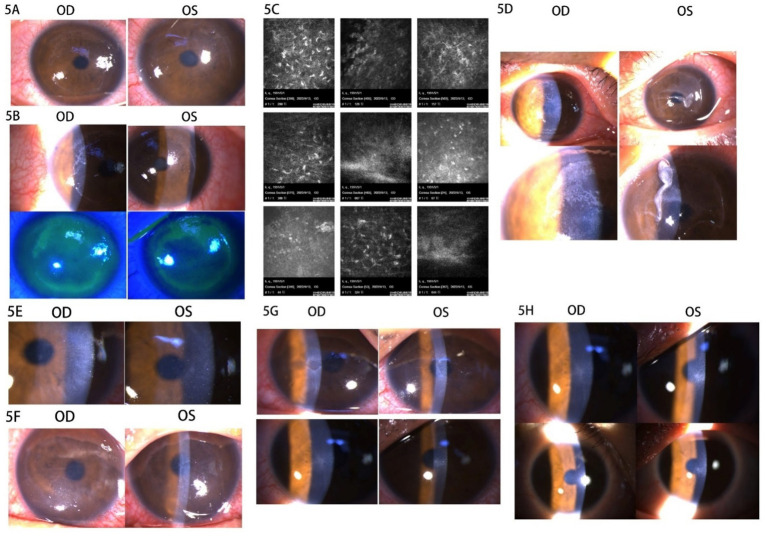
A total of five patients experienced varying degrees of delayed corneal epithelial healing following refractive surgery. In Case 1, unhealthy corneal epithelial debris was removed, and ophthalmic ointment was applied to cover the eyes instead of using bandage contact lenses (BCLs) to reconstruct the corneal epithelial barrier. This approach was also successfully implemented in Case 2. Furthermore, amniotic membrane transplantation (AMT) can quickly establish a corneal barrier and promote corneal epithelial regeneration, especially in cases of extensive corneal epithelial detachment. The remaining three patients were suspected of having corneal viral infections based on their medical history and the observation of corneal pathology using a slit lamp microscope. To prevent further infection and promote regeneration, topical steroid drops were discontinued early, and topical antiviral and corneal epithelial regeneration medications were administered alongside systemic antiviral therapy. Steroid drops were resumed after corneal epithelial healing to effectively prevent post-refractive haze.
Delays in corneal epithelial healing after refractive surgery should be taken seriously. BCLs, steroids, and both topical and systemic antiviral therapies should be properly utilized when there is a delay in corneal epithelial healing.
使用智能脉冲技术的经上皮光性角膜切削术(SPT-TransPRK)是目前表层屈光手术的主要方法,具有非接触手术、手术时间短和患者配合度高等优点。激光消融角膜上皮、Bowman膜和基质可有效矫正屈光不正。因此,术后角膜上皮的完全愈合对于确保良好视力至关重要。屈光手术医生应加深对角膜伤口愈合机制的理解,并关注屈光手术后角膜上皮的修复,以确保患者视觉健康的质量。
共有5例患者在屈光手术后出现不同程度的角膜上皮愈合延迟。在病例1中,清除不健康的角膜上皮碎屑,应用眼膏覆盖眼睛而非使用绷带接触镜(BCL)来重建角膜上皮屏障。该方法在病例2中也成功实施。此外,羊膜移植(AMT)可快速建立角膜屏障并促进角膜上皮再生,尤其是在广泛角膜上皮脱离的情况下。根据病史和裂隙灯显微镜下的角膜病理观察,其余3例患者被怀疑患有角膜病毒感染。为防止进一步感染并促进再生,早期停用局部类固醇滴眼液,并给予局部抗病毒和角膜上皮再生药物以及全身抗病毒治疗。角膜上皮愈合后恢复使用类固醇滴眼液以有效预防屈光术后 haze。
屈光手术后角膜上皮愈合延迟应引起重视。当角膜上皮愈合延迟时,应正确使用BCL、类固醇以及局部和全身抗病毒治疗。