Luo Jin, Li Zhenyu, Wang Zhibin, Ding Yashuang, Gao Peng, Li Yuping
Jin Luo Department of Gynecology, 73rd Army Group Military Hospital, Xiamen City, Fujian Province 361000, P.R. China.
Zhenyu Li Department of Rehabilitation, 73rd Army Group Military Hospital, Xiamen City, Fujian Province 361000, P.R. China.
Pak J Med Sci. 2025 Mar;41(3):657-661. doi: 10.12669/pjms.41.3.10554.
To explore the efficacy of probiotics combined with metformin and a calorie-restricted diet in obese patients with polycystic ovary syndrome (PCOS).
Clinical data of 141 obese PCOS patients treated in the 73rd Group Army Hospital from June 2021 to December 2023 were retrospectively analyzed. Patients were grouped according to the treatment records: metformin group (n=69), patients treated with metformin and a calorie-restricted diet) and combined group (n=72, patients treated with probiotics combined with metformin and a calorie-restricted diet). Levels of endocrine hormone indicators, Homeostasis Model Assessment of Insulin Resistance (HOMA-IR), Fasting blood glucose (FPG), gut microbiota status, and Body mass index (BMI) were compared before and after the treatment in two groups.
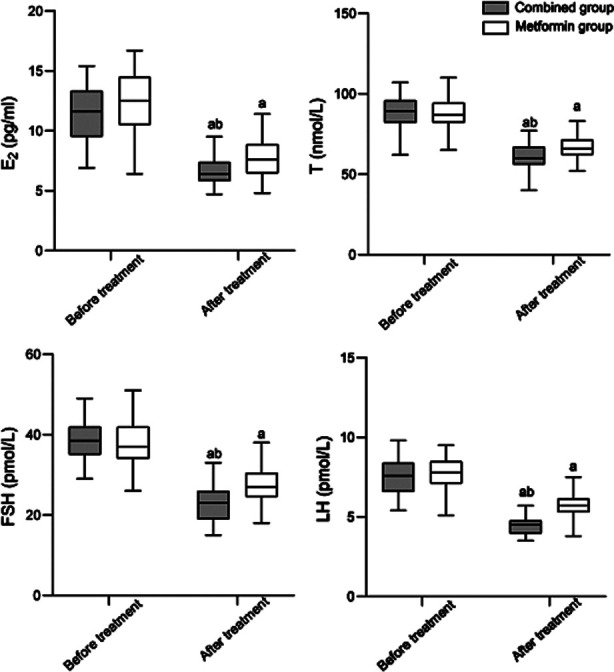
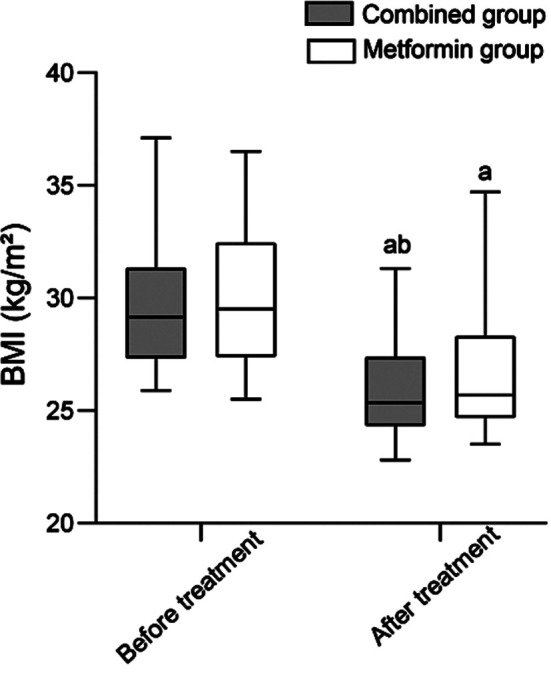
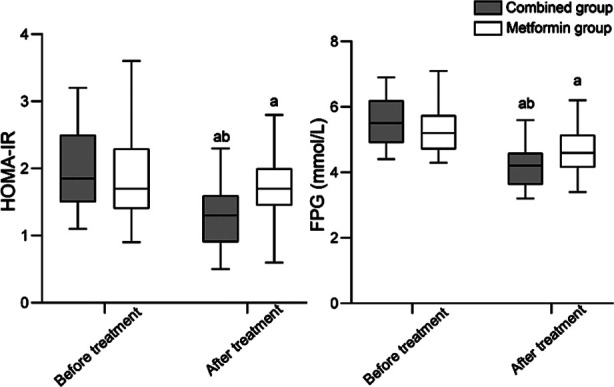
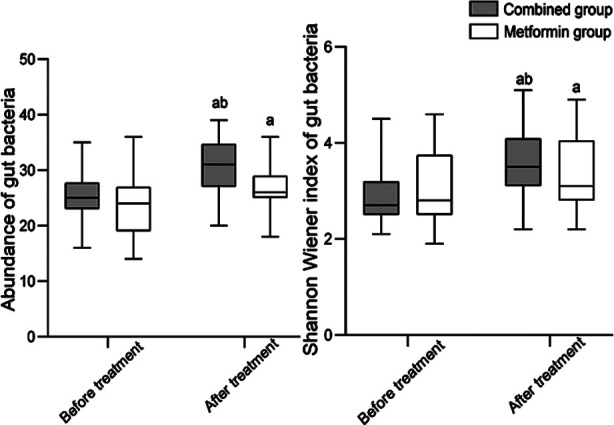
After the treatment, the levels of endocrine hormone indicators, HOMA-IR, and FPG in both groups were significantly reduced compared to pre-treatment levels and were significantly lower in the combined group compared to the metformin group (<0.05). Abundance of gut microbiota and Shannon Wiener diversity index in both groups significantly increased after the treatment and were markedly higher in the combined group than in the metformin group (<0.05). Treatment led to a significant reduction in the body mass index (BMI) in all patients (<0.05). However, post-treatment BMI was comparable in the two groups (>0.05).
In obese patients with PCOS, adding probiotics to the metformin and calorie-restricted diet regimen is more effective in regulating hormone levels, improving blood sugar and insulin resistance, regulating gut microbiota status, and reducing BMI than metformin combined with calorie-restricted diet alone.
探讨益生菌联合二甲双胍及限制热量饮食对肥胖多囊卵巢综合征(PCOS)患者的疗效。
回顾性分析2021年6月至2023年12月在第73集团军医院接受治疗的141例肥胖PCOS患者的临床资料。根据治疗记录将患者分组:二甲双胍组(n = 69,接受二甲双胍及限制热量饮食治疗)和联合组(n = 72,接受益生菌联合二甲双胍及限制热量饮食治疗)。比较两组治疗前后的内分泌激素指标水平、胰岛素抵抗稳态模型评估(HOMA-IR)、空腹血糖(FPG)、肠道微生物群状态及体重指数(BMI)。
治疗后,两组的内分泌激素指标水平、HOMA-IR及FPG均较治疗前显著降低,且联合组显著低于二甲双胍组(<0.05)。两组肠道微生物群丰度及香农维纳多样性指数在治疗后均显著增加,且联合组明显高于二甲双胍组(<0.05)。治疗使所有患者的体重指数(BMI)显著降低(<0.05)。然而,两组治疗后的BMI相当(>0.05)。
在肥胖PCOS患者中,在二甲双胍和限制热量饮食方案中添加益生菌,在调节激素水平、改善血糖和胰岛素抵抗、调节肠道微生物群状态及降低BMI方面比单独使用二甲双胍联合限制热量饮食更有效。