Schoofs Hans, Daubel Nina, Schnabellehner Sarah, Grönloh Max L B, Palacios Martínez Sebastián, Halme Aleksi, Marks Amanda M, Jeansson Marie, Barcos Sara, Brakebusch Cord, Benedito Rui, Engelhardt Britta, Vestweber Dietmar, Gaengel Konstantin, Linsenmeier Fabian, Schürmann Sebastian, Saharinen Pipsa, van Buul Jaap D, Friedrich Oliver, Smith Richard S, Majda Mateusz, Mäkinen Taija
Department of Immunology, Genetics and Pathology, Uppsala University, Uppsala, Sweden.
Department of Medical Biochemistry at the Amsterdam UMC, location AMC, Amsterdam, The Netherlands.
Nature. 2025 May;641(8062):465-475. doi: 10.1038/s41586-025-08724-6. Epub 2025 Mar 19.
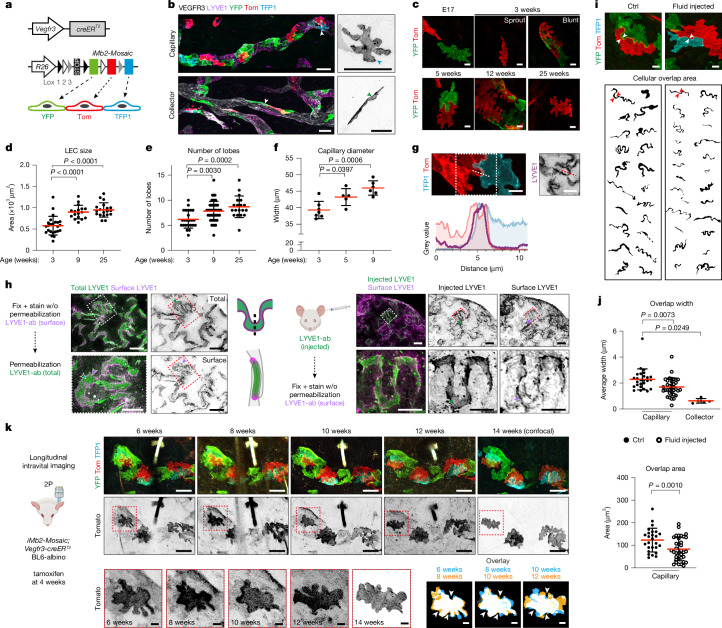
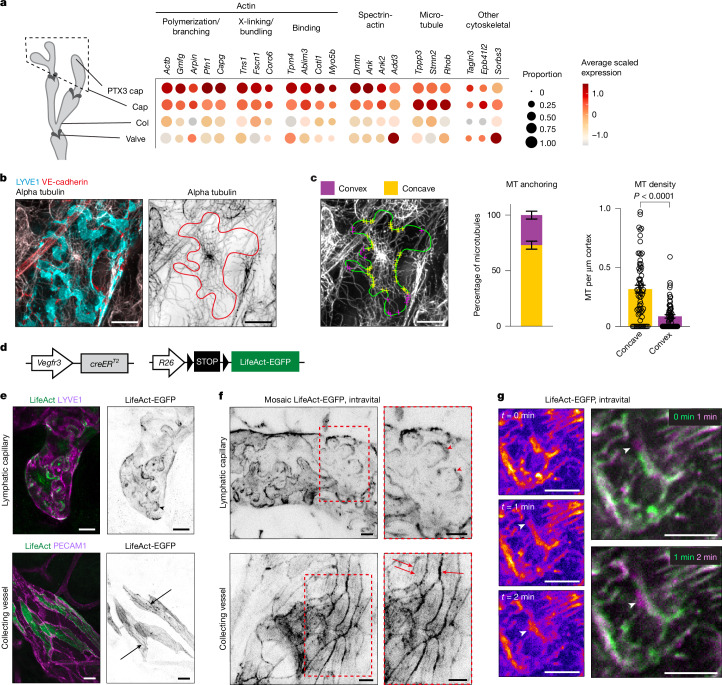
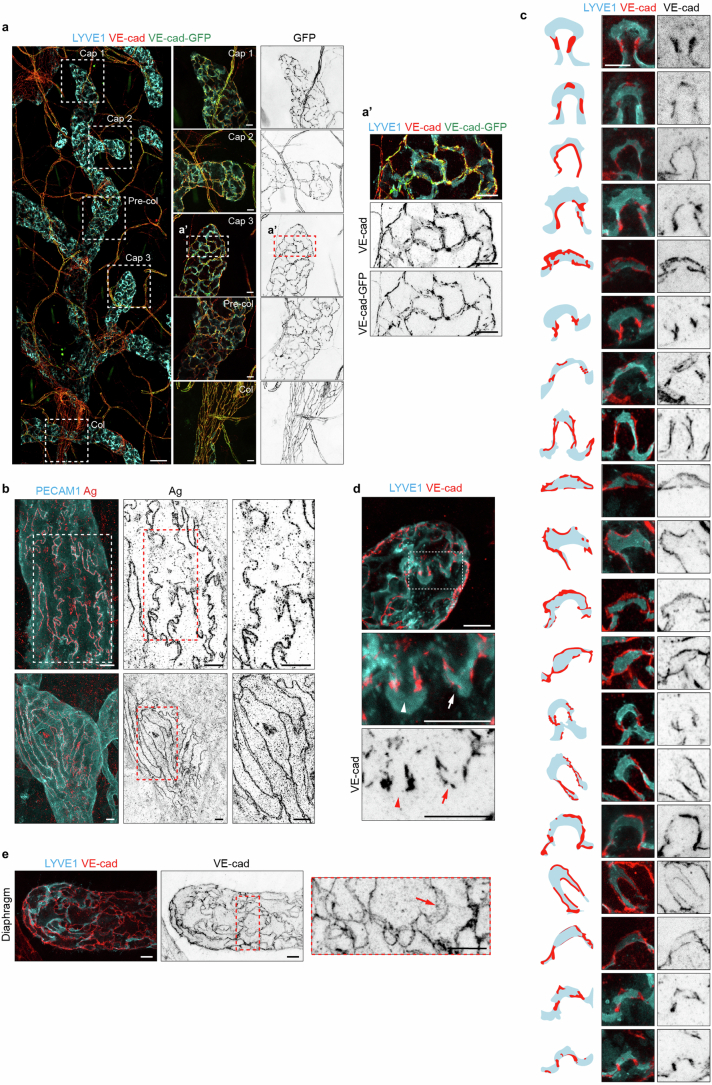
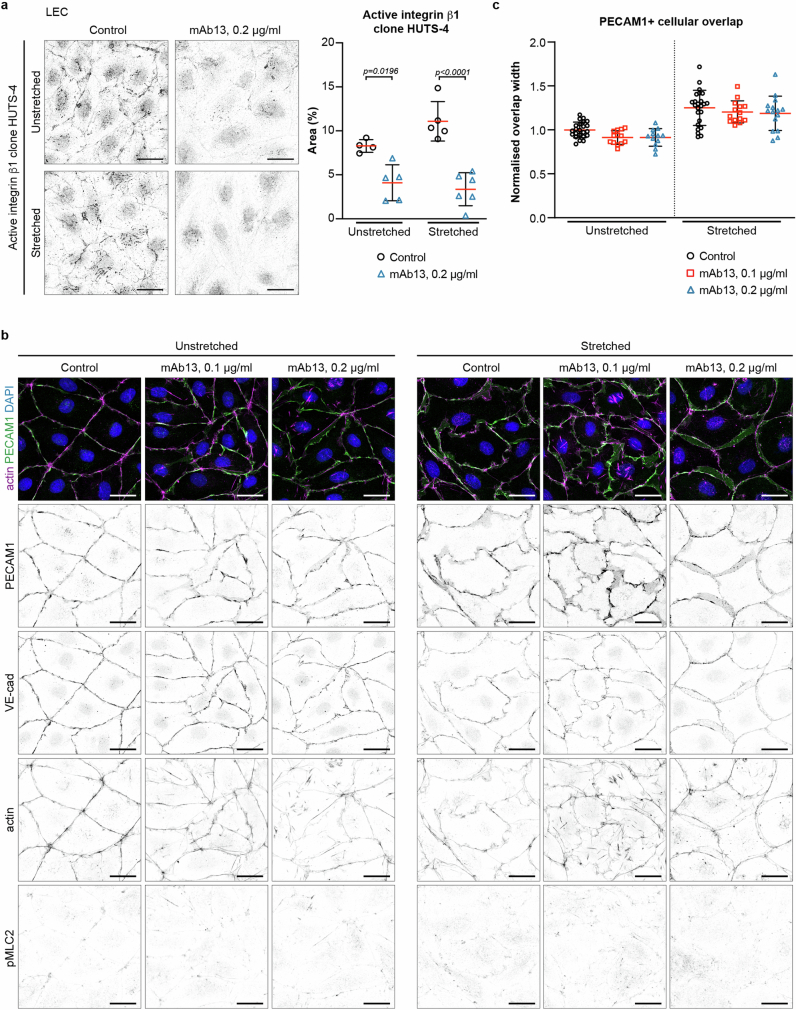
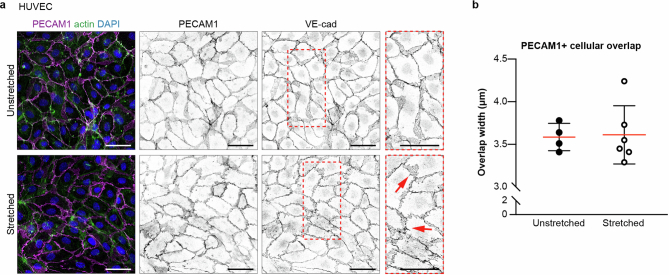
Lymphatic capillaries continuously take up interstitial fluid and adapt to resulting changes in vessel calibre. The mechanisms by which the permeable monolayer of loosely connected lymphatic endothelial cells (LECs) maintains mechanical stability remain elusive. Here we identify dynamic cytoskeletal regulation of LEC shape, induced by isotropic stretch, as crucial for the integrity and function of dermal lymphatic capillaries. We found that the oak leaf-shaped LECs showed a spectrum of VE-cadherin-based junctional configurations at the lobular intercellular interface and a unique cytoskeletal organization, with microtubules at concave regions and F-actin at convex lobes. Multispectral and longitudinal intravital imaging of capillary LEC shape and actin revealed dynamic remodelling of cellular overlaps in vivo during homeostasis and in response to interstitial fluid volume increase. Akin to puzzle cells of the plant epidermis, LEC shape was controlled by Rho GTPase CDC42-regulated cytoskeletal dynamics, enhancing monolayer stability. Moreover, cyclic isotropic stretch increased cellular overlaps and junction curvature in primary LECs. Our findings indicate that capillary LEC shape results from continuous remodelling of cellular overlaps that maintain vessel integrity while preserving permeable cell-cell contacts compatible with vessel expansion and fluid uptake. We propose a bellows-like fluid propulsion mechanism, in which fluid-induced lumen expansion and shrinkage of LEC overlaps are countered by actin-based lamellipodia-like overlap extension to aid vessel constriction.
淋巴毛细管持续摄取组织间液,并适应由此导致的血管口径变化。由松散连接的淋巴内皮细胞(LEC)构成的可渗透单层维持机械稳定性的机制仍不清楚。在这里,我们确定由各向同性拉伸诱导的LEC形状的动态细胞骨架调节对真皮淋巴毛细管的完整性和功能至关重要。我们发现,橡树叶状的LEC在小叶细胞间界面处呈现出一系列基于VE-钙黏蛋白的连接结构以及独特的细胞骨架组织,微管位于凹面区域,F-肌动蛋白位于凸叶。对毛细管LEC形状和肌动蛋白的多光谱和纵向活体成像显示,在体内稳态期间以及对组织间液量增加的反应中,细胞重叠会发生动态重塑。类似于植物表皮的拼图细胞,LEC形状受Rho GTP酶CDC42调节的细胞骨架动力学控制,从而增强单层稳定性。此外,周期性各向同性拉伸增加了原代LEC中的细胞重叠和连接曲率。我们的研究结果表明,毛细管LEC形状源于细胞重叠的持续重塑,这种重塑在保持血管完整性的同时,保留了与血管扩张和液体摄取相容的可渗透细胞间接触。我们提出了一种类似波纹管的液体推进机制,其中液体诱导的管腔扩张和LEC重叠的收缩由基于肌动蛋白的片状伪足样重叠延伸来抵消,以帮助血管收缩。